
Best Mobiles Under Rs. 40,000 in India: From Nothing Phone 4a Pro, OnePlus Nord 6 and More
Smartphones have interesting designs with good IP ratings
These devices have enough raw and gaming performance
Camera performance ranges between great to strictly average
Over the past few months, we have seen some new devices launching in the sub-Rs. 40,000 smartphone segment. This is mainly due to the memory crisis, which often forces smartphone brands to raise their price tags as memory module prices rise. Manufacturers either go with a brand-new model or opt for an incremental update, tagging it as the successor to an existing model but with a much higher price tag. As a result, new smartphones are being forced into higher-priced segments.
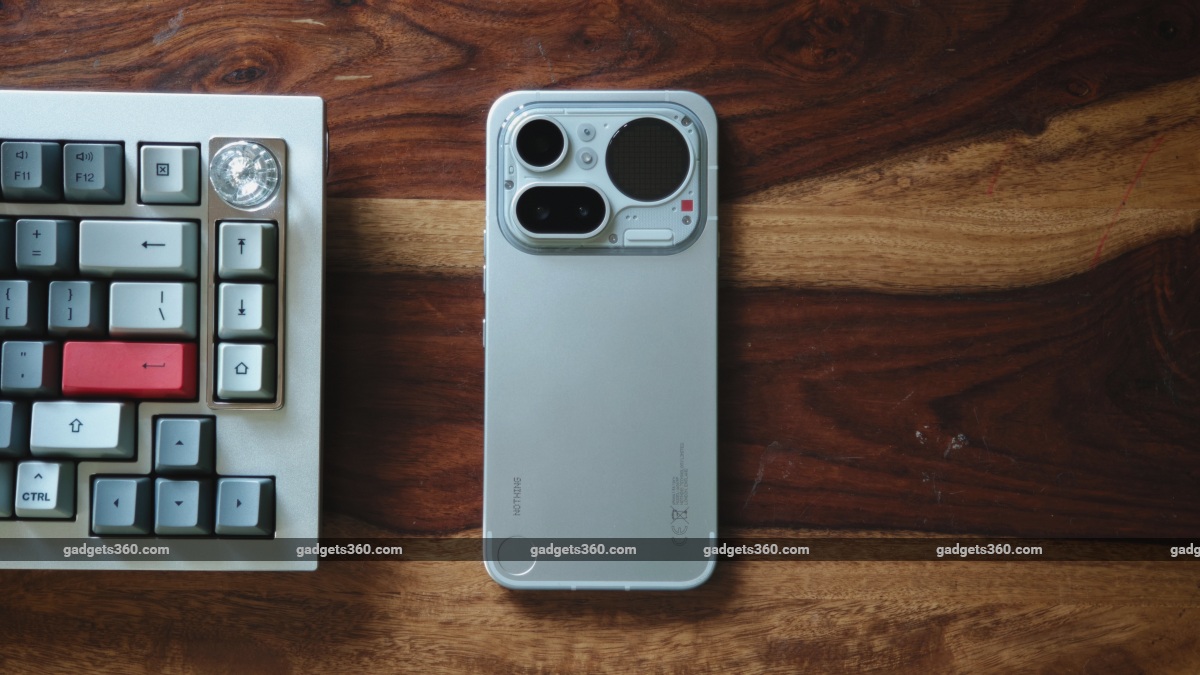
A very good example of this push into newer segments is the Nothing Phone 4a Pro, the successor to the Phone 3a Pro. While the Phone 3a Pro was priced from under Rs. 30,000, the Phone 4a Pro, with all its upgrades and a price hike, finds itself in the sub Rs. 40,000 segment, with its base model priced at Rs. 39,999. Another new entrant in this segment is the OnePlus Nord 6, which is now part of this segment because of the same crisis. Other new entrants include the Nothing Phone 4a, which is currently under review. Once reviewed, this guide will be updated accordingly.

Fresh and new aspirants aside, the other smartphones in this segment actually come from the next tier. Devices that were priced much higher at launch but, after a year, have received price cuts and still make a lot of sense. Buyers looking for premium features such as capable low-light cameras, flagship-grade raw performance, and interesting designs will find them in this segment. But shockingly, there are devices that don't perform on all fronts, even at the Rs. 40,000 mark. But such is the state of smartphones in 2026!
| Phones under Rs. 40,000 | Gadgets 360 rating | Price in India | Base storage |
|---|---|---|---|
| OnePlus Nord 6 | 8/10 | 38,999 | 8+256GB |
| Nothing Phone 4a Pro | 8/10 | 39,999 | 8+128GB |
| Google Pixel 9a | 8/10 | 39,999 | 8+256GB |
| iQOO Neo 10 | 8/10 | 34,999 | 8+128GB |
| OnePlus 13R | 9/10 | 41,999 | 12+256GB |
OnePlus Nord 6
The OnePlus Nord 6 takes a whole new direction for the Nord brand. From being a proper, balanced mid-range brand offering excellent value, OnePlus has now changed course (given rising memory costs) to a more gaming-oriented product line. Its design conveys different vibes and is a departure from the typical, mature design of previous Nord models. At the same time, it also brings along a more updated IP69 rating and a faster 165Hz display.
Powering the Nord 6 is a Qualcomm Snapdragon 8s Gen 4, which is more than sufficient for everyday tasks and obviously, 3D gaming. There's no additional co-processor, but OnePlus claims 165Hz support for select games. The camera hardware is modest at best compared to some of the other devices in this guide, barely delivering the basics. The massive 9,000mAh battery can easily last two days with casual use and well over a day with heavy usage.
Nothing Phone 4a Pro
Nothing's Phone 3a Pro was an impressive product in terms of overall value; it offered a capable telephoto camera under Rs. 30,000, which made it a very good smartphone at this price point in 2025. In 2026, its price was expected to rise, but Nothing did a fine job with its Phone 4a Pro by delivering a more consistent imaging experience that was missing from its previous product. This was also combined with a brand-new design direction that now uses an aluminium unibody and a retro-looking 3D-contoured polycarbonate enclosure around the cameras. This design, while still maintaining its roots, is finally more mature and will appeal to a broader audience than the Phone 3a Pro. Also new is the Glyph Matrix, a solid upgrade over the previous Glyph lighting system, which was a bit vague.
Nothing was also finally decided on a slightly faster storage using UFS 3.1 (versus the previous UFS 2.2). India got the large 5,400mAh battery. We tested the unit with a 5080mAh capacity, and it comfortably lasted a whole day with casual use. Camera performance has improved, and users can also take advantage of the telephoto's 7X lossless zoom capability this year, which captured impressive photos in our review.
Google Pixel 9a
Google's Pixel 9a is a solid contender in this segment, even though it does not pack the most powerful hardware. Another reason why some may prefer the Pixel 9a, aside from its now discounted price, is that it is nearly identical to the Pixel 10a. Its IP68-rated design is both sleek and stealthy, with no visible camera bump, so it looks and feels very unique. This sleek design also happens to pack a large enough (as Pixels go) 5,100mAh battery. Users will get a flat 6.3-inch POLED panel that gets sufficiently bright outdoors and packs a sharp 422 ppi, but has noticeably thick borders.
Compared to any smartphone available at this price point, Google's Pixel 9a stands out for two reasons. Firstly, it offers a bloatware-free software experience, getting 7 years (now 6) of Android software updates and SMRs. Secondly, if you are worried about security, you will have peace of mind, as Pixel devices are the first to receive them. Camera performance is equally impressive for this price point, as both the primary and ultrawide cameras perform well in all lighting conditions.
iQOO Neo 10
iQOO's Neo 10 is the second device in this segment to have gaming-grade hardware. It has a Qualcomm Snapdragon 8s Gen 4 at the helm, which delivers impressive gaming performance. The processor also gets help from iQOO's Supercomputing Chip Q1, letting it manage additional gaming features like Super frame rate (MEMC-enhanced boosted fps) and Super-resolution, which enhance the phone's already good gaming capabilities. Keeping everything cool is also a large vapour chamber cooling system, letting the processor max out and perform under load.
Its design is pretty basic, offering an IP65 and MIL-STD-810H ratings. The display is a 1.5K panel, which gets plenty sharp and is sufficiently bright outdoors. It also offers a 144Hz refresh rate, provided your game supports it. Battery life is quite solid as well, offering enough power for heavy users. But all of this power and performance comes at the cost of a weak camera, and this is where the iQOO Neo 10 barely meets expectations.
OnePlus 13R
Priced a bit higher (but the same as the 12GB RAM variant of the OnePlus Nord 6) is the OnePlus 13R. It currently retails for Rs. 41,999 on OnePlus' official website. The OnePlus 13R, compared to the iQOO Neo 10 and the OnePlus Nord 6, is a more balanced device, offering a more palatable mix of raw performance and imaging. The phone has a stylish design that will remind many of the OnePlus 13 series, but its slim overall profile appears quite contemporary even in 2026. It has a flat 6.78-inch display with a 1.5K resolution and Gorilla Glass 7i protection as well. However, it is an LTPO panel that is really hard to find at around Rs. 40,000.
Performance with the Qualcomm Snapdragon 8 Gen 3 isn't bad by any means, even if the phone is now over a year old. The chipset can easily handle most 3D games with ease, and part of this is down to the massive vapour chamber cooling system. The 50-megapixel primary and 2X optical telephoto cameras also offer good camera performance in daylight. Low-light images can get a bit soft with the telephoto because it lacks OIS. It's 6,000mAh, which easily lasts beyond a day with heavy use.