
Best Smartphones of 2025: From Samsung Galaxy Z Fold 7, Vivo X300 Pro, iPhone 17 Pro and more
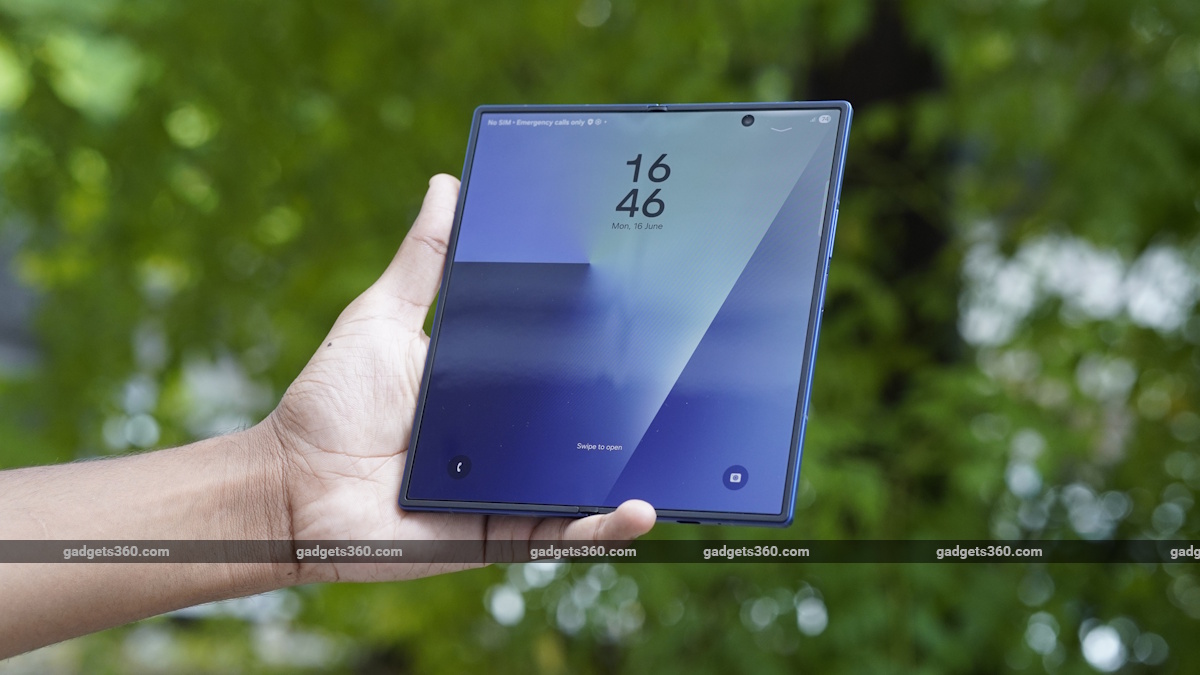
Foldables saw more cutting-edge innovation than regular flagships
Regular premium flagships focussed on camera performance and battery life
Those who missed the AI train doubled down on hardware features
Another exciting year in smartphones is finally coming to an end. While we wait for Apple to launch its first foldable, Samsung has just launched its Galaxy Z TriFold in select markets. Indeed, the outlook for smartphones always seems exciting; even though not much has changed with the flagships launched this year, compared to their predecessors last year. While another exciting year is now on the horizon, we look back at some of the best smartphones we launched and reviewed this year. These are the devices that stood out, delivering excellent performance in all areas and impressing us not necessarily with new innovations, but with their mix of features and excellent hardware choices.
Given that these are the cream of the crop, the phones do belong to the premium category, offering nothing but the best. So, without further adieu, here's a short list of the best smartphones we reviewed in 2025, in no particular order.
| Phones | Gadgets 360 rating (out of 10) | Price in India (as recommended) |
|---|---|---|
| Samsung Galaxy Z Fold 7 | 9 | Rs. 1,74,999 |
| Motorola Razr 60 Ultra | 9 | Rs. 79,999 |
| Apple iPhone 17 Pro | 9 | Rs. 1,34,900 |
| Apple iPhone 17 | 9 | Rs. 82,900 |
| Oppo Find X9 Pro | 9 | Rs. 1,09,999 |
| Vivo X300 Pro | 9 | Rs. 1,09,999 |
| Xiaomi 15 Ultra | 9 | Rs. 1,09,999 |
Samsung Galaxy Z Fold 7
The Samsung Galaxy Z Fold 7 is one of those devices that received a complete redesign this year. And a redesign is exactly what the Galaxy Z Fold needed after years of being the chubby one, amid a slew of slim, sleek foldables from Chinese smartphone giants. Fortunately for Samsung, most brands withdrew from the global foldables market this year. So its achievements in terms of design were better recognised and appreciated by the masses.
The phone's super-slim exterior appeared a bit too delicate with its sharp corners and ultra-thin sides. However, it fared pretty well in terms of durability, even though it's not the first foldable to offer an IP68 rating (which goes to the Google Pixel 10 Pro Fold). Design aside, the Galaxy Z Fold 7 was also the first Samsung Galaxy Z device to get a high-resolution 200-megapixel primary camera. The camera hardware delivers both in daylight and low-light, and the main folding display also allows for some light productivity work thanks to app multitasking. The phone was also incredibly light for a foldable, which was partially down to its smaller display that is only enough to get you a day of use.
Motorola Razr 60 Ultra
Like Samsung, Motorola has been chasing the “flippable” or clamshell foldable experience for years. Motorola's biggest breakthrough was making maximum use of its large cover display. While Samsung's latest Galaxy Z Flip 7 also packs in the largest cover display on a clamshell foldable, it fails to make good use of it like Motorola's Razr. This instantly reduces the need to open the clamshell foldable (which still requires two hands, unlike an old-school flip phone) and also helps save on battery life.
The Motorola Razr 60 Ultra is easily the best clamshell foldable available today. The large cover display has the now typical floating camera appearance with both the primary and ultrawide camera peeping through the display. Camera performance is as good as it can possibly get on a foldable, with a surprisingly good 2X lossless digital zoom, shooting crisp photos in daylight. The phone also packs in all the bells and whistles one would expect from a premium device and does not disappoint in any area, including battery life, which was an issue with the previous Razr 50 Ultra.
Apple iPhone 17 Pro Max
After years of recycling the same old design, Apple finally came up with something new, not just in terms of design, but also with its cameras for the iPhone 17 Pro. While the overall design still looks very much like an iPhone, with plenty of refinements (and an unmistakable orange colour), Apple's Pro iPhone received a major overhaul on the back, with a switch back to aluminium (from titanium/steel) and a massive camera bump (read: plateau). This large camera bump is there for a reason, as it accommodates the company's first high-resolution periscopic telephoto camera.
Design and camera achievements aside, the iPhone 17 Pro also delivers ample power and can now comfortably shoot 4K 120 fps video, thanks to the all-new vapour chamber cooling system, which, albeit a bit late to the game, helps maintain the phone's performance under stress. Also interesting is the new selfie camera, which has a square sensor letting users snap horizontal selfies without holding the phone horizontally.
Apple iPhone 17
While the standard iPhone 17 did not receive any noticeable design upgrades over the iPhone 16, it did receive some pivotal, life-changing hardware upgrades that fans have been wanting for a long time. Among these is a 120Hz LTPO OLED display, which will let users enjoy a smoother iOS experience versus the standard 60Hz panel that Apple has shipped with the premium device for several years. The display also gets an anti-reflective coating to cut down glare.
Cameras have also been upgraded. There's finally a new high-resolution ultrawide camera, and it also gets the new 18-megapixel selfie camera from the Pro. Also new is a larger battery that not only lasts long, but also charges quickly. The new A19 processor powers iOS 26's liquid-glass experience without any hiccups. Sadly, it only comes in one size, with Apple waving goodbye to the Plus model in favour of the new premium Air. Unlike all the other 17 series iPhones launched this year, it's still stuck with 8GB of RAM when the rest have been upgraded to 12GB. Well, maybe next year…
Oppo Find X9 Pro
Oppo made a big comeback to the premium smartphone segment with the launch of its Find X9 Pro. The Find X8 Pro reintroduced the Find X brand after going missing for several years in India last year. The Find X9 Pro takes things up a notch, finally hitting the sweet spot by addressing the issues we faced with the previous model and adding some new tricks to its camera game.
The Find X9 Pro finally moves past Oppo's older design philosophy of rounded corners and a circular camera layout. It goes with something fresh and new, and to everyone's surprise, it also launched a photography kit with a Hasselblad-branded teleconverter lens to extend the reach of its already impressive zoom capabilities. While we weren't big fans of this teleconverter kit, the rest of the phone did impress in every possible way, delivering several upgrades like better battery life and performance.
Vivo X300 Pro
The Vivo X300 Pro indeed needs no introduction to the premium segment. Vivo has been outdoing itself with every new X series model year after year, but decided to one-up its game by also bringing the X200 Ultra's teleconverter kit to India with the X300 Pro. It may not replace a mirrorless camera yet, but it delivers the desired level of quality for the mobile photography enthusiast in a package that weighs much less than a camera.
Aside from its design and cameras, the Vivo X300 Pro also gets a new processor and a notable price hike. The new processor performs well but runs hot when stressed, mainly while playing games. Also new is the long-awaited switch to OriginOS with OriginOS 6. It has a new interface with some new tricks and the ever-present and ever-growing AI features. Also new are several customisation options for the homescreen and lockscreen.
Xiaomi 15 Ultra
The only real ‘Ultra' smartphone on this list, the Xiaomi 15 Ultra, is all about mobile photography. It has the 4 rear-facing cameras, one of which is a 200-megapixel telephoto camera (also available on the Vivo X300 pro and the Oppo Find X9 Pro), but the second telephoto camera allows it to zoom in at different focal lengths with minimal loss of quality. Given the number of cameras, the phone does feel a bit chunky and is also offered with an optional photography kit with a grip, but without a teleconverter lens.
While Xiaomi's HyperOS comes with plenty of bloatware, it is one of the few phones to offer a Snapdragon 8 Elite processor on this list. Cameras aside, the 15 Ultra's design also looks very unique and different compared to the other camera smartphones in this list, with a dual-finish rear panel, which feels like a camera because of its chunky camera module and vegan leather finish.