-
 BenQ GV32 Projector Review: Strikes a Nostalgic Chord11 March 2026
-
BenQ GW90TC Series Monitors Launched in India With Up to 27-Inch Displays, USB Type-C Connectivity13 February 2026
-
BenQ W2720i AI Home Cinema Projector With 4K HDR Output and Android TV OS Launched in India1 April 2025
-
BenQ 27-Inch PD2705U, 32-Inch PD3205U Designer Monitors Launched in India: Details13 June 2022
-
BenQ X3000i 4K Projector With Up to 240Hz Refresh Rate, Android TV Support Launched in India14 March 2022
- Home
- Tv
- Tv Features
- Want A Big Screen Experience At Home This Diwali? BenQ CEO Reveals The ideal Projector Budget
Want A Big-Screen Experience At Home This Diwali? BenQ CEO Reveals The ideal Projector Budget
Planning to buy a home projector this Diwali? BenQ India MD Rajeev Singh says Rs 50,000 to Rs 70,000 is the sweet spot for a quality projector. Here's what buyers should know.
Written by Ankit Sharma | Updated: 20 October 2026 10:00 IST
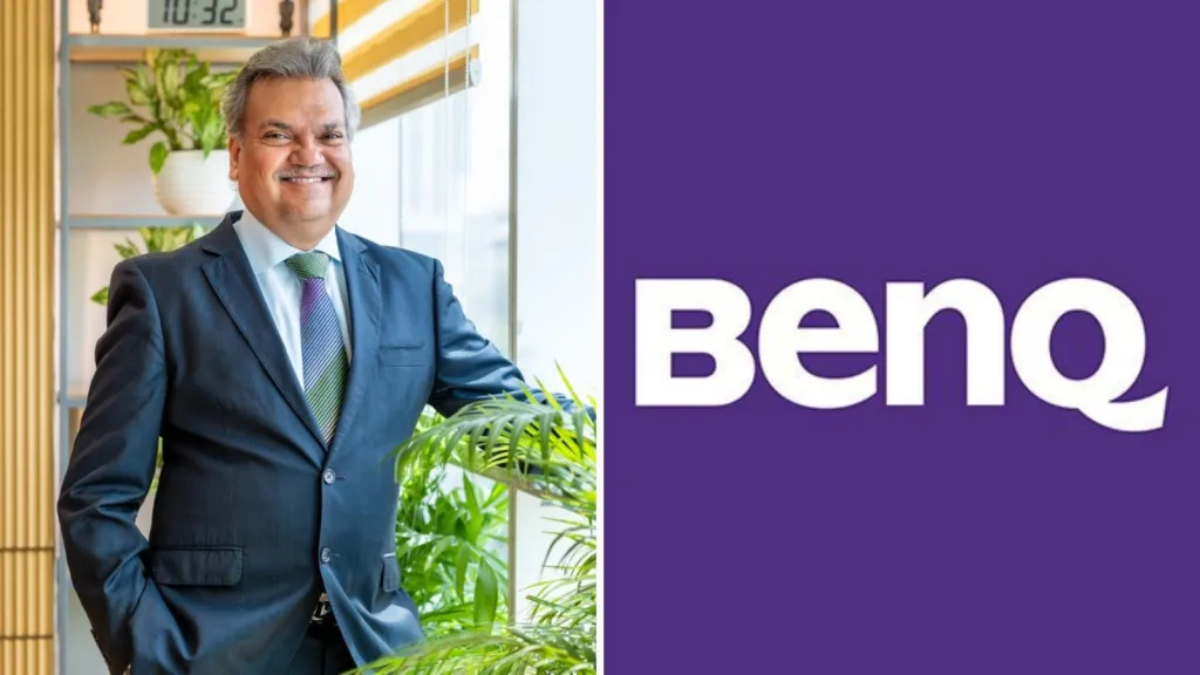
BenQ newer models are making big-screen entertainment easier at home
Click Here to Add Gadgets360 As A Trusted Source


Advertisement
With the festive season on, people across India have started shopping for their favourite products. While rising component costs and supply-chain challenges remain major concerns for the electronics industry, BenQ India is seeing strong growth in India compared to last year. The company aims for Rs1,000 crore in revenue by 2026. The company is gaining momentum as its business-to-business (B2B) and business-to-consumer (B2C) segments grow. Gadgets 360 spoke with Rajeev Singh, Managing Director, BenQ India and South Asia, about the company's growth plans, how global geopolitical tensions are affecting business, shifting demand in the B2B and B2C segments, and the growing popularity of home projectors in India. As projectors become more popular in India, we asked Rajeev what the ideal cost of purchasing a good projector today is. They also discussed regional demand trends, projectors' potential to challenge traditional TVs, and BenQ's focus on monitors for content creators. We edited and shortened a few responses for clarity.
How does 2025 look for BenQ India in terms of growth and market momentum in India, and what business or revenue targets have you set for 2026?
In the last financial year 2025, our revenue was about Rs 690 crore, up almost 25% from the previous year. Our financial year runs from January to December. We have set a target of Rs 1,000 crore for calendar year 2026, which is a growth of around 40-45%. The first nine months are over, and we are on track, so we should hit Rs 1,000 crore in December.
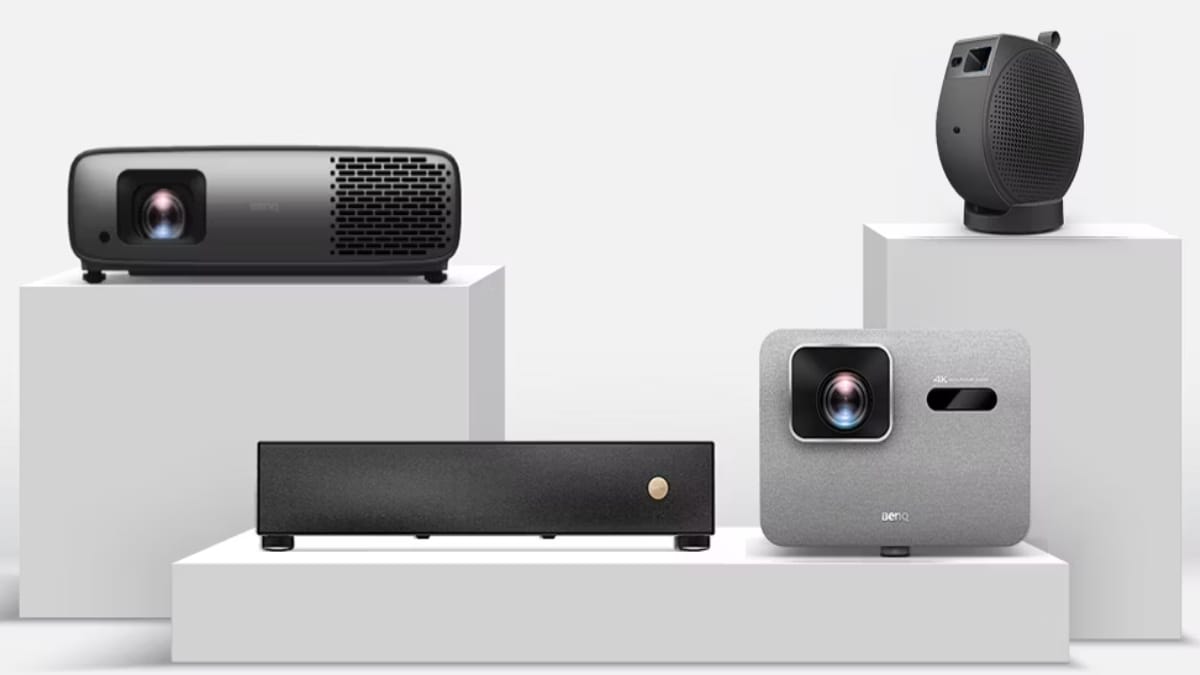
BenQ India is seeing strong growth in India compared to last year
Photo Credit: BenQ
How are Middle East tensions and component shortages affecting BenQ's supply chain and costs?
Middle East tensions haven't affected us so far, and we don't expect a major impact. Yes, we have kept one additional month of stock as a buffer. Earlier, we worked with 30–40 days of stock. Now we are working with 60–70 days of stock, and for some products, even up to 90 days. However, rising hardware demand from AI is creating shortages of memory, processors, and PCBs, pushing prices up. It started with memory and then processors. Now it has extended to PCBs. The PCB shortage is also affecting us. PCBs go into every product. When it was limited to memory and processors, two of our products, monitors and projectors, were not affected. Only interactive flat panels were affected. Now that PCB shortages are in the picture, every electronic product is affected. This is a challenge we are working on.
How is BenQ's business split between B2B and B2C, and which segment is driving growth in 2026?
In 2026, B2B and B2C are expected to contribute almost equally, at around Rs 500 crore each. Last year, the mix was closer to 60:40, with B2C accounting for the larger share. Last year, several government smart classroom projects were delayed as funding was diverted towards defence amid the India-Pakistan tensions. This significantly impacted our B2B business, as government education projects are a large part of this segment. This year, the government education business is recovering, although it hasn't yet reached the levels we had hoped. B2C is growing about 30%, while B2B is growing about 50%. Both segments are performing well, but B2B is growing faster, which is changing the overall business mix.
Which region in India is the biggest market for BenQ in terms of projectors?
In India, we are seeing the highest demand for projectors from the South region, which brings us 39% of the business. Consumers here are more tech-savvy and are willing to spend on mid-range and premium products. In addition, the South has greater purchasing power and buys more expensive devices than the all-India average. They enjoy watching content on the big screen. The movie-related demand is strongest in Hyderabad and Andhra Pradesh. Interest is not as strong in the North, so the number of home theatres in the South differs significantly. The technology side is strongest in Karnataka, particularly Bengaluru. We also have a strong presence in Kerala, where we are the number one brand in monitors.
What is a realistic budget for a good home projector, and what should consumers expect at different price points?
Nowadays, a good projector can be purchased in the Rs 50,000 to 70,000 range. Many cheaper projectors are available for around Rs 10K to 20K, but their specifications and performance may not always meet expectations. You can find DLP laser projectors in the Rs 50,000 to 70,000 range with better performance and a light-source life of up to 50,000 hours. BenQ's TH575i and GV50 projectors are also available in this price segment. Newer projectors are also easier to set up, with automatic adjustments that help align the picture to the projection surface and correct it when objects come in the way. This makes them more convenient for everyday use.
Do you think projectors will replace TVs in India in the coming years?
I think this will be one of the biggest changes we see, and it will be across multiple market segments. And this is already happening at the entry level. You can buy projectors in the Rs 10,000 to 20,000 range, but they may not offer the best capabilities and performance. These devices are attracting first-time buyers, including people from middle-income families. People will get used to watching content on a projector and will be less likely to go back to a TV. They can start with a projector of Rs 20,000 to 25,000 and later upgrade to a DLP projector, which costs around Rs 60,000 to 70,000. They may not be keen on a conventional TV, having been used to a bigger projected image. Another big difference is the way you watch. TVs make their own light; projectors project an image with reflected light. We generally see our surroundings through reflected light rather than looking directly at a light source. Watching TV for extended periods, such as during a three-and-a-half-hour match or a seven-hour one-day cricket match, can cause eye discomfort for some viewers. A projector offers a different viewing experience, letting users enjoy a much larger image, 120 or even 150 inches, while sitting relatively close to the screen.
How important is the creator economy to BenQ, and how are its monitors designed for content creators?
The creator economy is very important for us. We have launched a monitor specifically for content creators, including YouTubers and Instagrammers, while our separate series caters to professional photographers. These monitors cover the entire content creation workflow, especially editing before upload. They offer accurate colour reproduction, ensuring that the colours creators see while editing closely match the original content and look as intended when published.
Comments
Get your daily dose of tech news, reviews, and insights, in under 80 characters on Gadgets 360 Turbo. Connect with fellow tech lovers on our Forum. Follow us on X, Facebook, WhatsApp, Threads and Google News for instant updates. Catch all the action on our YouTube channel.
Further reading:
BenQ India, BenQ Home Projector, BenQ, BenQ Display, BenQ Projector, BenQ Projectors, BenQ Projector for Home, BenQ Home Projectors, buy a home projector
Related Stories


Want A Big-Screen Experience At Home This Diwali? BenQ CEO Reveals The ideal Projector Budget


Advertisement
Follow Us


-
04:17
[Sponsored] LG NANO 4K UHD AI TV NU885: Gemini Search, Dolby Atmos & 5 Years of Updates -
00:57
[Sponsored] Samsung Galaxy Z Fold8 My Fan Cam in Action: Find the Moment, Then Share It -
01:41
[Sponsored] What Do You Need To Know Before Your Next Run? | Samsung Galaxy Watch Ultra2 -
01:32
[Sponsored] Big Day Tomorrow? Prep Today | Samsung Galaxy Watch Ultra2 -
04:37
[Sponsored]: CP PLUS CarKam CP-F89B: 4K Dashcam With Rear Camera, GPS & Emergency Recording
-
iPhone 16 आज भी Amazon सेल में मिल रहा ₹15 हजार से ज्यादा सस्ता
-
OnePlus 15 को Amazon Great Indian Festival Sale में खरीदें सस्ता
-
₹2250 सस्ता मिल रहा Motorola का 7000mAh बैटरी वाला फोन! Flipkart पर ऑफर
-
Flipkart Sale में ₹14000 सस्ता मिल रहा Vivo का 50MP कैमरा, 9020mAh बैटरी वाला फोन
-
Moto G47 Power लॉन्च होगा 7,000mAh बैटरी के साथ! IP64 रेटिंग
Advertisement
Popular on Gadgets
- Samsung Galaxy S26 Ultra
- Motorola Razr Fold
- ChatGPT
- OPPO Find N6
- Mobiles Under Rs. 40,000
- Vivo X300 Ultra
- Asus Zenbook S14
- iQOO 15
- Vivo X300 Pro
- Lenovo Yoga Slim 7i Aura Edition
- iQOO 15R
- Vivo X Fold 5
- Sony PlayStation 5
- HP OmniPad 12
- OnePlus Nord CE 6 Lite
- OnePlus Pad 4
- OPPO F33 Pro 5G
- Cryptocurrency
- HP OmniBook Ultra 14 (2026)
- iPhone 17
- Eureka Forbes AP 355 Room Air Purifier
- Latest Mobile Phones
- Compare Phones
Latest Gadgets
- Samsung Galaxy F70 5G
- Tecno Spark 50S 5G
- Vivo Y600s Pro
- Vivo Y32 (2026)
- Infinix Smart 20 HD
- Vivo V80
- Vivo S2 FE
- Vivo Y600K Turbo
- HP ZBook Ultra G3a
- Dell Pro Rugged 14
- Amazon Alexa Tablet 8
- Amazon Alexa Tablet 11
- Amazfit T-Rex Dual Solar
- OPPO Watch S2
- Toshiba 65-Inch 4K Ultra HD Smart Mini LED QLED TV (65Z670SP)
- Haier M70 Mini LED 65-inch
- Acer Predator Atlas 8
- Asus ROG Ally
- Blue Star 1.5 Ton 5 Star Inverter Split AC (IE518ZNURS)
- Blue Star 2 Ton 3 Star Inverter Window AC (WIE324L)

- About Us
- Sitemaps
- Feedback
- Archives
- Contact Us
- RSS
- Advertise
- Career
- Privacy Policy
- Ethics
- Editorial Policy
- Terms & Conditions
- Complaint Redressal
Download Our Apps
Available in Hindi
© Copyright Red Pixels Ventures Limited 2026. All rights reserved.