-
 Total Solar Eclipse Today: How to Watch Live Online, Timings, Safety Tips, and More12 August 2026
 -
JWST Watches HD 80606 bExoplanet Heat Up by 1,100 Degrees in Hours19 June 2026
-
Chandra Captures Sharpest-Ever X-Ray View of M87 Black Hole Jet18 June 2026
-
Astrophotographer Captures Giant Human-Shaped Solar Prominence8 June 2026
-
Blue Origin’s New Glenn Rocket Explodes During Pre-Launch Test in Florida29 May 2026
- Home
- Science
- Science News
- NASA's Laser Communications Relay Demonstration Is 'Space Bound', Here’s Why It's Important
NASA's Laser Communications Relay Demonstration Is 'Space-Bound', Here’s Why It's Important
NASA’s laser technology will make space communications many times faster.
By Edited by Gadgets 360 Newsdesk | Updated: 8 December 2021 14:27 IST

Photo Credit: Instagram/ NASA
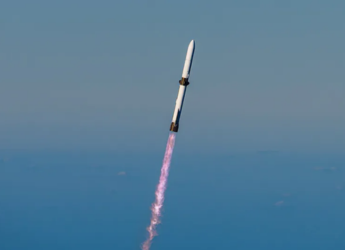
NASA's LCRD was launched from Cape Canaveral Space Force Station
Click Here to Add Gadgets360 As A Trusted Source

Advertisement
NASA's new laser technology is finally space-bound. After much anticipation and a two-year delay, the Laser Communications Relay Demonstration (LCRD) was launched today (December 8) at 5:19am EST. According to NASA's social media updates, the LCRD was launched from Cape Canaveral Space Force Station in Florida on an Atlas V rocket of the United Launch Alliance. NASA also explained why this new technology was important. It said, "LCRD will showcase the unique capabilities of optical communications which increases bandwidth for communicating data in space while reducing size, weight, and power requirements."
LCRD is part of the Space Test Program 3 mission, which is a joint venture between the US Space Force and NASA. “This new way of communicating with spacecraft could expand the possibilities of what we could learn from future missions across the solar system,” NASA wrote on Instagram.
This laser communications technology is also known as optical communications as it uses infrared light to send information. According to NASA, this technology provides “higher data rates than traditional radio frequency systems.” The higher data rates will allow the space agency to send more data in each transmission, which makes it a faster way of space communication.
LCRD will start its operations in a geosynchronous orbit about 22,000 miles above Earth. From there, it will establish space-to-ground laser communications with ground stations based in Hawaii and California. Scientists have further plans for laser communications technology. The caption on the Instagram post read, “Later in its mission, LCRD will receive and transmit data from an optical terminal that we will place on the International Space Station.”
A few days ago, NASA had stated that the technology will allow them to send 10-100 times more data as compared to radio frequencies. It will also prevent overcrowding of the radio frequency spectrum, which has happened over the past few decades. This problem increased as constellations of satellites in the low Earth orbits increased rapidly.
In a previous announcement, NASA was certain that the delay of the mission wouldn't have too many adverse effects. In fact, investigators believed that the LCRD is perfectly scheduled to benefit the Artemis manned Moon-landing mission, scheduled for 2025.
Will Snapdragon's new 2022 chips make it more prominent as a brand? We discuss this on Orbital, the Gadgets 360 podcast. Orbital is available on Spotify, Gaana, JioSaavn, Google Podcasts, Apple Podcasts, Amazon Music and wherever you get your podcasts.
Affiliate links may be automatically generated - see our ethics statement for details.
Comments
Get your daily dose of tech news, reviews, and insights, in under 80 characters on Gadgets 360 Turbo. Connect with fellow tech lovers on our Forum. Follow us on X, Facebook, WhatsApp, Threads and Google News for instant updates. Catch all the action on our YouTube channel.
Further reading:
NASA, NASA Laser Communications Relay Demonstration, NASA LCRD, Laser Communications
Related Stories


Advertisement
Follow Us




-
![[Sponsored] Galaxy Watch9 for Everyday Health Insights | Smarter Wellness Choices](https://www.gadgets360.com/static/desktop/images/spacer.png)
01:42
[Sponsored] Galaxy Watch9 for Everyday Health Insights | Smarter Wellness Choices -
01:15
[Sponsored] Galaxy Tab S10 Lite for Students: Notes, Solve Math and More -
04:17
[Sponsored] LG NANO 4K UHD AI TV NU885: Gemini Search, Dolby Atmos & 5 Years of Updates -
00:57
[Sponsored] Samsung Galaxy Z Fold8 My Fan Cam in Action: Find the Moment, Then Share It -
01:41
[Sponsored] What Do You Need To Know Before Your Next Run? | Samsung Galaxy Watch Ultra2
-
₹12 हजार छूट के साथ मिल रहा 48 मेगापिक्सल कैमरा वाला iPhone 17 Pro
-
धरती पर ये चीज होगी महंगी, एलन मस्क ने बताया, रोबोट के लिए बंपर डिमांड
-
आनंद महिंद्रा ने क्यों बदला UPI ऐप, बताई इस फैसले की वजह
-
Motorola Edge 70 Neo में मिल सकती है 7,000mAh बैटरी, 50 मेगापिक्सल प्राइमरी कैमरा
-
Rogbid की सस्ती स्मार्टवॉच AMOLED स्क्रीन, GPS, IP67 रेटिंग के साथ लॉन्च
Advertisement
Popular on Gadgets
- Samsung Galaxy S26 Ultra
- Motorola Razr Fold
- ChatGPT
- OPPO Find N6
- Mobiles Under Rs. 40,000
- Vivo X300 Ultra
- Asus Zenbook S14
- iQOO 15
- Vivo X300 Pro
- Lenovo Yoga Slim 7i Aura Edition
- iQOO 15R
- Vivo X Fold 5
- Sony PlayStation 5
- HP OmniPad 12
- OnePlus Nord CE 6 Lite
- OnePlus Pad 4
- OPPO F33 Pro 5G
- Cryptocurrency
- HP OmniBook Ultra 14 (2026)
- iPhone 17
- Eureka Forbes AP 355 Room Air Purifier
- Latest Mobile Phones
- Compare Phones
Latest Gadgets
- Vivo Y600
- HMD 2660 Flip Senior Edition
- Lava Aura Curve
- Poco X8s
- Samsung Galaxy F70 5G
- Tecno Spark 50S 5G
- Vivo Y600s Pro
- Vivo Y32 (2026)
- MacBook Pro 14-Inch (M6, 2026)
- Lenovo Yoga 9n 2-in-1
- iPad mini (2026)
- Amazon Alexa Tablet 8
- Pebble Qore 2
- Amazfit T-Rex Dual Solar
- Toshiba 65-Inch 4K Ultra HD Smart Mini LED QLED TV (65Z670SP)
- Haier M70 Mini LED 65-inch
- Acer Predator Atlas 8
- Asus ROG Ally
- Blue Star 1.5 Ton 5 Star Inverter Split AC (IE518ZNURS)
- Blue Star 2 Ton 3 Star Inverter Window AC (WIE324L)

- About Us
- Sitemaps
- Feedback
- Archives
- Contact Us
- RSS
- Advertise
- Career
- Privacy Policy
- Ethics
- Editorial Policy
- Terms & Conditions
- Complaint Redressal
Download Our Apps
Available in Hindi
© Copyright Red Pixels Ventures Limited 2026. All rights reserved.