
- Home
- Glance
Researchers Find Electric Eels Can Rewrite Genetic Code of Fish Nearby
Researchers Find Electric Eels Can Rewrite Genetic Code of Fish Nearby
Written by Gadgets 360 Staff | Updated: 8 December 2023 20:12 IST
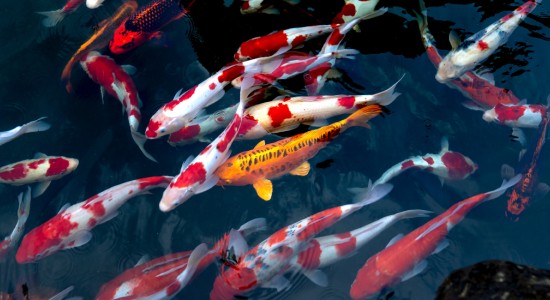
Photo Credit: Pexels/ Quang Nguyen Vinh
Click Here to Add Gadgets360 As A Trusted Source


Advertisement
Researchers Find Electric Eels Can Rewrite Genetic Code of Fish Nearby
Researchers at Nagoya University have unearthed a groundbreaking revelation about electric eels: these astonishing creatures possess the ability to alter the genetic makeup of small fish larvae through their electric shocks. This shocking discovery sheds new light on electroporation, a technique that employs electricity to transport genes.
The electric eel, renowned as the most substantial electricity-producing creature globally, can discharge an impressive 860 volts, ample to power a machine. In a recent study detailed in PeerJ - Life and Environment, scientists from Nagoya University unravelled the eel's capacity to modify the genes of minute fish larvae electrically.
This discovery delves into electroporation, a method harnessing an electric field to create openings in cell membranes transiently. These temporary pores enable the entry of molecules like DNA or proteins into the targeted cells.
Led by Professor Eiichi Hondo and Assistant Professor Atsuo Iida, the research team speculated on the potential impact of electricity flow on neighbouring organisms' cells. They pondered whether cells could integrate DNA fragments present in water, referred to as environmental DNA.
To examine this hypothesis, they exposed young fish to a DNA solution tagged with a luminescent marker, monitoring its uptake by zebrafish. Subsequently, they introduced an electric eel, inducing it to discharge electricity by biting a feeder.
Assistant Professor Iida expressed his belief that electroporation might occur naturally, contrary to common perception labelling it solely as a laboratory process. He postulated that electric eels in the Amazon River could serve as power sources, prompting genetic recombination in nearby organisms by releasing environmental DNA fragments due to electric discharge.
Their experiments revealed that 5 percent of the larvae displayed markers signifying gene transfer induced by the electric eel's discharge. Despite the eels exhibiting distinct pulse shapes and unstable voltage compared to conventional electroporation machines, the transfer of genes to cells was evident.
This study not only underscores the potential of electric eels and electricity-generating organisms to influence genetic modification in nature but also echoes similar observations of natural phenomena like lightning impacting nematodes and soil bacteria.
Assistant Professor Iida anticipates further exploration of electric field research in living organisms, believing it holds promise beyond conventional understanding and may unravel new biological phenomena, potentially sparking groundbreaking discoveries in the future.
Comments
Catch the latest from the Consumer Electronics Show on Gadgets 360, at our CES 2026 hub.


Advertisement
Follow Us




-
07:38
Redmi Pad 2 Pro Review | Worth Buying or not? | Best Tablet in Budget? -
08:02
Top OxygenOS 16 Features You Must Know: Don't Miss These OnePlus Features On Your Phone! -
10:42
[Partner Content] OPPO Find X9 Two Week Experience: Here's Why It Stands Out -
04:38
Realme Watch 5 Review: Watch This Before You Buy The Latest Realme Smartwatch -
07:03
Vivo X300 Pro Review | Best Camera Phone You Can Buy For 2026
Advertisement
Popular on Gadgets
- Samsung Galaxy Unpacked 2025
- ChatGPT
- Redmi Note 14 Pro+
- iPhone 16
- Apple Vision Pro
- Oneplus 12
- OnePlus Nord CE 3 Lite 5G
- iPhone 13
- Xiaomi 14 Pro
- Oppo Find N3
- Tecno Spark Go (2023)
- Realme V30
- Best Phones Under 25000
- Samsung Galaxy S24 Series
- Cryptocurrency
- iQoo 12
- Samsung Galaxy S24 Ultra
- Giottus
- Samsung Galaxy Z Flip 5
- Apple 'Scary Fast'
- Housefull 5
- GoPro Hero 12 Black Review
- Invincible Season 2
- JioGlass
- HD Ready TV
- Laptop Under 50000
- Smartwatch Under 10000
- Latest Mobile Phones
- Compare Phones
Latest Gadgets
- Tecno Spark Go 3
- iQOO Z11 Turbo
- OPPO A6c
- Samsung Galaxy A07 5G
- Vivo Y500i
- OnePlus Turbo 6V
- OnePlus Turbo 6
- Itel Zeno 20 Max
- Lenovo Yoga Slim 7x (2025)
- Lenovo Yoga Slim 7a
- Lenovo Idea Tab Plus
- Realme Pad 3
- Garmin Quatix 8 Pro
- NoiseFit Pro 6R
- Haier H5E Series
- Acerpure Nitro Z Series 100-inch QLED TV
- Asus ROG Ally
- Nintendo Switch Lite
- Haier 1.6 Ton 5 Star Inverter Split AC (HSU19G-MZAID5BN-INV)
- Haier 1.6 Ton 5 Star Inverter Split AC (HSU19G-MZAIM5BN-INV)

- About Us
- Sitemaps
- Feedback
- Archives
- Contact Us
- RSS
- Advertise
- Career
- Privacy Policy
- Ethics
- Editorial Policy
- Terms & Conditions
- Complaint Redressal
Download Our Apps
Available in Hindi
© Copyright Red Pixels Ventures Limited 2026. All rights reserved.