-
 SETI Scientists Searched Interstellar Comet 3I/ATLAS for Alien Signals7 June 2026
 -
Scientists Study 100 Possible Alien Signals as Arecibo’s Historic SETI Search Concludes14 January 2026
-
Rare Interstellar Object 3I/ATLAS Fails Alien Test, Scientists Say1 January 2026
-
Chinese Astronomers Search for Extraterrestrial Signals in TRAPPIST-1 System20 September 2025
-
New Study Challenges Great Filter Theory, Suggests Life Evolves with Planetary Changes24 February 2025
- Home
- Science
- Science News
- World’s Biggest Alien Search Enters Final Stage With 100 Mystery Signals
World’s Biggest Alien Search Enters Final Stage With 100 Mystery Signals
SETI scientists are rechecking the final 100 signals using China’s FAST telescope for alien origins.
Written by Gadgets 360 Staff | Updated: 17 January 2026 20:07 IST
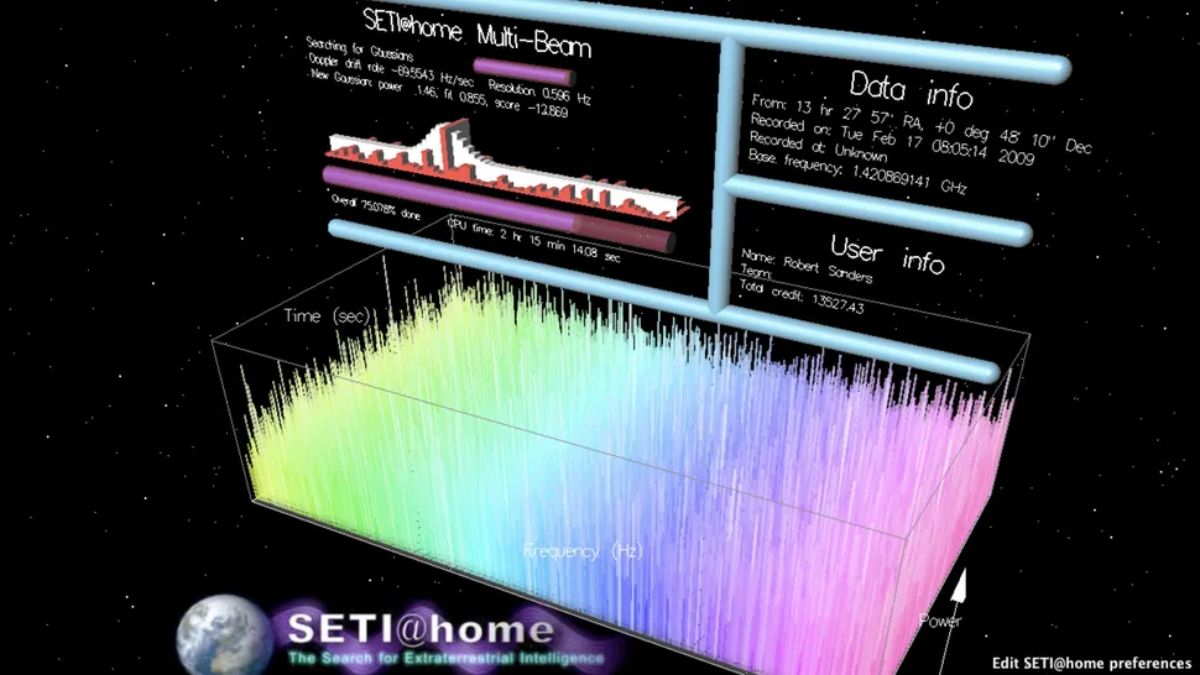
Photo Credit: Robert Sanders/UC Berkeley.
China’s FAST telescope scans the sky for the final SETI signals flagged by global volunteers
Click Here to Add Gadgets360 As A Trusted Source


Advertisement
Astronomers are closing in on the final phase of one of the world's largest searches for extraterrestrial intelligence, as just 100 mysterious radio signals remain under investigation. These are signals that, years ago, were flagged by the global SETI@home project and now are being re-examined using China's powerful FAST radio telescope. But scientists have warned that most, if not all, are probably human-made interference. Nevertheless, each one is being scrutinised very closely for the simple reason that scientists believe any potential, even chance, of discovering alien technologies is worth it.
From Billions of Blips to 100 Signals: How SETI Scientists Narrowed the Search
According to SETI researchers, SETI@home ran from 1999 to 2020 and used millions of computers worldwide to process Arecibo's observations, identifying nearly 12 billion candidate signals. Over time, advanced algorithms and manual inspection reduced this to 100 signals that now deserve careful follow-up.
Since July 2025, FAST has been capturing these signals. As Arecibo fell down in 2020, FAST is the only facility that can make these kinds of observations. Even if no signals turn out to be extraterrestrial, SETI scientists say that the project sets a new sensitivity standard for future searches.
FAST Telescope Takes Over: Tracking SETI Signals and Setting New Standards in Alien Search
The effort highlights the power of citizen science and careful data analysis. Researchers also note that modern computing and machine learning could allow a future review of all SETI@home data, in case signals were missed.
SETI co-founders say the project exceeded expectations, showing global collaboration can advance the search for life beyond Earth.
Comments
Get your daily dose of tech news, reviews, and insights, in under 80 characters on Gadgets 360 Turbo. Connect with fellow tech lovers on our Forum. Follow us on X, Facebook, WhatsApp, Threads and Google News for instant updates. Catch all the action on our YouTube channel.
Related Stories







Advertisement
Follow Us




-
04:17
[Sponsored] LG NANO 4K UHD AI TV NU885: Gemini Search, Dolby Atmos & 5 Years of Updates -
00:57
[Sponsored] Samsung Galaxy Z Fold8 My Fan Cam in Action: Find the Moment, Then Share It -
01:41
[Sponsored] What Do You Need To Know Before Your Next Run? | Samsung Galaxy Watch Ultra2 -
01:32
[Sponsored] Big Day Tomorrow? Prep Today | Samsung Galaxy Watch Ultra2 -
04:37
[Sponsored]: CP PLUS CarKam CP-F89B: 4K Dashcam With Rear Camera, GPS & Emergency Recording
-
अंजान नंबर से आने वाली कॉल में नजर आएगा KYC रजिस्टर्ड नाम
-
Flipkart Big Billion Days Sale: 50 इंच स्मार्ट TV पर आया धांसू डिस्काउंट
-
Flipkart Big Billion Days: 7000 से ज्यादा सस्ता मिल रहा Nothing का ये फोन
-
Oppo के वाइड फोल्डिंग स्मार्टफोन में मिल सकता है 6.35 इंच आउटर डिस्प्ले
-
Flipkart Big Billion Days Sale: 9 हजार से भी सस्ता रेफ्रिजरेटर, 5 बेस्ट ऑप्शन पर डिस्काउंट
Advertisement
Popular on Gadgets
- Samsung Galaxy S26 Ultra
- Motorola Razr Fold
- ChatGPT
- OPPO Find N6
- Mobiles Under Rs. 40,000
- Vivo X300 Ultra
- Asus Zenbook S14
- iQOO 15
- Vivo X300 Pro
- Lenovo Yoga Slim 7i Aura Edition
- iQOO 15R
- Vivo X Fold 5
- Sony PlayStation 5
- HP OmniPad 12
- OnePlus Nord CE 6 Lite
- OnePlus Pad 4
- OPPO F33 Pro 5G
- Cryptocurrency
- HP OmniBook Ultra 14 (2026)
- iPhone 17
- Eureka Forbes AP 355 Room Air Purifier
- Latest Mobile Phones
- Compare Phones
Latest Gadgets
- Vivo Y600s Pro
- Vivo Y32 (2026)
- Infinix Smart 20 HD
- Vivo V80
- Vivo S2 FE
- Vivo Y600K Turbo
- Realme P4s Lite
- Vivo S60t
- HP ZBook Ultra G3a
- Dell Pro Rugged 14
- Amazon Alexa Tablet 8
- Amazon Alexa Tablet 11
- Amazfit T-Rex Dual Solar
- OPPO Watch S2
- Toshiba 65-Inch 4K Ultra HD Smart Mini LED QLED TV (65Z670SP)
- Haier M70 Mini LED 65-inch
- Acer Predator Atlas 8
- Asus ROG Ally
- Blue Star 1.5 Ton 5 Star Inverter Split AC (IE518ZNURS)
- Blue Star 2 Ton 3 Star Inverter Window AC (WIE324L)

- About Us
- Sitemaps
- Feedback
- Archives
- Contact Us
- RSS
- Advertise
- Career
- Privacy Policy
- Ethics
- Editorial Policy
- Terms & Conditions
- Complaint Redressal
Download Our Apps
Available in Hindi
© Copyright Red Pixels Ventures Limited 2026. All rights reserved.