- Home
- Glance
M87: The Famous and Now-Found-Spinning Blackhole
M87: The Famous and Now-Found-Spinning Blackhole
By Gadgets 360 Staff | Updated: 1 October 2023 10:59 IST
Click Here to Add Gadgets360 As A Trusted Source


Advertisement
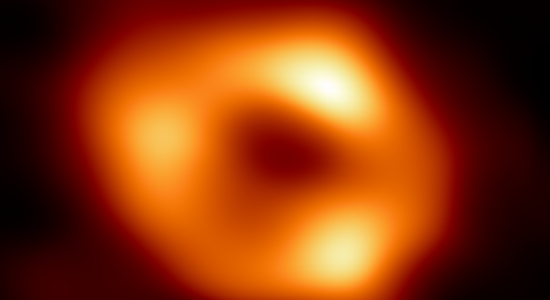
Researchers had to assemble data from global observatories to create a telescope the size of Earth in order to obtain the first image of a black hole. In 2019, when the hazy, luminous image was finally made public, it was published in all major newspapers. The same supermassive element, which resides at the centre of the Messier 87 galaxy, has recently revealed new information. The black hole spins of M87's core have been verified by analysis of observations gathered over a 22-year period.
According to astrophysicist and co-author Kazuhiro Hada of the National Astronomical Observatory of Japan, the possibility that this black hole is spinning has been a major worry among scientists since the success of black hole imaging in this galaxy with the Event Horizon Telescope.
170 sightings of M87 made between 2000 and 2022 were examined by researchers using a global network of more than 20 telescopes. Due to black holes' powerful gravitational pull, which even confines light, they were unable to view anything inside the event horizon. They could, however, follow the black hole's beautiful jet, which measures 4,900 light-years across and appears to move nearly five times as quickly as light due to an optical ruse called superluminal velocity.
Astronomer Heber Curtis originally noticed this jet in 1918, but it was subsequently photographed by the Hubble Space Telescope. Although it is unclear how these strong jets are produced, it is believed that radiation and particles are directed along the magnetic field lines of the black hole.
The black hole at the centre of M87 was progressively shifting the angle of its jet by about 10 degrees before shifting back to its initial position, according to the researchers. It took around 11 years to complete this cycle. The existence of a spinning black hole was deduced by the researchers from this shift in the jet's tilt. The formation of the disc and the jet topple sideways as a result of the rotating black holes' frame-dragging effect, which forces space-time to bend around them. Since M87 is substantially closer than other galaxies—only 54 million light-years away—it is of great interest.
Comments
Catch the latest from the Consumer Electronics Show on Gadgets 360, at our CES 2026 hub.
Further reading:
Science Daily


Advertisement
Follow Us




-
03:06
How To Delete Instagram Account | Step-By-Step Guide -
05:36
[Sponsored] Haier C90 OLED TV | Dolby Vision IQ, 144Hz OLED and Google TV in Action -
07:38
Redmi Pad 2 Pro Review | Worth Buying or not? | Best Tablet in Budget? -
08:02
Top OxygenOS 16 Features You Must Know: Don't Miss These OnePlus Features On Your Phone! -
10:42
[Partner Content] OPPO Find X9 Two Week Experience: Here's Why It Stands Out
-
Amazon Sale: 25 हजार बजट में गेमिंग फोन की तलाश? चेक करें ये डील्स
-
Lava Blaze Duo 3 भारत में लॉन्च: इस 'बजट' फोन में हैं 2 स्क्रीन
-
Flipkart Sale: 65 इंच बड़े स्मार्ट TV पर Rs 45 हजार तक डिस्काउंट!
-
पहली बार! सांस लेते पौधे का वीडियो रिकॉर्ड, इंसान की क्रांतिकारी खोज
-
Amazon की सेल में Canon, HP और अन्य ब्रांड्स के प्रिंटर्स पर बड़ा डिस्काउंट
Advertisement
Popular on Gadgets
- Samsung Galaxy Unpacked 2025
- ChatGPT
- Redmi Note 14 Pro+
- iPhone 16
- Apple Vision Pro
- Oneplus 12
- OnePlus Nord CE 3 Lite 5G
- iPhone 13
- Xiaomi 14 Pro
- Oppo Find N3
- Tecno Spark Go (2023)
- Realme V30
- Best Phones Under 25000
- Samsung Galaxy S24 Series
- Cryptocurrency
- iQoo 12
- Samsung Galaxy S24 Ultra
- Giottus
- Samsung Galaxy Z Flip 5
- Apple 'Scary Fast'
- Housefull 5
- GoPro Hero 12 Black Review
- Invincible Season 2
- JioGlass
- HD Ready TV
- Laptop Under 50000
- Smartwatch Under 10000
- Latest Mobile Phones
- Compare Phones
Latest Gadgets
- Red Magic 11 Air
- Honor Magic 8 RSR Porsche Design
- Honor Magic 8 Pro Air
- Infinix Note Edge
- Lava Blaze Duo 3
- Tecno Spark Go 3
- iQOO Z11 Turbo
- OPPO A6c
- Lenovo Yoga Slim 7x (2025)
- Lenovo Yoga Slim 7a
- Lenovo Idea Tab Plus
- Realme Pad 3
- Moto Watch
- Garmin Quatix 8 Pro
- Haier H5E Series
- Acerpure Nitro Z Series 100-inch QLED TV
- Asus ROG Ally
- Nintendo Switch Lite
- Haier 1.6 Ton 5 Star Inverter Split AC (HSU19G-MZAID5BN-INV)
- Haier 1.6 Ton 5 Star Inverter Split AC (HSU19G-MZAIM5BN-INV)

- About Us
- Sitemaps
- Feedback
- Archives
- Contact Us
- RSS
- Advertise
- Career
- Privacy Policy
- Ethics
- Editorial Policy
- Terms & Conditions
- Complaint Redressal
Download Our Apps
Available in Hindi
© Copyright Red Pixels Ventures Limited 2026. All rights reserved.