-
 Astronomers Discover Two Galaxies That Appear to Lack Dark Matter10 June 2026
 -
New Black Hole Study Suggests Singularities May Not Exist24 May 2026
-
Scientists Reconsider Dark Matter Theory Amid Growing Cosmological Mysteries7 May 2026
-
Ultra-High-Energy Neutrino Detected Beneath Mediterranean Sea Baffles Scientists10 April 2026
-
Andromeda XXXVI Discovery Sheds Light on Dark Matter Rich Dwarf Galaxies9 April 2026
- Home
- Science
- Science News
- New Dark Matter Simulation Could Change How Galaxies Are Thought to Evolve
New Dark Matter Simulation Could Change How Galaxies Are Thought to Evolve
Perimeter Institute researchers developed KISS-SIDM, efficiently simulating self-interacting dark matter, explaining dense galaxy cores and early supermassive black holes.
Written by Gadgets 360 Staff | Updated: 20 January 2026 20:24 IST
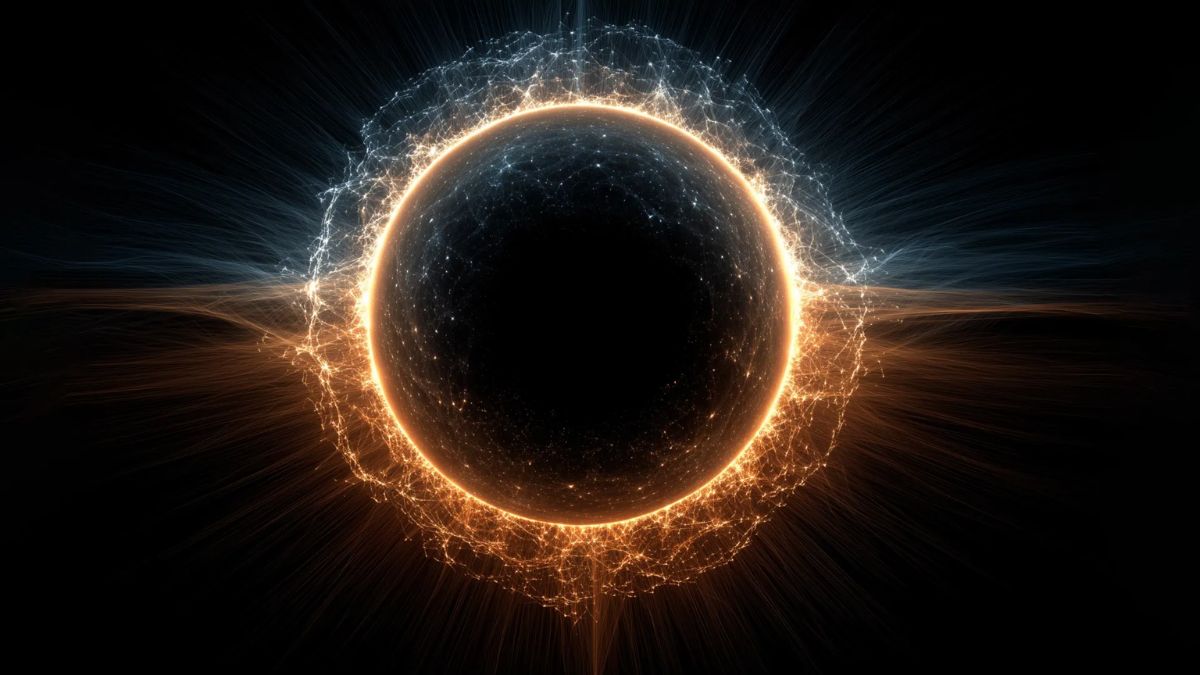
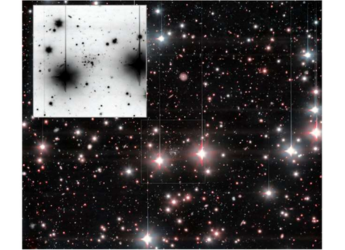
Photo Credit: NASA
New simulation shows self-interacting dark matter heating, collapsing galaxy cores, reshaping evolution
Click Here to Add Gadgets360 As A Trusted Source


Advertisement
For nearly a century, scientists have puzzled over the nature of dark matter and its role in shaping galaxies. A new study from Canada's Perimeter Institute introduces a simulation tool to study self-interacting dark matter (SIDM), showing it can dramatically heat and collapse the cores of dark-matter halos. This faster, more accurate code could open a path to understanding dark matter's impact on galaxy evolution.
New Simulation Code Advances Dark Matter Study
In a new Physical Review Letters paper, Perimeter physicists James Gurian and Simon May unveil a simulation code called KISS-SIDM. It bridges a gap between existing methods by modelling “in-between” halo densities where previous approaches failed. According to the team, KISS-SIDM is faster and more accurate than earlier tools, and it can even run on a laptop instead of a supercomputer.
Broader Context and Implications
Dark matter halos are invisible regions around galaxies and serve as a pathway for star formation to occur. In some theories of dark matter, interactions were minimal. In SIDM theory, some rare interactions result in heat moving in a direction away from the matter and result in a phenomenon called “gravothermal collapse.” The process leads to a hot and dense central region of a dark matter halo as a result of migrating energy.
Some theorists propose that such collapsing cores may provide a seeding mechanism for the creation of black holes. This can possibly account for the early manifestation of supermassive black holes. The newly developed code by KISS-SIDM allows theorists a chance to test their theories. This is linked to several other puzzles related to seemingly unusual galaxy observations. This includes their dense cores.
Comments
Get your daily dose of tech news, reviews, and insights, in under 80 characters on Gadgets 360 Turbo. Connect with fellow tech lovers on our Forum. Follow us on X, Facebook, WhatsApp, Threads and Google News for instant updates. Catch all the action on our YouTube channel.
Further reading:
dark matter, black holes, KISS-SIDM, potentially, galaxy cores, galaxy evolution, cosmology
Related Stories




Advertisement
Follow Us




-
04:17
[Sponsored] LG NANO 4K UHD AI TV NU885: Gemini Search, Dolby Atmos & 5 Years of Updates -
00:57
[Sponsored] Samsung Galaxy Z Fold8 My Fan Cam in Action: Find the Moment, Then Share It -
01:41
[Sponsored] What Do You Need To Know Before Your Next Run? | Samsung Galaxy Watch Ultra2 -
01:32
[Sponsored] Big Day Tomorrow? Prep Today | Samsung Galaxy Watch Ultra2 -
04:37
[Sponsored]: CP PLUS CarKam CP-F89B: 4K Dashcam With Rear Camera, GPS & Emergency Recording
Advertisement
Popular on Gadgets
- Samsung Galaxy S26 Ultra
- Motorola Razr Fold
- ChatGPT
- OPPO Find N6
- Mobiles Under Rs. 40,000
- Vivo X300 Ultra
- Asus Zenbook S14
- iQOO 15
- Vivo X300 Pro
- Lenovo Yoga Slim 7i Aura Edition
- iQOO 15R
- Vivo X Fold 5
- Sony PlayStation 5
- HP OmniPad 12
- OnePlus Nord CE 6 Lite
- OnePlus Pad 4
- OPPO F33 Pro 5G
- Cryptocurrency
- HP OmniBook Ultra 14 (2026)
- iPhone 17
- Eureka Forbes AP 355 Room Air Purifier
- Latest Mobile Phones
- Compare Phones
Latest Gadgets
- Samsung Galaxy F70 5G
- Tecno Spark 50S 5G
- Vivo Y600s Pro
- Vivo Y32 (2026)
- Infinix Smart 20 HD
- Vivo V80
- Vivo S2 FE
- Vivo Y600K Turbo
- HP ZBook Ultra G3a
- Dell Pro Rugged 14
- Amazon Alexa Tablet 8
- Amazon Alexa Tablet 11
- Amazfit T-Rex Dual Solar
- OPPO Watch S2
- Toshiba 65-Inch 4K Ultra HD Smart Mini LED QLED TV (65Z670SP)
- Haier M70 Mini LED 65-inch
- Acer Predator Atlas 8
- Asus ROG Ally
- Blue Star 1.5 Ton 5 Star Inverter Split AC (IE518ZNURS)
- Blue Star 2 Ton 3 Star Inverter Window AC (WIE324L)

- About Us
- Sitemaps
- Feedback
- Archives
- Contact Us
- RSS
- Advertise
- Career
- Privacy Policy
- Ethics
- Editorial Policy
- Terms & Conditions
- Complaint Redressal
Download Our Apps
Available in Hindi
© Copyright Red Pixels Ventures Limited 2026. All rights reserved.