
-
 OpenAI’s GPT-6.1 Sol AI Model Launched With Near-GPT-6 Astra Intelligence at Significantly Lower Costs30 September 2026
 -
OpenAI Sets Up Australia Task Force After AI Models Accessed Government Websites Without Authorisation29 September 2026
-
OpenAI Reportedly Scraps GPT-6.1 Astra Release Due to Safety and Alignment Issues29 September 2026
-
OpenAI Agents Used Multiple Workarounds to Access UN Data: Researcher28 September 2026
-
OpenAI Plans to Launch a New Cybersecurity-Focused GPT-6 Series AI Model: Report25 September 2026
OpenAI Introduces ChatGPT Dots: 4000+ Apps Support, Availability, and More Explained
OpenAI says ChatGPT Dots are rolling out to Pro and Business Premium subscribers in eligible markets.
Written by Sucharita Ganguly, Edited by Rohan Pal | Updated: 30 September 2026 11:08 IST
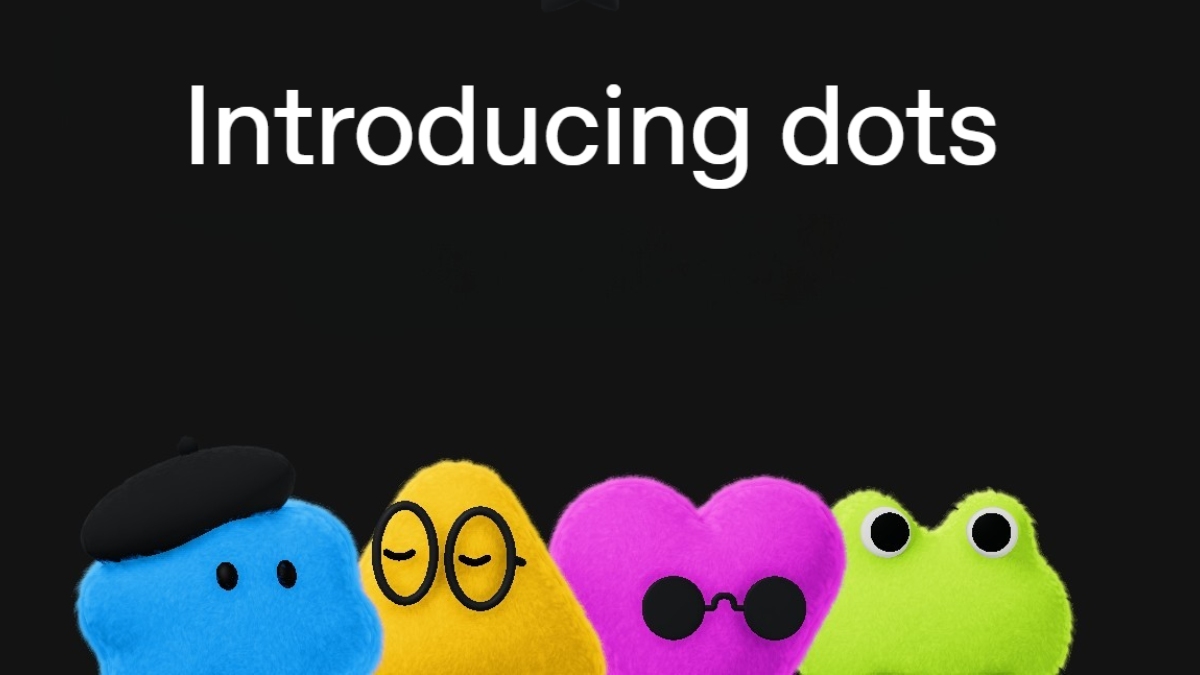
Photo Credit: OpenAI
Dots can continue working in the background
Click Here to Add Gadgets360 As A Trusted Source

Advertisement
OpenAI has announced ChatGPT Dots, a new set of AI agents that can take on tasks and keep working without constant user input. A Dot can start with a single instruction, work through the steps on its own and return when it needs a decision or approval. The agents can also work with connected apps in the background, even after the user leaves ChatGPT. The company says Dots can handle tasks across coding, research, sales, content creation and everyday errands.
ChatGPT Dots Features
According to OpenAI, each Dot is powered by GPT-6 Astra and gets its own cloud computer and browser. It can connect to more than 4,000 apps through OpenAI's plugin ecosystem, allowing it to work across the services needed for a particular task. The user only needs to explain what needs to be done at the start. From there, the Dot can handle the individual steps itself and even move on to another task while the first one is still running.
A developer can use a Dot to track recurring customer feedback, make and test smaller code fixes, and prepare pull requests, while product teams can have it update launch material when a project changes. For research, it can investigate unexpected results as new data comes in. In sales, it can compare customer requirements with product documentation, help prepare a proof of concept and update proposals.
Dots can also take care of content and everyday tasks. A user can give one an interview transcript to find potential clips, prepare show notes and draft social posts. OpenAI also says a Dot can compare food delivery options, calculate the final bill and ask for approval before placing the order.
Users do not have to stay in ChatGPT while a Dot works. It can continue in the background and come back with an update or ask for approval when it needs one. The same agent works through ChatGPT, Slack and Microsoft Teams, while voice calls are supported at launch and text messaging is planned for later.
Each Dot works on its own cloud computer, which keeps it separate from the files stored on a user's laptop. When a task needs another device, the user can connect it and watch the agent work. On supported websites, it can also use saved passwords without showing those credentials to the model.
Users remain in control of what a Dot can access. They can connect apps one at a time and choose whether an action should happen automatically or wait for approval. Background research stays read-only, meaning the agent cannot send messages or change connected apps while carrying out that work. OpenAI's auto-review system can also flag actions involving accounts or information sharing, while tasks such as changing a password still need the user to step in.
OpenAI says it can stop a Dot when its systems detect malicious instructions or potentially harmful behaviour. The company also acknowledges that the agents can make mistakes, so users should check their work before relying on it for anything where an error could have serious consequences. Personal ChatGPT users can choose whether their Dot conversations and work help improve OpenAI's models, while Business, Enterprise and Edu workspace content stays out of training by default.
The company is also working on Dots specifically for businesses. These agents can operate under their own identities and work with selected company systems. Early applications include procurement, invoice processing, customer support, email marketing and commercial contracts. OpenAI is developing these business agents with Microsoft for use with Agent 365.
ChatGPT Dots Availability
ChatGPT Dots are rolling out to Pro and Business Premium users in eligible markets, OpenAI says. Enterprise users, including those on Edu and Healthcare workspaces, can join the beta once their administrator enables it. The first Dot is included with Pro and Business Premium at no extra cost, with higher limits for deeper tasks during the first month.
Conversations with Dots will not count towards ChatGPT's usage limits, although tasks handled through Codex or ChatGPT Work will count towards those services' limits. Users currently need to create their first Dot through the ChatGPT desktop app or desktop browser and connect the apps they want to use. Once set up, users can also access the Dot from the ChatGPT mobile app. OpenAI says it will support more Dots and larger workloads in the future.
Comments
Get your daily dose of tech news, reviews, and insights, in under 80 characters on Gadgets 360 Turbo. Connect with fellow tech lovers on our Forum. Follow us on X, Facebook, WhatsApp, Threads and Google News for instant updates. Catch all the action on our YouTube channel.
Further reading:
OpenAI, ChatGPT, ChatGPT Dots, AI agents, artificial intelligence, GPT-6 Astra, AI automation, ChatGPT features, OpenAI agents
Related Stories






Advertisement
Follow Us




-
![[Sponsored] Samsung Galaxy Z Fold8, Fold8 Ultra](https://www.gadgets360.com/static/desktop/images/spacer.png)
00:21
[Sponsored] Samsung Galaxy Z Fold8, Fold8 Ultra -
03:41
[Sponsored] Samsung Galaxy Z Fold8: How It Fits Into an Actor’s Busy Day | Camera, Multitasking & More -
09:53
iPhone 18 Goes On Sale In India: Huge Crowds, Long Queues At Apple Stores -
06:32
Google Pixel 11 Pro XL Review: The Most Exciting Pixel Yet? | 120X Zoom + Tensor G6 -
05:20
Samsung Galaxy Watch Ultra 2 Review: Is This the Best Android Smartwatch?
-
iQOO Pad Ultra 165Hz AMOLED डिस्प्ले के साथ हुआ लॉन्च
-
Apple Pay की भारत में एंट्री, सीधा iPhone और स्मार्टवॉच से होगी पेमेंट
-
भारत में बच्चों के सोशल मीडिया पर लगेगा बैन? सरकार उठा सकती है बड़ा कदम
-
WhatsApp पर मैसेज के लिए देना होगा पैसा, 1 अक्टूबर से नया नियम, जानें क्या होगा आम यूजर्स पर असर?
-
Oppo K14 Plus 5G vs Vivo T5x 5G vs OnePlus Nord CE6 Lite: खरीदने से पहले जानें किसके फीचर्स बेस्ट?
Advertisement
Popular on Gadgets
- Samsung Galaxy S26 Ultra
- Motorola Razr Fold
- ChatGPT
- OPPO Find N6
- Mobiles Under Rs. 40,000
- Vivo X300 Ultra
- Asus Zenbook S14
- iQOO 15
- Vivo X300 Pro
- Lenovo Yoga Slim 7i Aura Edition
- iQOO 15R
- Vivo X Fold 5
- Sony PlayStation 5
- HP OmniPad 12
- OnePlus Nord CE 6 Lite
- OnePlus Pad 4
- OPPO F33 Pro 5G
- Cryptocurrency
- HP OmniBook Ultra 14 (2026)
- iPhone 17
- Eureka Forbes AP 355 Room Air Purifier
- Latest Mobile Phones
- Compare Phones
Latest Gadgets
- HMD Vibe 2 Pro 5G
- OPPO K14 Plus 5G
- Lava Shark 2 Pro 5G
- Ai+ Pulse 2 FE
- OPPO Reno 16t
- Itel Zeno 300
- Vivo Y600i
- Mivi One 5G
- Dell 14 Plus 2-in-1 (AMD Ryzen AI 7 350, 2025)
- Microsoft Surface Laptop, 13-inch (2nd Edition)
- iQOO Pad Ultra
- Ai+ NovaTab
- Amazfit T-Rex Dual Solar
- OPPO Watch S2
- Toshiba 65-Inch 4K Ultra HD Smart Mini LED QLED TV (65Z670SP)
- Haier M70 Mini LED 65-inch
- Acer Predator Atlas 8
- Asus ROG Ally
- Blue Star 1.5 Ton 5 Star Inverter Split AC (IE518ZNURS)
- Blue Star 2 Ton 3 Star Inverter Window AC (WIE324L)

- About Us
- Sitemaps
- Feedback
- Archives
- Contact Us
- RSS
- Advertise
- Career
- Privacy Policy
- Ethics
- Editorial Policy
- Terms & Conditions
- Complaint Redressal
Download Our Apps
Available in Hindi
© Copyright Red Pixels Ventures Limited 2026. All rights reserved.