- Home
- Mobiles
- Mobiles News
- Your Smartphone Camera Could Soon Capture More Light, Snap Better Photos With This New Tech
Your Smartphone Camera Could Soon Capture More Light, Snap Better Photos With This New Tech
If HoloCoder is implemented, the additional light could potentially make a noticeable difference to low-light photography and video recording.
Written by Shaurya Tomer, Edited by Rohan Pal | Updated: 13 November 2026 12:36 IST
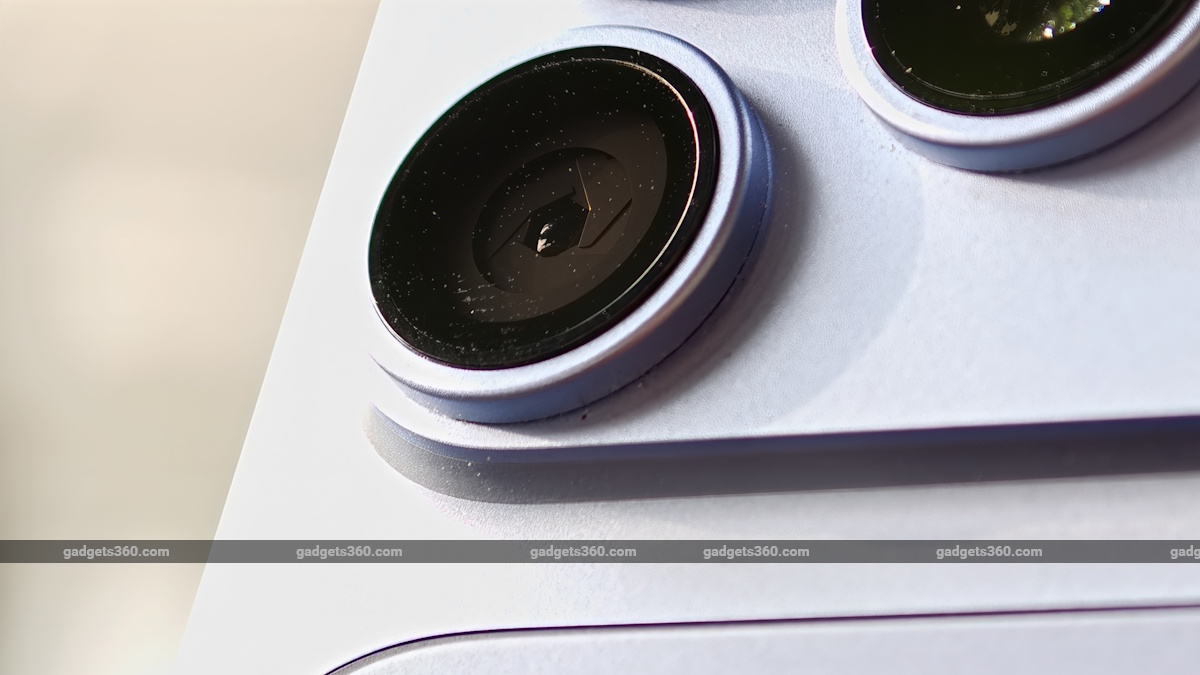
Apple's iPhone 18 Pro Max debuts variable aperture technology for the first time
Click Here to Add Gadgets360 As A Trusted Source

Advertisement
Smartphone cameras have evolved considerably since their inception, with manufacturers continually finding new ways to improve image quality without increasing camera module size. Recent developments have pushed the boundaries of mobile photography, with technologies such as LOFIC (Lateral Overflow Integration Capacitor) emerging as one way to improve dynamic range. Now, a new optical technology could offer another significant upgrade. Called HoloCoder, it may potentially improve low-light photography, preserve details in challenging lighting conditions, and even capture depth information.
HoloCoder Technology Could Help Smartphone Cameras
A key component in most smartphone cameras is the Bayer filter, a colour-filter array that sits above the image sensor and helps it capture red, green and blue information to produce colour photographs. However, this approach also means that a considerable amount of incoming light never reaches the sensor. According to a report by WIRED, the filter can absorb and waste around 60 percent of the light before it reaches the sensor.
For instance, a red pixel only needs red light, while the filter blocks the green and blue wavelengths.
Boston-based optics company Metalenz has now acquired Israeli startup PxE Holographic Imaging, which has developed an alternative called HoloCoder. The technology reportedly uses a microscopic optical layer placed directly on top of an image sensor. As a result, the structure diffracts and redirects light waves towards the sensor's pixels, instead of absorbing unwanted light.
Metalenz reportedly claims this approach could let a camera sensor collect up to 2.5 times more light. If implemented in smartphones, the additional light could potentially make a noticeable difference to low-light photography and video recording. It is also believed to help cameras retain more detail in high-contrast scenes.
These include sunsets or selfies taken against a bright window where conventional sensors can struggle to preserve both highlights and shadows.
Another notable benefit could be the ability to capture 3D depth information alongside colour data. For comparison, typical smartphone cameras rely on secondary cameras, dedicated depth sensors or software-based processing to estimate the distance between the camera and a subject.
HoloCoder, on the other hand, is claimed to be capable of combining light and depth sensing in a single optical layer. This, as per the company, can reduce the need for some of these additional components, allowing manufacturers to simplify camera hardware while potentially saving space and processing resources.
Metalenz CEO and co-founder Rob Devlin told WIRED that improving smartphone cameras through software has its limits when the sensor itself fails to capture enough information. The executive pointed out that companies such as Apple, Samsung and Google continue to invest heavily in computational photography, but software cannot fully recover light information that has already been discarded by the camera's colour filter.
In addition to HoloCoder, Metalenz is also reportedly working with Qualcomm on Polar ID, a facial biometric authentication system for Android that uses polarisation data. The technology is intended to compete with Apple's Face ID and is expected to reach consumer devices by the end of 2027. HoloCoder, meanwhile, has yet to be made available.
Comments
Get your daily dose of tech news, reviews, and insights, in under 80 characters on Gadgets 360 Turbo. Connect with fellow tech lovers on our Forum. Follow us on X, Facebook, WhatsApp, Threads and Google News for instant updates. Catch all the action on our YouTube channel.
Further reading:
HoloCoder, smartphone cameras


Advertisement
Follow Us


-
 Best OLEVS Automatic & Chronograph Watches for Everyday and Formal Wear
-
Ergonomic & Stylish Leather Card Holders & Slim Wallets for Men Under ₹999
-
Best Seagate 2TB External Hard Drives: High-Speed Storage Tested
-
Best Citizen Watches for Men: Precision, Style, and Eco-Drive Power
-
Best Flite Footwear for Everyday Comfort: Sandals, Slippers & Casuals
Advertisement
Popular on Gadgets
- Samsung Galaxy S26 Ultra
- Motorola Razr Fold
- ChatGPT
- OPPO Find N6
- Mobiles Under Rs. 40,000
- Vivo X300 Ultra
- Asus Zenbook S14
- iQOO 15
- Vivo X300 Pro
- Lenovo Yoga Slim 7i Aura Edition
- iQOO 15R
- Vivo X Fold 5
- Sony PlayStation 5
- HP OmniPad 12
- OnePlus Nord CE 6 Lite
- OnePlus Pad 4
- OPPO F33 Pro 5G
- Cryptocurrency
- HP OmniBook Ultra 14 (2026)
- iPhone 17
- Eureka Forbes AP 355 Room Air Purifier
- Latest Mobile Phones
- Compare Phones
Latest Gadgets
- Vivo Y6k
- Karbonn Rebel
- Karbonn Rebel Pro
- OnePlus Turbo 6Vs
- Redmi M100 Pro
- OnePlus Ace 7 Pro
- OnePlus Ace 7
- Samsung W27
- Dell 14S (2026)
- HP ProBook 4 G2iS 14
- Infinix Xpad 30
- iPad mini (2026)
- Moto Watch 2 Fit
- Pebble Qore 2
- Toshiba 65-Inch 4K Ultra HD Smart Mini LED QLED TV (65Z670SP)
- Haier M70 Mini LED 65-inch
- Acer Predator Atlas 8
- Asus ROG Ally
- Blue Star 1.5 Ton 5 Star Inverter Split AC (IE518ZNURS)
- Blue Star 2 Ton 3 Star Inverter Window AC (WIE324L)

- About Us
- Sitemaps
- Feedback
- Archives
- Contact Us
- RSS
- Advertise
- Career
- Privacy Policy
- Ethics
- Editorial Policy
- Terms & Conditions
- Complaint Redressal
Download Our Apps
Available in Hindi
© Copyright Red Pixels Ventures Limited 2026. All rights reserved.