-
 Inside Chennairains.org and How Tech Helped Face Disaster27 December 2015
 -
Facebook Post Helps Identify Chennai Flood Victim's Body10 December 2015
-
What PM Modi Should Do With the Swachh Bharat Tax7 December 2015
-
PIB Regrets 'Merging' Images of PM Modi Visiting Flood-Hit Chennai9 December 2015
-
Chennai Rains: Skype Announces Free International Calls Into Tamil Nadu4 December 2015
- Home
- Science
- Science News
- Chennai Received More Rainfall on December 1 Than Any Day Since 1901: Nasa
Chennai Received More Rainfall on December 1 Than Any Day Since 1901: Nasa
By Press Trust of India | Updated: 9 December 2015 12:21 IST
Click Here to Add Gadgets360 As A Trusted Source

Advertisement
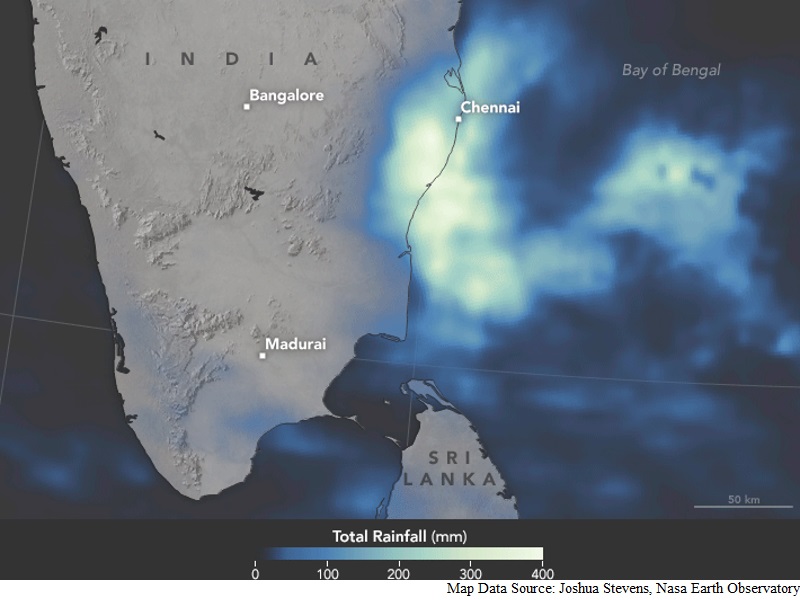
On December 1-2 flood-ravaged Chennai received more rainfall in 24 hours than it had seen on any day since 1901, according to Nasa.
The space agency Tuesday released an animated map that provides satellite-based estimates of rainfall over southeastern India on December 1-2, accumulating in 30-minute intervals.
The deluge followed a month of persistent monsoon rains that were already well above normal for Tamil Nadu, Nasa's Earth Observatory said in a blog post.
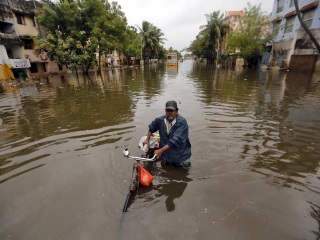
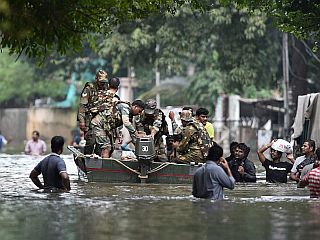
At least 250 people have died, several hundred have been critically injured, and thousands affected or displaced by the flooding that has ensued.
Nasa said the rainfall data come from the Integrated Multi-Satellite Retrievals for GPM (IMERG), a product of the Global Precipitation Measurement mission.
According to Hal Pierce, a scientist on the GPM team at Nasa's Goddard Space Flight Centre, the highest rainfall totals exceeded 500mm (20 inches) in an area just off the southeastern coast.
"Meteorologists in India and abroad attributed the rains to a super-charged northeast monsoon. In the winter, prevailing winds blow from northeast to southwest across the country, which tends to have a drying effect in most places, particularly inland," the blog post said.
"But those northeasterly winds also blow over the warm waters of the Bay of Bengal, where they evaporate a great deal of moisture from the sea and dump it over southern and eastern India. Coastal eastern India receives 50 to 60 percent of its yearly rainfall during this winter monsoon," it said.
Comments
Get your daily dose of tech news, reviews, and insights, in under 80 characters on Gadgets 360 Turbo. Connect with fellow tech lovers on our Forum. Follow us on X, Facebook, WhatsApp, Threads and Google News for instant updates. Catch all the action on our YouTube channel.
Related Stories



Advertisement
Follow Us




-
![[Sponsored] LG NANO 4K UHD AI TV NU885: Gemini Search, Dolby Atmos & 5 Years of Updates](https://www.gadgets360.com/static/desktop/images/spacer.png)
04:17
[Sponsored] LG NANO 4K UHD AI TV NU885: Gemini Search, Dolby Atmos & 5 Years of Updates -
00:57
[Sponsored] Samsung Galaxy Z Fold8 My Fan Cam in Action: Find the Moment, Then Share It -
01:41
[Sponsored] What Do You Need To Know Before Your Next Run? | Samsung Galaxy Watch Ultra2 -
01:32
[Sponsored] Big Day Tomorrow? Prep Today | Samsung Galaxy Watch Ultra2 -
04:37
[Sponsored]: CP PLUS CarKam CP-F89B: 4K Dashcam With Rear Camera, GPS & Emergency Recording
-
iPhone 16 आज भी Amazon सेल में मिल रहा ₹15 हजार से ज्यादा सस्ता
-
OnePlus 15 को Amazon Great Indian Festival Sale में खरीदें सस्ता
-
₹2250 सस्ता मिल रहा Motorola का 7000mAh बैटरी वाला फोन! Flipkart पर ऑफर
-
Flipkart Sale में ₹14000 सस्ता मिल रहा Vivo का 50MP कैमरा, 9020mAh बैटरी वाला फोन
-
Poco X8s जल्द हो सकता है लॉन्च, NBTC पर हुई लिस्टिंग
Advertisement
Popular on Gadgets
- Samsung Galaxy S26 Ultra
- Motorola Razr Fold
- ChatGPT
- OPPO Find N6
- Mobiles Under Rs. 40,000
- Vivo X300 Ultra
- Asus Zenbook S14
- iQOO 15
- Vivo X300 Pro
- Lenovo Yoga Slim 7i Aura Edition
- iQOO 15R
- Vivo X Fold 5
- Sony PlayStation 5
- HP OmniPad 12
- OnePlus Nord CE 6 Lite
- OnePlus Pad 4
- OPPO F33 Pro 5G
- Cryptocurrency
- HP OmniBook Ultra 14 (2026)
- iPhone 17
- Eureka Forbes AP 355 Room Air Purifier
- Latest Mobile Phones
- Compare Phones
Latest Gadgets
- Samsung Galaxy F70 5G
- Tecno Spark 50S 5G
- Vivo Y600s Pro
- Vivo Y32 (2026)
- Infinix Smart 20 HD
- Vivo V80
- Vivo S2 FE
- Vivo Y600K Turbo
- HP ZBook Ultra G3a
- Dell Pro Rugged 14
- Amazon Alexa Tablet 8
- Amazon Alexa Tablet 11
- Amazfit T-Rex Dual Solar
- OPPO Watch S2
- Toshiba 65-Inch 4K Ultra HD Smart Mini LED QLED TV (65Z670SP)
- Haier M70 Mini LED 65-inch
- Acer Predator Atlas 8
- Asus ROG Ally
- Blue Star 1.5 Ton 5 Star Inverter Split AC (IE518ZNURS)
- Blue Star 2 Ton 3 Star Inverter Window AC (WIE324L)

- About Us
- Sitemaps
- Feedback
- Archives
- Contact Us
- RSS
- Advertise
- Career
- Privacy Policy
- Ethics
- Editorial Policy
- Terms & Conditions
- Complaint Redressal
Download Our Apps
Available in Hindi
© Copyright Red Pixels Ventures Limited 2026. All rights reserved.