-
 F1 25, Hunt: Showdown 1896 and Earth Defense Force: World Brothers 2 Join PS Plus in October1 October 2026
 -
Starlink Constellation Crosses 10,600 Satellites After Latest SpaceX Launch12 June 2026
-
Sahara Meteorite May Be Fragment of a Lost Moon-Sized World, Study Suggests5 June 2026
-
Sun Unleashes Triple Solar Flare Blast, Triggering G3 Geomagnetic Storm Alert4 June 2026
-
Warhorse Studios Announces Open-World Middle-Earth RPG and New Kingdom Come Adventure21 May 2026
- Home
- Science
- Science News
- Meteorite Bashing Changed Earth's Chemistry: Study
Meteorite Bashing Changed Earth's Chemistry: Study
By Agence France-Presse | Updated: 24 September 2015 16:46 IST
Click Here to Add Gadgets360 As A Trusted Source

Advertisement
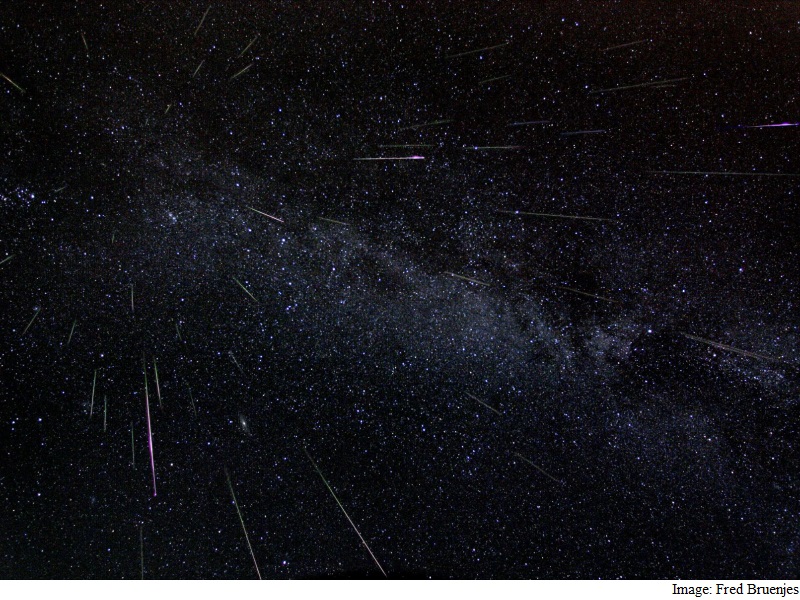
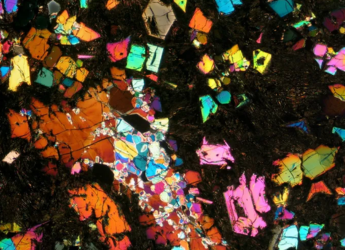
In its early life, Earth suffered a meteorite pummelling that lasted 100 million years and may have changed its chemical makeup forever, researchers said Wednesday.
The steady stream of Earth-shattering collisions shortly after the birth of our solar system, ripped up the planet's surface and altered the very composition of the rock we call home.
At the same time, those ancient meteorites called chondrites were adding to the Earth's bulk, which like all planets form through a process of accretion where material is pulled in by gravity, according to the study published in the journal Nature Communications.
While the Earth lost chunks as the meteorites crashed into it, it nevertheless experienced a net gain in mass during this violent period.
The finding is the latest in a long scientific quest to resolve a puzzle over the makeup of meteorites building blocks of early Earth and the chemical signature of our present-day planet.
Embryonic Earth some 4.7 billion years ago, the new research suggests, did in fact have the same chemical mix as at least one type of chondrite (called enstatite).
But the extended bombardment changed the chemical signature of the planet itself.
"Repeated episodes of production and erosion of the terrestrial crust removed large quantities of silicon, leaving the relative excess of magnesium we observe today," the researchers concluded.
The crust is the outermost layer of Earth, a thin layer over the mantle, which itself covers the planet's outer and inner core.
If scientists could extract samples from its deep layers, they might have a better idea of what a proto-Earth was made of.
But they have no choice but to rely on other evidence including meteorites.
For the study, Asmaa Boujibar and colleagues at France's National Centre for Scientific Research (CNRS) used lab experiments and modelling to test their theory.
They reproduced the conditions under which Earth's primitive crust accumulated, by melting chondrites under various pressures.
The results, the study concludes, explains the makeup of the molten rock that eventually cooled into Earth's crust.
Comments
Get your daily dose of tech news, reviews, and insights, in under 80 characters on Gadgets 360 Turbo. Connect with fellow tech lovers on our Forum. Follow us on X, Facebook, WhatsApp, Threads and Google News for instant updates. Catch all the action on our YouTube channel.
Related Stories




Advertisement
Follow Us




-
![[Sponsored] LG NANO 4K UHD AI TV NU885: Gemini Search, Dolby Atmos & 5 Years of Updates](https://www.gadgets360.com/static/desktop/images/spacer.png)
04:17
[Sponsored] LG NANO 4K UHD AI TV NU885: Gemini Search, Dolby Atmos & 5 Years of Updates -
00:57
[Sponsored] Samsung Galaxy Z Fold8 My Fan Cam in Action: Find the Moment, Then Share It -
01:41
[Sponsored] What Do You Need To Know Before Your Next Run? | Samsung Galaxy Watch Ultra2 -
01:32
[Sponsored] Big Day Tomorrow? Prep Today | Samsung Galaxy Watch Ultra2 -
04:37
[Sponsored]: CP PLUS CarKam CP-F89B: 4K Dashcam With Rear Camera, GPS & Emergency Recording
-
iPhone 16 आज भी Amazon सेल में मिल रहा ₹15 हजार से ज्यादा सस्ता
-
OnePlus 15 को Amazon Great Indian Festival Sale में खरीदें सस्ता
-
₹2250 सस्ता मिल रहा Motorola का 7000mAh बैटरी वाला फोन! Flipkart पर ऑफर
-
iPhone Duo में होगी 4,800mAh से ज्यादा की बैटरी, जल्द शुरू होगी बिक्री
-
HMD Vibe 2 Max बजट फोन लॉन्च होगा 108MP कैमरा, 6,000mAh बैटरी फीचर के साथ!
Advertisement
Popular on Gadgets
- Samsung Galaxy S26 Ultra
- Motorola Razr Fold
- ChatGPT
- OPPO Find N6
- Mobiles Under Rs. 40,000
- Vivo X300 Ultra
- Asus Zenbook S14
- iQOO 15
- Vivo X300 Pro
- Lenovo Yoga Slim 7i Aura Edition
- iQOO 15R
- Vivo X Fold 5
- Sony PlayStation 5
- HP OmniPad 12
- OnePlus Nord CE 6 Lite
- OnePlus Pad 4
- OPPO F33 Pro 5G
- Cryptocurrency
- HP OmniBook Ultra 14 (2026)
- iPhone 17
- Eureka Forbes AP 355 Room Air Purifier
- Latest Mobile Phones
- Compare Phones
Latest Gadgets
- Samsung Galaxy F70 5G
- Tecno Spark 50S 5G
- Vivo Y600s Pro
- Vivo Y32 (2026)
- Infinix Smart 20 HD
- Vivo V80
- Vivo S2 FE
- Vivo Y600K Turbo
- HP ZBook Ultra G3a
- Dell Pro Rugged 14
- Amazon Alexa Tablet 8
- Amazon Alexa Tablet 11
- Amazfit T-Rex Dual Solar
- OPPO Watch S2
- Toshiba 65-Inch 4K Ultra HD Smart Mini LED QLED TV (65Z670SP)
- Haier M70 Mini LED 65-inch
- Acer Predator Atlas 8
- Asus ROG Ally
- Blue Star 1.5 Ton 5 Star Inverter Split AC (IE518ZNURS)
- Blue Star 2 Ton 3 Star Inverter Window AC (WIE324L)

- About Us
- Sitemaps
- Feedback
- Archives
- Contact Us
- RSS
- Advertise
- Career
- Privacy Policy
- Ethics
- Editorial Policy
- Terms & Conditions
- Complaint Redressal
Download Our Apps
Available in Hindi
© Copyright Red Pixels Ventures Limited 2026. All rights reserved.