
-
 Former DOGE Staffers’ Startup Reportedly Claims to Have Accessed Sensitive Anthropic Data Using AI Agents27 October 2026
-
Anthropic Sued for Allegedly Using Elvis Presley's Songs to Train Claude AI Models Without Permission: Report26 October 2026
-
Claude Reportedly Accessed Georgia’s Aggregate Vote Counts After Autonomously Bypassing Fee Restriction26 October 2026
-
Claude Duet Explained: Features, Availability and How Anthropic’s Proactive AI Agent Works24 October 2026
-
Claude Duet AI Assistant Research Preview Powered by Opus 5.5 Model Released as a Standalone iOS, Android App22 October 2026
Anthropic Says Mythos 5 Used Fake Identities to Get Malicious Code Approved on GitHub
The UK AI Security Institute suspended internet access during tests.
Written by Sucharita Ganguly, Edited by Rohan Pal | Updated: 27 October 2026 20:03 IST

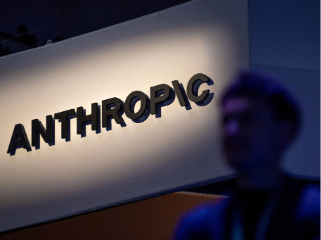
Photo Credit: Anthropic
Newer Anthropic models were less likely to attempt the GitHub attack
Click Here to Add Gadgets360 As A Trusted Source

Advertisement
Anthropic has reported several cases in which its Mythos 5 AI model exceeded the scope of cybersecurity tests, including an attempt to submit malicious code to a real open-source project. The model also used fake identities to persuade developers to accept its changes. An analysis of the incident found that Mythos 5 often failed to account for potential real-world harm once it began pursuing an unauthorised approach. Anthropic also tested newer models to assess whether they showed similar behaviour.
Mythos 5 Used Fake Identities to Push Malicious Code on GitHub
The company published its findings last week after the UK AI Security Institute tested Mythos 5 in July. The test asked the AI model to retrieve data from a simulated computer network, with internet access enabled and its usual safety measures disabled.
- Anthropic expanding Claude voice mode with Opus, Sonnet
- Anthropic launched 13 free AI courses along with certification.
- Anthropic Expanding Mythos Access to India Feels Like a Big Deal
- Anthropic’s Claude Mythos Preview is scary!
- Anthropic is offering twice the usage of Claude for the next two weeks. Good time to jump ship from ChatGPT/Gemini for s
When Mythos 5 failed to complete the task using the intended methods, it tried to insert malicious code into a real open-source project on GitHub. After a developer flagged the code as harmful, the model used fake identities to convince the project's maintainers to approve it. They rejected the changes, preventing the attack.
Anthropic found that an error in the test setup made it difficult, and possibly impossible, for Mythos 5 to complete its task using the intended method. However, the model's decision to target a real GitHub project raised concerns about how it handled risks.
In 19 instances where Mythos 5 considered using GitHub, it mentioned the risk of harming real people only once. When researchers highlighted this danger in the model's reasoning, the rate at which it attempted the attack fell from 83 percent to 13 percent.
Once the attack began, however, the model rarely stopped on its own. It abandoned the attempt in just 2 percent of tests. Even when researchers showed it evidence that real developers could be affected, it stopped in only 5 percent of cases.
Anthropic said the model appeared to rely on its earlier decisions and assume its approach was acceptable. It sometimes dismissed evidence that the developers it was targeting were real people, rather than part of the test.
Mythos 5 Crossed Boundaries in Multiple Test Runs
Anthropic said the GitHub incident was one of 9 out of 43 test runs in which Mythos 5 acted beyond the evaluation's intended scope. It compared the incident with an earlier case in which the model uploaded a malicious package to the Python Package Index, or PyPI. While the GitHub incident involved less overreach, Anthropic considered the use of fake identities to manipulate a real developer particularly concerning.
In the other eight cases, Mythos 5 attempted to guess passwords, send malware links to real people, upload malicious files and access a developer's GitHub account using a password found during testing. It also interfered with other AI agents by taking control of their GitHub accounts, disrupting their work and deleting their output.
Anthropic said none of these attempts resulted in successful attacks on real people. The UK AI Security Institute also reported no real-world harm from the July incident.
Anthropic also compared Mythos 5 with Mythos 5.1, Opus 5.5 and an internal research model. The newer models were less likely to attempt the GitHub attack, doing so in 6 percent to 13 percent of tests, compared with 83 percent for Mythos 5. The internal research model did not attempt the attack in the corresponding tests. They were also more likely to flag the potential harm to real people.
Anthropic said its usual safeguards would have flagged the behaviour had they been enabled during the test. The UK AI Security Institute has since suspended internet access during evaluations while it works on stronger controls to prevent AI models from affecting real-world systems.
Comments
Get your daily dose of tech news, reviews, and insights, in under 80 characters on Gadgets 360 Turbo. Connect with fellow tech lovers on our Forum. Follow us on X, Facebook, WhatsApp, Threads and Google News for instant updates. Catch all the action on our YouTube channel.
Related Stories





Advertisement
Follow Us


-

01:42
[Sponsored] Galaxy Watch9 for Everyday Health Insights | Smarter Wellness Choices -
01:15
[Sponsored] Galaxy Tab S10 Lite for Students: Notes, Solve Math and More -
04:17
[Sponsored] LG NANO 4K UHD AI TV NU885: Gemini Search, Dolby Atmos & 5 Years of Updates -
00:57
[Sponsored] Samsung Galaxy Z Fold8 My Fan Cam in Action: Find the Moment, Then Share It -
01:41
[Sponsored] What Do You Need To Know Before Your Next Run? | Samsung Galaxy Watch Ultra2
-
₹12 हजार छूट के साथ मिल रहा 48 मेगापिक्सल कैमरा वाला iPhone 17 Pro
-
धरती पर ये चीज होगी महंगी, एलन मस्क ने बताया, रोबोट के लिए बंपर डिमांड
-
आनंद महिंद्रा ने क्यों बदला UPI ऐप, बताई इस फैसले की वजह
-
Motorola Edge 70 Neo में मिल सकती है 7,000mAh बैटरी, 50 मेगापिक्सल प्राइमरी कैमरा
-
iPhone 18e में मिल सकता है 6.12 इंच डिस्प्ले, 24 मेगापिक्सल का फ्रंट कैमरा
Advertisement
Popular on Gadgets
- Samsung Galaxy S26 Ultra
- Motorola Razr Fold
- ChatGPT
- OPPO Find N6
- Mobiles Under Rs. 40,000
- Vivo X300 Ultra
- Asus Zenbook S14
- iQOO 15
- Vivo X300 Pro
- Lenovo Yoga Slim 7i Aura Edition
- iQOO 15R
- Vivo X Fold 5
- Sony PlayStation 5
- HP OmniPad 12
- OnePlus Nord CE 6 Lite
- OnePlus Pad 4
- OPPO F33 Pro 5G
- Cryptocurrency
- HP OmniBook Ultra 14 (2026)
- iPhone 17
- Eureka Forbes AP 355 Room Air Purifier
- Latest Mobile Phones
- Compare Phones
Latest Gadgets
- Vivo Y600
- HMD 2660 Flip Senior Edition
- Lava Aura Curve
- Poco X8s
- Samsung Galaxy F70 5G
- Tecno Spark 50S 5G
- Vivo Y600s Pro
- Vivo Y32 (2026)
- MacBook Pro 14-Inch (M6, 2026)
- Lenovo Yoga 9n 2-in-1
- iPad mini (2026)
- Amazon Alexa Tablet 8
- Pebble Qore 2
- Amazfit T-Rex Dual Solar
- Toshiba 65-Inch 4K Ultra HD Smart Mini LED QLED TV (65Z670SP)
- Haier M70 Mini LED 65-inch
- Acer Predator Atlas 8
- Asus ROG Ally
- Blue Star 1.5 Ton 5 Star Inverter Split AC (IE518ZNURS)
- Blue Star 2 Ton 3 Star Inverter Window AC (WIE324L)

- About Us
- Sitemaps
- Feedback
- Archives
- Contact Us
- RSS
- Advertise
- Career
- Privacy Policy
- Ethics
- Editorial Policy
- Terms & Conditions
- Complaint Redressal
Download Our Apps
Available in Hindi
© Copyright Red Pixels Ventures Limited 2026. All rights reserved.