Meta Unveils Muse Spark 1.1 AI Model With 1 Million-Token Context Window, Model API Preview
Muse Spark 1.1 is available to developers through the new Meta Model API that is now in public preview.
Written by Shaurya Tomer, Edited by David Delima | Updated: 10 July 2026 11:56 IST
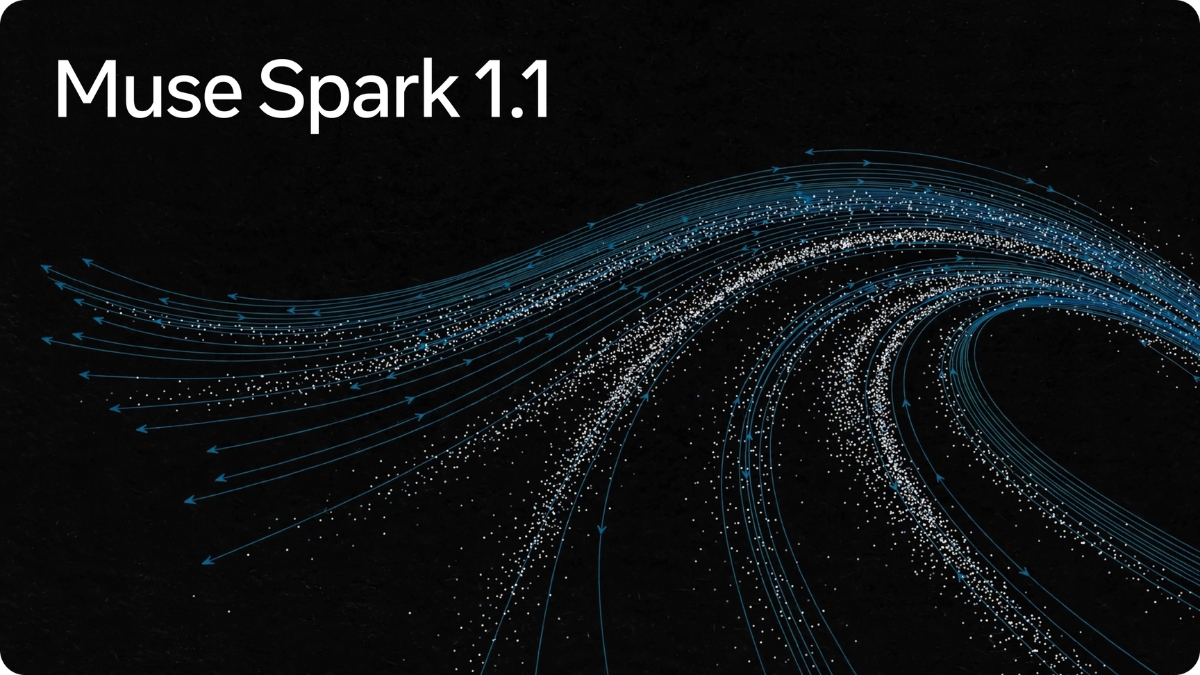
Photo Credit: Meta
A notable upgrade claimed by Meta is its one million-token context window
Click Here to Add Gadgets360 As A Trusted Source
Advertisement
Meta Platforms on Thursday announced Muse Spark 1.1 as its latest multimodal reasoning model designed for agentic AI tasks. The company claims it brings significant improvements over its predecessor when it comes to tool use, coding, computer interaction, and multimodal reasoning. Developed by Meta Superintelligence Labs, the AI model supports a context window of up to one million tokens. Alongside, Meta also released a public preview of the new Meta Model API for developers.
Muse Spark 1.1 Available to Developers via Meta Model API
The company says that Muse Spark 1.1 is available to developers via the new Meta Model API that is now in public preview. It is claimed to be designed to perform complex agentic tasks that require planning, reasoning, and coordination across multiple applications and external services. The AI model can generalise to new native tools, Model Context Protocol (MCP) servers, and custom skills without any additional training, Meta said in a blog post.
The company highlighted the improvements in task orchestration, with Muse Spark 1.1 being capable of serving as a primary agent that gathers context, formulates plans, and delegates work to multiple subagents running in parallel. Compared to the original Muse Spark model, its architecture is claimed to deliver faster completion of projects while reducing end-to-end latency.
Meta is also touting Muse Spark's one million-token context window, which helps it manage long-term memory, improve information retrieval from previous conversations, and its ability to compress the context while retaining key details for future use.
Other areas of improvement include computer-use capabilities and coding. As per the company, Muse Spark 1.1 can navigate desktop apps, interact with unfamiliar software interfaces, and take a call on when tasks should be automated using scripts. It also promises better performance during enterprise-scale software engineering tasks like debugging large codebases, implementing new features, executing large-scale code migrations, and building complete web apps. Meta claimed that its developers are already internally using the model for software development and AI research workflows.
Benchmark results shared by Meta show its competitiveness against other AI models across several industry evaluations. The model is claimed to have achieved an MCP Atlas score of 88.1, JobBench score of 54.7, Humanity's Last Exam score of 62.1, and Finance Agent v2 score of 57.2. On coding benchmarks, it recorded 80.0 on Terminal-Bench 2.1 and 53.3 on DeepSWE 1.1.
On the security front, Meta claims to have conducted safety evaluations under its Advanced AI Scaling Framework before deployment. It is said to have remained within acceptable threshold margins across chemical, biological, cybersecurity, and loss-of-control risk categories. Further, the AI model is claimed to have demonstrated improved resistance to jailbreak attempts, prompt injection attacks, and hallucination compared to the original model.
Comments
Get your daily dose of tech news, reviews, and insights, in under 80 characters on Gadgets 360 Turbo. Connect with fellow tech lovers on our Forum. Follow us on X, Facebook, WhatsApp, Threads and Google News for instant updates. Catch all the action on our YouTube channel.


Advertisement
Follow Us




-
![[Sponsored]: CP PLUS CarKam CP-F89B: 4K Dashcam With Rear Camera, GPS & Emergency Recording](https://www.gadgets360.com/static/desktop/images/spacer.png)
04:37
[Sponsored]: CP PLUS CarKam CP-F89B: 4K Dashcam With Rear Camera, GPS & Emergency Recording -
04:23
[Partner Content] Your Phone Can Do WAY More Than You Think | OPPO ColorOS 16 -
01:59
Samsung Galaxy Z Fold8 Ultra: Unfold the Ultra Night -
03:24
Apple Pay Launches In India: Supported Devices, Cards And Payments Explained -
00:21
[Sponsored] Samsung Galaxy Z Fold8, Fold8 Ultra
-
Amazon Great Indian Festival Sale 2026: ₹40 हजार वाले फोन पर जबरदस्त छूट
-
Amazon Great Indian Festival: ₹51 हजार सस्ता मिल रहा Samsung फ्लैगशिप फोन
-
Flipkart Big Billion Days Sale 2026: iPhone 15 पर बंपर डील!
-
iQOO Neo 12 का लॉन्च अक्टूबर अंत में! 16GB रैम के साथ Geekbench पर लिस्ट
-
Amazon Great Indian Festival Sale 2026: ₹20 हजार वाले टॉप 5 स्मार्टफोन पर डिस्काउंट
Advertisement
Popular on Gadgets
- Samsung Galaxy S26 Ultra
- Motorola Razr Fold
- ChatGPT
- OPPO Find N6
- Mobiles Under Rs. 40,000
- Vivo X300 Ultra
- Asus Zenbook S14
- iQOO 15
- Vivo X300 Pro
- Lenovo Yoga Slim 7i Aura Edition
- iQOO 15R
- Vivo X Fold 5
- Sony PlayStation 5
- HP OmniPad 12
- OnePlus Nord CE 6 Lite
- OnePlus Pad 4
- OPPO F33 Pro 5G
- Cryptocurrency
- HP OmniBook Ultra 14 (2026)
- iPhone 17
- Eureka Forbes AP 355 Room Air Purifier
- Latest Mobile Phones
- Compare Phones
Latest Gadgets
- Vivo Y32 (2026)
- Infinix Smart 20 HD
- Vivo V80
- Vivo S2 FE
- Vivo Y600K Turbo
- Realme P4s Lite
- Vivo S60t
- OPPO F35 5G
- Lenovo ThinkBook 14x
- Dell 14 Plus 2-in-1 (AMD Ryzen AI 7 350, 2025)
- Samsung Galaxy Tab S12+
- Samsung Galaxy Tab S12 Ultra
- Amazfit T-Rex Dual Solar
- OPPO Watch S2
- Toshiba 65-Inch 4K Ultra HD Smart Mini LED QLED TV (65Z670SP)
- Haier M70 Mini LED 65-inch
- Acer Predator Atlas 8
- Asus ROG Ally
- Blue Star 1.5 Ton 5 Star Inverter Split AC (IE518ZNURS)
- Blue Star 2 Ton 3 Star Inverter Window AC (WIE324L)

- About Us
- Sitemaps
- Feedback
- Archives
- Contact Us
- RSS
- Advertise
- Career
- Privacy Policy
- Ethics
- Editorial Policy
- Terms & Conditions
- Complaint Redressal
Download Our Apps
Available in Hindi
© Copyright Red Pixels Ventures Limited 2026. All rights reserved.