
-
 Meta Agrees to Pay $18 Billion to Settle US Lawsuits Over Children's Social Media Addiction27 August 2026
 -
Starlink Constellation Crosses 10,600 Satellites After Latest SpaceX Launch12 June 2026
-
SpaceX Launches 24 More Starlink Satellites, Nears 10,500 in Orbit20 May 2026
-
Meghalaya Government Signs MoU With Starlink to Boost Connectivity in Region and Reduce Digital Divide1 April 2026
-
Bank of Baroda Mini Statement: How to Get Mini Statement Using Different Methods Online13 February 2026
- Home
- Internet
- Internet News
- Bihar turns to internet to make anganwadis work
Bihar turns to internet to make anganwadis work
By Indo-Asian News Service | Updated: 24 September 2012 15:49 IST
Click Here to Add Gadgets360 As A Trusted Source

Advertisement
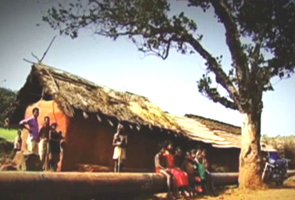
It was meant to be a scheme to wipe out hunger and malnutrition and ensure basic education for children. Under the Integrated Child Development Services launched in 1975, many states set up anganwadis that offered a range of services to pregnant women, young mothers and children in the under-five age group.
Running the anganwadi centres in Bihar is, however, emerging as quite a challenge. Less than half the centres in the state open daily; and of the children enrolled in them, less than half show up.
"In view of the poor functioning of the anganwadi centres, the government has initiated several measures to improve them," Social Welfare Minister Parveen Amanullah told in an interview.
"Only 46 percent anganwadi centres open daily; the presence of children at the centres that open is low. On an average, 24 of 46 children come to a centre," the minister said, citing two surveys, one of which was conducted under the aegis of Britain's Department for International Development.
The minister, however, expressed confidence that the functioning of the centres could be substantially improved in just a year's time: "We are committed to improving the functioning of anganwadi centres, and we have taken steps to ensure that there is a marked improvement in a year's time," she said.
Punitive action has been taken against officials found wanting in the discharge of their duties: 1,593 anganwadi sevikas (workers, mostly women) have been relieved of their charge; three Child Development Project Officers (CDPOs) have been dismissed, 35 have been suspended and 20 others face punishment. Departmental proceedings have also been initiated against some women supervisors and clerks.
In a bid to keep a closer watch on the anganwadi centres, the social welfare department has decided to introduce web-based reporting of the functioning.
"By making monthly reports of the centres available online, Bihar has become the first state in the country to implement web-based reporting of the functioning of anganwadis," Rajit Punhani, secretary, department of social welfare, said.
Punhani was sanguine that the web-based reporting would also help check corruption. "Details of anganwadi centres, including distribution of take-home ration and presence of children, will be available online," he said.
The department has also introduced the e-dak software that will facilitate instant communication with CDPOs.
Punhani said that the web facility already covers 60,603 of the state's 80,000 anganwadi centres.
About 6.5 million children, 2.3 million adolescents and 1.3 million pregnant or lactating women are covered by the different programmes offered under the ICDS in the state.
Comments
Get your daily dose of tech news, reviews, and insights, in under 80 characters on Gadgets 360 Turbo. Connect with fellow tech lovers on our Forum. Follow us on X, Facebook, WhatsApp, Threads and Google News for instant updates. Catch all the action on our YouTube channel.
Further reading:
Internet
Related Stories





Advertisement
Follow Us




-
![[Sponsored] Samsung Galaxy Z Fold8, Fold8 Ultra](https://www.gadgets360.com/static/desktop/images/spacer.png)
00:21
[Sponsored] Samsung Galaxy Z Fold8, Fold8 Ultra -
03:41
[Sponsored] Samsung Galaxy Z Fold8: How It Fits Into an Actor’s Busy Day | Camera, Multitasking & More -
09:53
iPhone 18 Goes On Sale In India: Huge Crowds, Long Queues At Apple Stores -
06:32
Google Pixel 11 Pro XL Review: The Most Exciting Pixel Yet? | 120X Zoom + Tensor G6 -
05:20
Samsung Galaxy Watch Ultra 2 Review: Is This the Best Android Smartwatch?
-
Amazon Great Indian Festival: सेल से पहले 6 मोबाइल पर Early Bird Deals
-
Vivo Y600i हुआ लॉन्च; 8000mAh बैटरी और ड्रॉप प्रोटेक्शन के साथ आया फोन
-
लैपटॉप की बैटरी हेल्थ ऐसे करें चेक, नहीं होगा नुकसान
-
IND vs WI Live: भारत-वेस्ट इंडीज पहला वनडे मैच कुछ ही देर में LIVE, यहां देखें फ्री!
-
Motorola Signature Flipkart सेल में ₹3 हजार सस्ता खरीदें, 50MP तीन कैमरा वाला फोन
Advertisement
Popular on Gadgets
- Samsung Galaxy S26 Ultra
- Motorola Razr Fold
- ChatGPT
- OPPO Find N6
- Mobiles Under Rs. 40,000
- Vivo X300 Ultra
- Asus Zenbook S14
- iQOO 15
- Vivo X300 Pro
- Lenovo Yoga Slim 7i Aura Edition
- iQOO 15R
- Vivo X Fold 5
- Sony PlayStation 5
- HP OmniPad 12
- OnePlus Nord CE 6 Lite
- OnePlus Pad 4
- OPPO F33 Pro 5G
- Cryptocurrency
- HP OmniBook Ultra 14 (2026)
- iPhone 17
- Eureka Forbes AP 355 Room Air Purifier
- Latest Mobile Phones
- Compare Phones
Latest Gadgets
- Vivo Y600i
- Mivi One 5G
- Xiaomi 18 Pro Max
- Motorola Signature 27
- OPPO Find X10 E
- OnePlus N6 Lite 4G
- Ai+ Nova 2 Power 5G
- Lava Virat Curve 5G
- Microsoft Surface Laptop, 13-inch (2nd Edition)
- Lenovo LOQ 15AHP11
- Microsoft Surface Pro, 12-inch (2nd Edition)
- Xiaomi Pad 9 Pro
- Amazfit T-Rex Dual Solar
- OPPO Watch S2
- Toshiba 65-Inch 4K Ultra HD Smart Mini LED QLED TV (65Z670SP)
- Haier M70 Mini LED 65-inch
- Acer Predator Atlas 8
- Asus ROG Ally
- Blue Star 1.5 Ton 5 Star Inverter Split AC (IE518ZNURS)
- Blue Star 2 Ton 3 Star Inverter Window AC (WIE324L)

- About Us
- Sitemaps
- Feedback
- Archives
- Contact Us
- RSS
- Advertise
- Career
- Privacy Policy
- Ethics
- Editorial Policy
- Terms & Conditions
- Complaint Redressal
Download Our Apps
Available in Hindi
© Copyright Red Pixels Ventures Limited 2026. All rights reserved.