

-
 SpaceX Acquires Cursor, the AI Coding Startup Competing With Claude Code and OpenAI Codex17 June 2026
 -
Starlink Constellation Crosses 10,600 Satellites After Latest SpaceX Launch12 June 2026
-
Starlink's India Launch Plans Said to Face Regulatory Hurdles Over Security Concerns Linked to Iran Conflict10 June 2026
-
Blue Origin’s New Glenn Rocket Explodes During Pre-Launch Test in Florida29 May 2026
-
SpaceX Dragon Capsule Reaches ISS Carrying 6,500 Pounds of Supplies18 May 2026
- Home
- Science
- Science News
- SpaceX Launches 24 More Starlink Satellites, Nears 10,500 in Orbit
SpaceX Launches 24 More Starlink Satellites, Nears 10,500 in Orbit
SpaceX launched 24 additional Starlink satellites from California aboard a Falcon 9 rocket on May 19, 2026. The mission successfully reused and recovered booster B1103 on a drone ship in the Pacific Ocean.
Written by Gadgets 360 Staff | Updated: 20 May 2026 20:22 IST
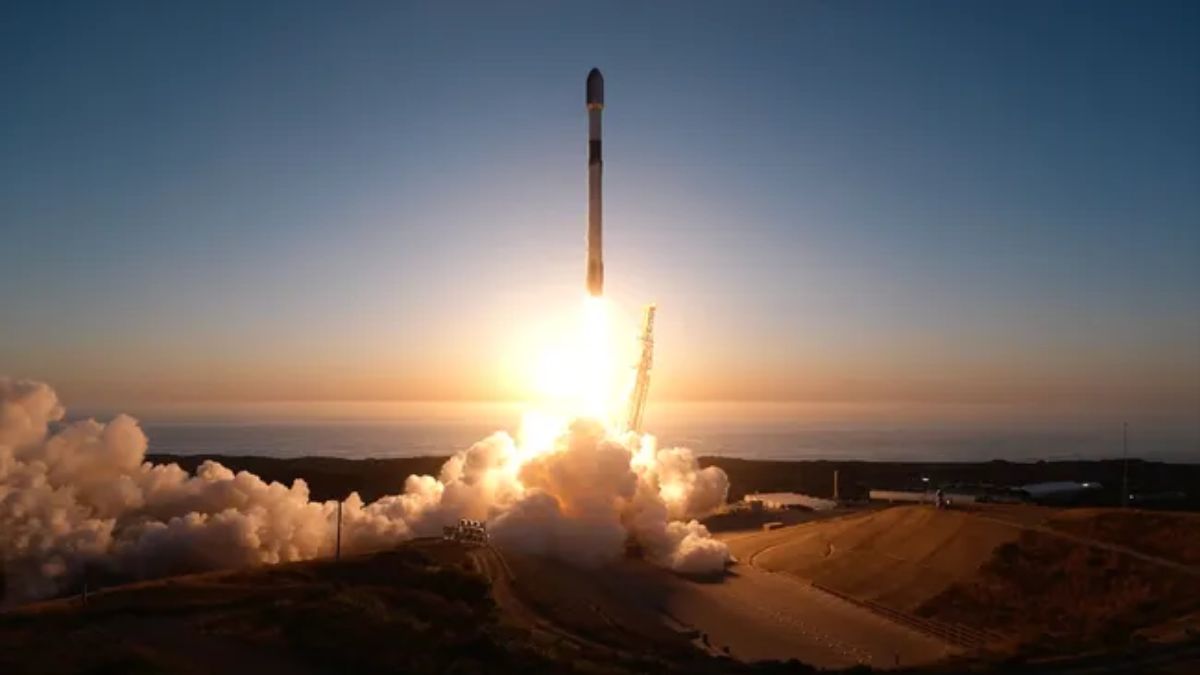
Photo Credit: SpaceX
SpaceX launched 24 Starlink satellites aboard a Falcon 9 rocket from California on May 19, 2026
Click Here to Add Gadgets360 As A Trusted Source


Advertisement
SpaceX made its second launch of the year towards its expanding internet network on Tuesday, May 19, 2026, launching 24 more satellites to the network from the Vandenberg Space Force Base in California. The satellites, part of group 17-42, were launched into orbit aboard the Falcon 9 rocket, which lifted off from Space Launch Complex 4 East at 10:46 p.m. EDT. The satellites reached a provisional orbit within nine minutes and were completely deployed within 50 minutes.
A Veteran Booster Sticks the Landing
According to Space.com, the booster B1103 was at the helm of this endeavour, having flown only once before. Following its launch into space with the upper stage and the satellite cargo onboard, the first stage successfully performed its reentry manoeuvre to land directly onto SpaceX's floating drone ship named "Of Course I Still Love You." The ability to reuse rockets is what makes SpaceX's Falcon 9 missions economically viable. Instead of disposing of a rocket that could cost millions of dollars after a one-time usage, SpaceX lands and refuels it for multiple uses.
A Megaconstellation Closing in on 10,500
As a result of this latest launch, the total number of active satellites orbiting Earth as part of the Starlink constellation is just shy of 10,500, says satellite tracker Jonathan McDowell. Each of these small satellites circles our planet in low-Earth orbit, flying at altitudes between about 340 kilometers and 570 kilometers above our planet's surface—much closer than typical geostationary communications satellites that operate from an altitude of roughly 35,786 kilometers. The close distance ensures a latency of less than 27 milliseconds, allowing applications like video conferencing and online gaming in locations where Internet access was previously unavailable.
Comments
Get your daily dose of tech news, reviews, and insights, in under 80 characters on Gadgets 360 Turbo. Connect with fellow tech lovers on our Forum. Follow us on X, Facebook, WhatsApp, Threads and Google News for instant updates. Catch all the action on our YouTube channel.
Further reading:
SpaceX, Falcon 9, Starlink, Vandenberg Space Force Base, Satellite Internet, Reusable Rockets, low-Earth orbit, Space launches, aerospace news
Related Stories



Advertisement
Follow Us




-
04:37
[Sponsored]: CP PLUS CarKam CP-F89B: 4K Dashcam With Rear Camera, GPS & Emergency Recording -
04:23
[Partner Content] Your Phone Can Do WAY More Than You Think | OPPO ColorOS 16 -
01:59
Samsung Galaxy Z Fold8 Ultra: Unfold the Ultra Night -
03:24
Apple Pay Launches In India: Supported Devices, Cards And Payments Explained -
00:21
[Sponsored] Samsung Galaxy Z Fold8, Fold8 Ultra
-
Flipkart Big Billion Days: Xiaomi के 5 Redmi स्मार्टफोन्स पर Deals रिवील
-
Delhi Pollution 2026: 50% Work From Home, बिना PUCC नहीं मिलेगा Fuel
-
Oppo K15x हुआ लॉन्च; 6500mAh बैटरी, 120Hz डिस्प्ले के साथ आया बजट 5G फोन
-
Poco C95 Pro ग्लोबल मार्केट में लॉन्च, 50MP AI कैमरा, 7500mAh बैटरी!
-
OnePlus 16 में मिलेगी ज्यादा कैपेसिटी वाली बैटरी, अगले सप्ताह होगा लॉन्च
Advertisement
Popular on Gadgets
- Samsung Galaxy S26 Ultra
- Motorola Razr Fold
- ChatGPT
- OPPO Find N6
- Mobiles Under Rs. 40,000
- Vivo X300 Ultra
- Asus Zenbook S14
- iQOO 15
- Vivo X300 Pro
- Lenovo Yoga Slim 7i Aura Edition
- iQOO 15R
- Vivo X Fold 5
- Sony PlayStation 5
- HP OmniPad 12
- OnePlus Nord CE 6 Lite
- OnePlus Pad 4
- OPPO F33 Pro 5G
- Cryptocurrency
- HP OmniBook Ultra 14 (2026)
- iPhone 17
- Eureka Forbes AP 355 Room Air Purifier
- Latest Mobile Phones
- Compare Phones
Latest Gadgets
- Samsung Galaxy F08
- Samsung Galaxy M08
- OPPO K15x
- OPPO K15s
- HMD Vibe 2 Pro 5G
- OPPO K14 Plus 5G
- Lava Shark 2 Pro 5G
- Ai+ Pulse 2 FE
- Dell 14 Plus 2-in-1 (AMD Ryzen AI 7 350, 2025)
- Microsoft Surface Laptop, 13-inch (2nd Edition)
- Samsung Galaxy Tab S12+
- Samsung Galaxy Tab S12 Ultra
- Amazfit T-Rex Dual Solar
- OPPO Watch S2
- Toshiba 65-Inch 4K Ultra HD Smart Mini LED QLED TV (65Z670SP)
- Haier M70 Mini LED 65-inch
- Acer Predator Atlas 8
- Asus ROG Ally
- Blue Star 1.5 Ton 5 Star Inverter Split AC (IE518ZNURS)
- Blue Star 2 Ton 3 Star Inverter Window AC (WIE324L)

- About Us
- Sitemaps
- Feedback
- Archives
- Contact Us
- RSS
- Advertise
- Career
- Privacy Policy
- Ethics
- Editorial Policy
- Terms & Conditions
- Complaint Redressal
Download Our Apps
Available in Hindi
© Copyright Red Pixels Ventures Limited 2026. All rights reserved.