
- Home
- Mobiles
- Mobiles Features
- GrapheneOS Explained: Why This Privacy Focused Mobile OS Is Gaining Attention
GrapheneOS Explained: Why This Privacy-Focused Mobile OS Is Gaining Attention
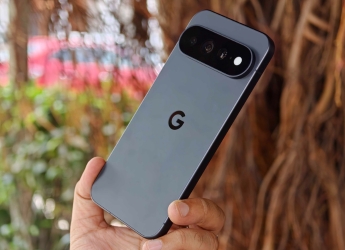
Google Pixel smartphones are the only handsets compatible with GrapheneOS' hardware security and update requirements.
Written by Nithya P Nair, Edited by Rohan Pal | Updated: 1 August 2026 10:00 IST

Photo Credit: Pixabay
GrapheneOS has entirely automatic background updates
Click Here to Add Gadgets360 As A Trusted Source

Advertisement
GrapheneOS is quite popular now, mainly after a federal case in Atlanta that has sparked debate over privacy-focused mobile operating systems. This mobile operating system, launched to enhance safety, is built on the standard security features of Android 17. It aims to cater for users who demand stronger privacy for personal and professional needs. GrapheneOS officially supports recent Google Pixel smartphones, which come with security features and long-term firmware updates from Google. Here is everything you need to know about GrapheneOS.
What Is GrapheneOS?
GrapheneOS is a privacy and security-focused mobile operating system. This setup works based on the Android Open Source Project (AOSP) and has been available only on Pixel phones. It is designed to offer greater security and user control over data than the standard Android operating system. It allows users to manage permissions and control access to sensors. It adds toggles for features like network permissions, sensor permissions, and restrictions when the device is locked.
GrapheneOS was launched in 2014 and was formerly known as CopperheadOS. This operating system does not include Google apps or Google Play services. It allows users to install Google Play services as a set of fully sandboxed apps without special privileges via a sandboxed Google Play compatibility layer. The company says most Android apps work on GrapheneOS, but those that rely heavily on Google services will have limited features.
How Does GrapheneOS Work?
GrapheneOS uses advanced security features to make unauthorised access and attacks more difficult. It offers an insider attack protection feature that requires the owner user to authenticate before the secure element firmware can be updated. This operating system also supports strong passwords by allowing a character limit of 16 to 128 for activities like app installations. It has an optional fingerprint and PIN two-factor unlock system for maximum security.
In addition, GrapheneOS offers hardware-based security technologies such as Memory Tagging Extension (MTE), designed to block attackers from exploiting the operating system.
GrapheneOS has features to protect devices from unauthorised access. It blocks new USB connections while the phone is locked. It disables USB data access when no active connections are available. Further, there is a locked-device auto-reboot feature that returns the device to the Before First Unlock state. This method clears sensitive data from memory.
Duress PIN/password is another feature which can be configured to erase the device when entered. It wipes the device when it's entered in any OS prompt for the current profile's PIN or password.
GrapheneOS Compatibility
As mentioned, right now, Google Pixel smartphones are the only handsets compatible with GrapheneOS' hardware security and update requirements. This could change in 2027 through the company's partnership with Motorola Mobility and Qualcomm. Handsets sold in partnership with specific carriers and carrier-locked devices in regions like the US may prevent installing GrapheneOS.
GrapheneOS has official production support for devices ranging from the Pixel 6 series to the Pixel 10a. However, the Pixel 8 series and later smartphones offer a minimum of seven years of support from launch, up from the previous five-year minimum.
GrapheneOS has entirely automatic background updates. It previously supported older Google devices, including the Pixel 3 series, Pixel 2 series, the original Pixel phones, Nexus 6P and the Samsung Galaxy S4. However, the company ended support for these devices. It previously supported the HiKey and HiKey 960 development boards as well.
Transfer files to another device
Files on a GrapheneOS device can be transferred to another device via an external drive, USB file transfer (MTP and PTP), or an app-based mechanism. GrapheneOS also develops different apps and services, including Vanadium and Android WebView. The platform includes a PDF Viewer, the Auditor app and a Camera app. It supports Seedvault, an encrypted backup solution.
Comments
Get your daily dose of tech news, reviews, and insights, in under 80 characters on Gadgets 360 Turbo. Connect with fellow tech lovers on our Forum. Follow us on X, Facebook, WhatsApp, Threads and Google News for instant updates. Catch all the action on our YouTube channel.

Related Stories


Advertisement
Follow Us




-

05:20
Samsung Galaxy Watch Ultra 2 Review: Is This the Best Android Smartwatch? -
07:01
Samsung Galaxy Z Fold 8 Review: Is This the Best Foldable Phone? -
06:39
Samsung Galaxy Z Fold8 Ultra Review: Cameras, Battery, Performance Tested -
04:33
[Sponsored] JBL Live 780NC: Great Sound, Perfect Comfort, Smart ANC & 80-Hour Battery -
12:04
[Partner Content] OPPO Reno16 Series Deep Dive: Built for Creators?
Advertisement
Popular on Gadgets
- Samsung Galaxy S26 Ultra
- Motorola Razr Fold
- ChatGPT
- OPPO Find N6
- Mobiles Under Rs. 40,000
- Vivo X300 Ultra
- Asus Zenbook S14
- iQOO 15
- Vivo X300 Pro
- Lenovo Yoga Slim 7i Aura Edition
- iQOO 15R
- Vivo X Fold 5
- Sony PlayStation 5
- HP OmniPad 12
- OnePlus Nord CE 6 Lite
- OnePlus Pad 4
- OPPO F33 Pro 5G
- Cryptocurrency
- HP OmniBook Ultra 14 (2026)
- iPhone 17
- Eureka Forbes AP 355 Room Air Purifier
- Latest Mobile Phones
- Compare Phones
Latest Gadgets
- iPhone Duo
- OPPO A7 Pro
- Huawei Mate XT 2 Ultimate Design
- Realme 16 Pro Harry Potter Edition
- Samsung Galaxy A07s
- Huawei Pura X View
- Tecno Camon Slim 5G
- iQOO Z11xa
- Acer Aspire G 3D 16
- Acer Swift Air 16 (2026)
- Xiaomi Pad 9 Pro
- Xiaomi Pad 9
- Apple Watch Ultra 4
- Apple Watch Series 12
- Haier M70 Mini LED 65-inch
- Xiaomi TV FX Mini LED 65
- Acer Predator Atlas 8
- Asus ROG Ally
- Blue Star 1.5 Ton 5 Star Inverter Split AC (IE518ZNURS)
- Blue Star 2 Ton 3 Star Inverter Window AC (WIE324L)

- About Us
- Sitemaps
- Feedback
- Archives
- Contact Us
- RSS
- Advertise
- Career
- Privacy Policy
- Ethics
- Editorial Policy
- Terms & Conditions
- Complaint Redressal
Download Our Apps
Available in Hindi
© Copyright Red Pixels Ventures Limited 2026. All rights reserved.
-
 Apple Watch Series 12
Starts from ₹56,900
Apple Watch Series 12
Starts from ₹56,900
-
 Samsung Galaxy Watch Ultra 2
Starts from ₹64,999
Samsung Galaxy Watch Ultra 2
Starts from ₹64,999
-
 Samsung Galaxy Watch 9 (44mm, LTE)
Starts from ₹41,999
Samsung Galaxy Watch 9 (44mm, LTE)
Starts from ₹41,999
-
 Samsung Galaxy Watch 9 (40mm, LTE)
Starts from ₹38,999
Samsung Galaxy Watch 9 (40mm, LTE)
Starts from ₹38,999
-
 Samsung Galaxy Watch 9 (40mm)
Starts from ₹37,999
Samsung Galaxy Watch 9 (40mm)
Starts from ₹37,999
-
 Samsung Galaxy Watch 9 (44mm)
Starts from ₹40,999
Samsung Galaxy Watch 9 (44mm)
Starts from ₹40,999
-
 Googlebook Laptops to Open for Pre-Orders on September 21, Google Confirms
-
 CoinEx Set to Close Exchange After Almost Nine Years in Operation
-
 iQOO 16 Launch Date Confirmed for September 29 in China, Three Colours Revealed
-
 Mac Mini M6 Geekbench Listing Reportedly Reveals Performance Gains Over M5 Chip