-
 Fitbit Air Review: Is This Google’s Best Fitness Tracker Yet?18 October 2026
 -
ViewSonic India Bets Big on LED Displays as It Expands Beyond Monitors17 October 2026
-
Google Play Store ‘Shop Devices’ Feature Goes Live in India With Pixel Phones and Accessories15 October 2026
-
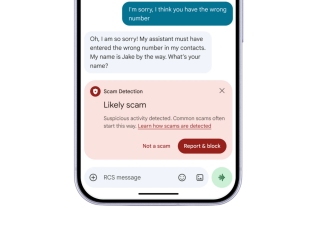
Google AI to Add More Anti-Scam Protections to Messages and Calls on Android Devices15 October 2026
-
Google Play Store Adds Vibe-Coded Apps, AI App Comparisons and Personalised Game Discovery14 October 2026
- Home
- Mobiles
- Mobiles News
- Google releases Project Ara Module Developers Kit with design guidelines
Google releases Project Ara Module Developers Kit with design guidelines
By Ketan Pratap | Updated: 10 April 2014 11:34 IST
Click Here to Add Gadgets360 As A Trusted Source

Advertisement
Just a few days ahead of Google's first ever Ara Developers' Conference, scheduled to be held from 15 April to 16 April, the company has released the Project Ara Module Developers Kit (MDK).
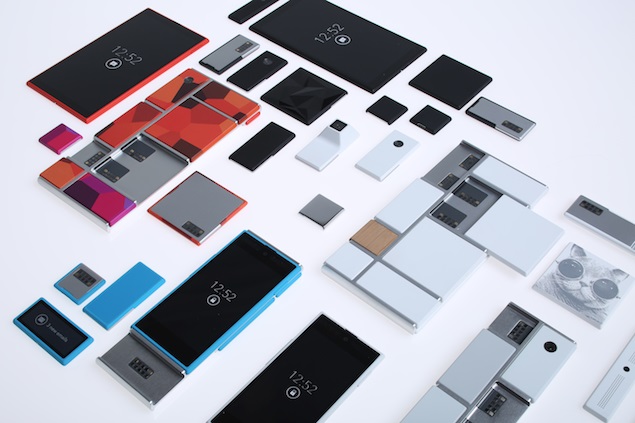
The newly released MDK version 0.10 covers guidelines for developers for designing Project Ara smartphones, creating valid module dimensions, components and layout for power pads.
Paul Eremenko, Head, Project Ara said in a Google+ post, "Today we're announcing the first release of the Project Ara Module Developers Kit (MDK) v0.10. This is a very early version but our goals are to give the developer community an opportunity to provide feedback and input, and to help us ensure that the final MDK - anticipated at the end of 2014 - is elegant, flexible, and complete."
The post clarifies that Google plans to release the final MDK version by the end of 2014.
The Project Ara design scheme comprises of what Google calls an endoskeleton (endo) and modules. The endo is the structural frame that holds all the modules in place, while a module can be anything, from a new application processor to a new display or keyboard, an extra battery, a pulse oximeter or some other customisable hardware unit.
The MDK documentation further reveals three different Ara skeleton sizes namely, mini, a basic unit; medium, a mainstream unit, and jumbo, a phablet-style model.
Notably, Google will be the only provider of Ara skeletons as of now and the search engine giant plans that the smaller modules will come from third-party developers.
"Next week, we're hosting the first Project Ara Developers Conference at the Computer History Museum in Mountain View," Eremenko added.
Project Ara's official site explains, "The Module Developers Kit (MDK) defines the Ara platform for module developers and provides reference implementations for various design features. The Ara platform consists of an on-device packet-switched data network based on the MIPI UniPro protocol stack, a flexible power bus, and an elegant industrial design that mechanically unites the modules with an endoskeleton."
Earlier, Google gave the world its first glimpse of the Project Ara modular prototype smartphone at the 'Launch' event in San Francisco. A Project Ara team member demoed a non-functional Wi-Fi model of the first modular smartphone.
In January, when Google sold Motorola Mobility to Lenovo, the Mountain View giant kept Project Ara (and the Motorola Advanced Technology unit) with itself.
Comments
Get your daily dose of tech news, reviews, and insights, in under 80 characters on Gadgets 360 Turbo. Connect with fellow tech lovers on our Forum. Follow us on X, Facebook, WhatsApp, Threads and Google News for instant updates. Catch all the action on our YouTube channel.
Further reading:
Google, Google Advanced Technology and Projects group, Google Project Ara, Mobiles, Modular Smartphones, Motorola, Project Ara
Related Stories



Advertisement
Follow Us




-
![[Sponsored] LG NANO 4K UHD AI TV NU885: Gemini Search, Dolby Atmos & 5 Years of Updates](https://www.gadgets360.com/static/desktop/images/spacer.png)
04:17
[Sponsored] LG NANO 4K UHD AI TV NU885: Gemini Search, Dolby Atmos & 5 Years of Updates -
00:57
[Sponsored] Samsung Galaxy Z Fold8 My Fan Cam in Action: Find the Moment, Then Share It -
01:41
[Sponsored] What Do You Need To Know Before Your Next Run? | Samsung Galaxy Watch Ultra2 -
01:32
[Sponsored] Big Day Tomorrow? Prep Today | Samsung Galaxy Watch Ultra2 -
04:37
[Sponsored]: CP PLUS CarKam CP-F89B: 4K Dashcam With Rear Camera, GPS & Emergency Recording
-
iPhone 16 आज भी Amazon सेल में मिल रहा ₹15 हजार से ज्यादा सस्ता
-
OnePlus 15 को Amazon Great Indian Festival Sale में खरीदें सस्ता
-
₹2250 सस्ता मिल रहा Motorola का 7000mAh बैटरी वाला फोन! Flipkart पर ऑफर
-
Flipkart Sale में ₹14000 सस्ता मिल रहा Vivo का 50MP कैमरा, 9020mAh बैटरी वाला फोन
-
OnePlus 16 के जल्द भारत में लॉन्च की तैयारी, 200 मेगापिक्सल हो सकता है प्राइमरी कैमरा
Advertisement
Popular on Gadgets
- Samsung Galaxy S26 Ultra
- Motorola Razr Fold
- ChatGPT
- OPPO Find N6
- Mobiles Under Rs. 40,000
- Vivo X300 Ultra
- Asus Zenbook S14
- iQOO 15
- Vivo X300 Pro
- Lenovo Yoga Slim 7i Aura Edition
- iQOO 15R
- Vivo X Fold 5
- Sony PlayStation 5
- HP OmniPad 12
- OnePlus Nord CE 6 Lite
- OnePlus Pad 4
- OPPO F33 Pro 5G
- Cryptocurrency
- HP OmniBook Ultra 14 (2026)
- iPhone 17
- Eureka Forbes AP 355 Room Air Purifier
- Latest Mobile Phones
- Compare Phones
Latest Gadgets
- Samsung Galaxy F70 5G
- Tecno Spark 50S 5G
- Vivo Y600s Pro
- Vivo Y32 (2026)
- Infinix Smart 20 HD
- Vivo V80
- Vivo S2 FE
- Vivo Y600K Turbo
- HP ZBook Ultra G3a
- Dell Pro Rugged 14
- Amazon Alexa Tablet 8
- Amazon Alexa Tablet 11
- Amazfit T-Rex Dual Solar
- OPPO Watch S2
- Toshiba 65-Inch 4K Ultra HD Smart Mini LED QLED TV (65Z670SP)
- Haier M70 Mini LED 65-inch
- Acer Predator Atlas 8
- Asus ROG Ally
- Blue Star 1.5 Ton 5 Star Inverter Split AC (IE518ZNURS)
- Blue Star 2 Ton 3 Star Inverter Window AC (WIE324L)

- About Us
- Sitemaps
- Feedback
- Archives
- Contact Us
- RSS
- Advertise
- Career
- Privacy Policy
- Ethics
- Editorial Policy
- Terms & Conditions
- Complaint Redressal
Download Our Apps
Available in Hindi
© Copyright Red Pixels Ventures Limited 2026. All rights reserved.