-
 Best Mobiles Under Rs. 70,000 With Telephoto Cameras in India27 September 2026
 -
How to Check Your Mobile Number on Jio, Airtel, Vi and BSNL26 September 2026
-
Adobe Premiere Now Available on Android With Multi-Track Editing, 4K Export, AI Tools23 September 2026
-
Jio and T-Mobile Achieve World’s First 5G SA Roaming Connection With Syniverse22 September 2026
-
BGMI 4.6 Update Set to Arrive on September 16 With Supernatural Midnight Hunters Theme Mode11 September 2026
- Home
- Mobiles
- Mobiles Sponsored
- Smarter AI, Stronger Privacy: Why the Galaxy S26 Series Is a Genuine Leap Forward
Sponsored Content
Smarter AI, Stronger Privacy: Why the Galaxy S26 Series Is a Genuine Leap Forward
By Sponsored Content | Updated: 28 February 2026 20:04 IST
Click Here to Add Gadgets360 As A Trusted Source

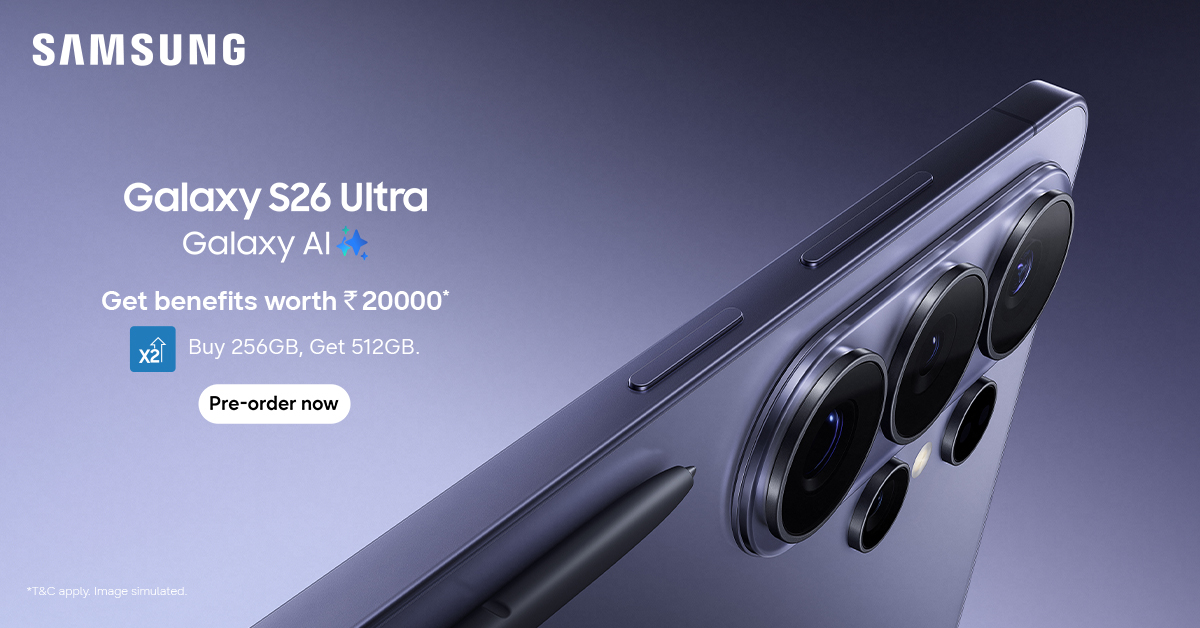
Smartphone launches have a habit of drowning in spec-sheet theatre. Bigger numbers, shinier materials, a slide deck full of percentages. Samsung's Galaxy S26 series bucks that tendency. This is a flagship built around what it actually feels like to hold, use, and trust a phone day in and day out.
Unveiled in San Francisco, the Galaxy S26 lineup signals a clear shift in Samsung's priorities. The Ultra model, in particular, tells that story most vividly. The company has not abandoned hardware refinement, but it is no longer leading with raw power as the headline act. Instead, the Galaxy S26 series makes the case that purposeful upgrades in privacy, camera optics, thermal management, and on-device AI are worth more to most people than a marginal GPU boost. It is a compelling argument, and one the hardware largely backs up.
A Display Built to Keep Your Screen to Yourself
The single most attention-grabbing feature on the Galaxy S26 Ultra is one that has never appeared on a Samsung phone before: a hardware-level privacy display. Samsung is calling it the "World's First Privacy Display on Mobile," and the claim rests on a genuine engineering achievement rather than marketing sleight of hand.
The technology, developed under Samsung Display's Flex Magic Pixel trademark and abbreviated as FMP, works at the pixel level. Instead of relying on an aftermarket privacy film stuck on top of the glass, the Galaxy S26 Ultra builds the light-narrowing effect directly into the panel itself. The display emits light in a tight, forward-facing cone. From a side angle, the screen appears blurred or nearly invisible. The technology has received independent "Privacy Display" verification from UL Solutions, adding third-party credibility to Samsung's claim.
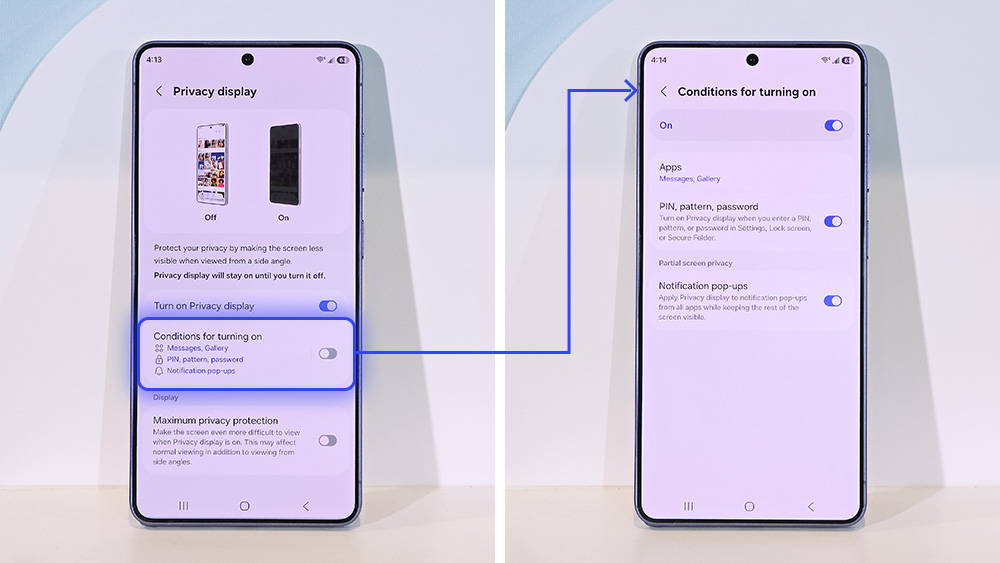
What makes this useful in daily life is the software control sitting on top of the hardware. Users can apply the privacy filter selectively, turning it on for a banking app or a PIN entry screen without locking the entire display into restricted-visibility mode. That granular control is what separates a practical privacy tool from a novelty feature.
Underneath the privacy layer, Samsung has also upgraded the OLED panel itself. Native 10-bit colour support, an improved anti-reflective coating, and better overall power efficiency round out a display package that outperforms the S25 Ultra in colour accuracy and outdoor readability.
Design: Slimmer, Lighter, and Cooler When It Counts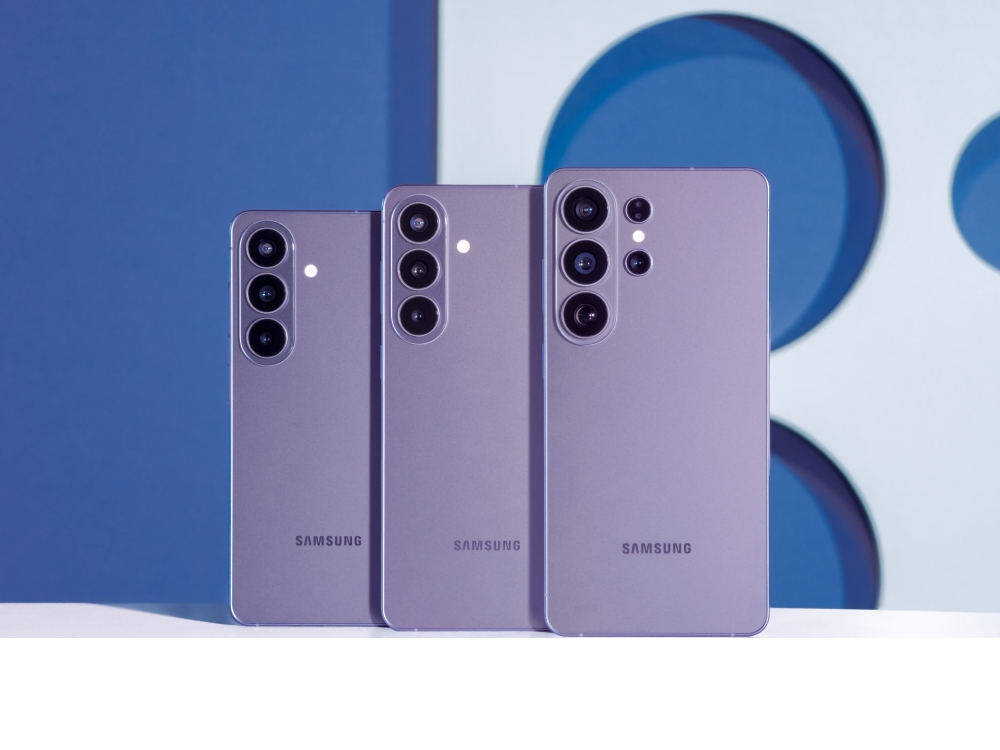
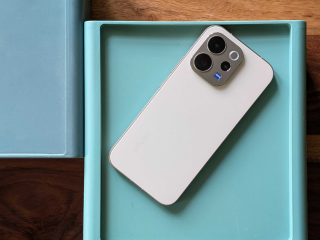
The rear camera array has been redesigned around what Samsung calls an "ambient island" layout. The lenses are grouped into a single unified housing rather than sitting as individual floating elements as they did on the S25 Ultra. The visual result is cleaner and more cohesive, and the practical benefit is a back panel that is less likely to catch on fabric or feel unbalanced in the hand.
The physical dimensions tell a straightforward story. The Galaxy S26 Ultra measures 7.9mm thick and weighs 214 grams, compared to 218 grams on its predecessor. Four grams is a small number, but combined with the reduced thickness, the phone sits more naturally in the hand during longer sessions.
The thermal engineering update deserves more attention than it usually gets in phone coverage. Samsung has expanded the internal vapor chamber and paired it with a new thermal interface material. The result is 21 percent greater heat dissipation compared to the previous Ultra generation. In real-world terms, that means sustained workloads like intensive gaming or video editing are far less likely to trigger performance throttling. This has historically been one of the more frustrating limitations of putting powerful chips inside thin glass-and-metal enclosures, and Samsung has made meaningful progress here.
The Armor Aluminum frame and Corning Gorilla Glass construction carry over from the previous generation, along with the same water and dust resistance rating.
Pro-Level Cameras, Powered By Galaxy AI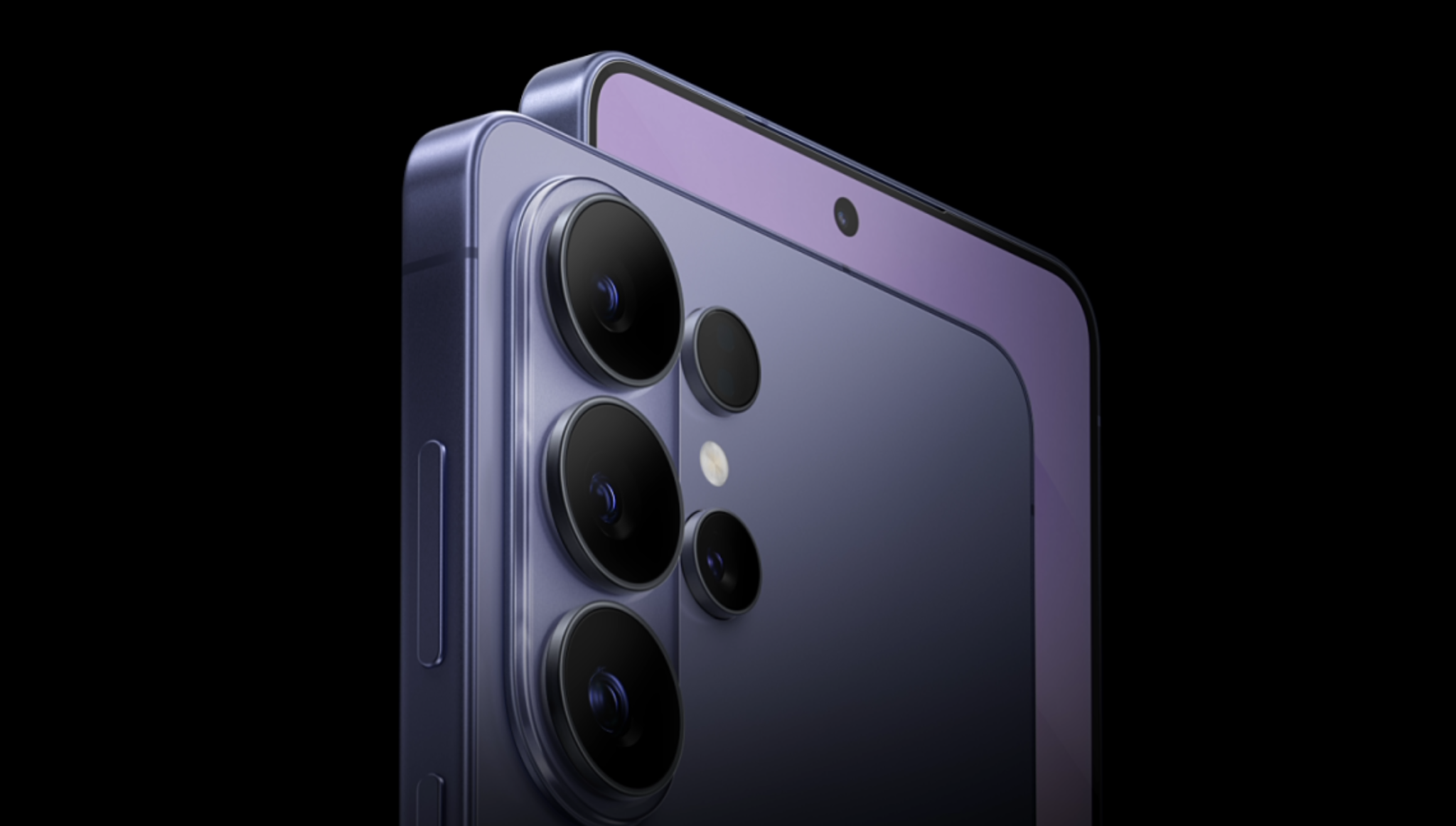
On paper, the Galaxy S26 Ultra's camera specifications look nearly unchanged from last year. The primary sensor remains 200 megapixels, the telephoto remains 50 megapixels with 5x optical zoom. But Samsung has made one of the most impactful changes available without swapping the sensor entirely: it has widened the aperture on both lenses.
The primary camera moves from f/1.7 to f/1.4. That wider opening lets in roughly 47 percent more light, which is a physics-level improvement that software post-processing cannot fully replicate. The practical payoff is faster shutter speeds in dim environments, better motion freezing, and a shallower natural depth of field that gives portraits a more defined subject-background separation.
The telephoto lens moves from f/3.4 to f/2.9. The gap sounds small, but it makes the 5x zoom lens noticeably more capable in low-light conditions, producing cleaner images with less digital noise when zoomed shots would previously have struggled.
Video recording also picks up a useful new tool. A Horizontal Lock feature uses real-time gyroscope data to keep the recorded horizon level even when the phone is rotated or tilted mid-shot. It builds on the existing Super Steady stabilisation and addresses a common frustration for anyone who has reviewed shaky vacation footage after the fact.
On the processing side, the ProScaler engine handles digital zoom refinement, while Photo Assist manages text-prompted image edits. Creative Studio extends that into generative image creation for users who want more advanced editing capabilities built directly into the camera app.
Powerful Performance and All-Day Battery
The Galaxy S26 Ultra is powered by a custom Snapdragon 8 Elite Gen 5 processor. The standard S26 and S26 Plus make the transition to Samsung's own Exynos 2600, which is built on a 2nm manufacturing process. The 2nm node is a notable step forward for the Exynos line, with meaningful GPU performance gains that should benefit both gaming and efficiency under heavy workloads.
Storage and memory configurations start at 12GB of RAM and 256GB of storage across the lineup. The Ultra model can be configured up to 16GB of RAM and 1TB of internal storage. That is a meaningful increase over the S25 Ultra, which topped out at 12GB of RAM even in its highest-tier configuration.
One of the most consequential upgrade for daily users may be charging speed. The Galaxy S26 Ultra now supports 60W wired charging, a significant jump that has been on the wish list for Samsung users for several generations. Wireless charging is supported at 25W through the Qi2 standard. With the 5,000mAh battery, Samsung claims a charge from empty to 75 percent in roughly 30 minutes. For a phone that most people rely on as their primary device, that kind of charging speed reduces one of the more persistent daily annoyances.
One UI 8.5: Automation with Privacy Built In
The software experience on the S26 series ships with One UI 8.5, and its design philosophy centres on two goals that could easily conflict: smarter automation and stronger privacy controls. Samsung has built the version shipping here around making both work at the same time.
The AI Call Screening feature handles incoming calls automatically. It answers, asks the caller to explain their purpose, and generates a text summary in real time. The user can then decide whether to pick up or ignore the call without ever interacting with an unknown caller directly. It is a practical filter for spam and unwanted interruptions.
Now Nudge reads on-screen context and surfaces relevant shortcuts and autofill options when they are likely to be useful. It works across both Samsung's native apps and third-party applications, reducing the number of steps required for common repeated tasks.
On the privacy architecture side, a dedicated data engine works alongside Samsung's Knox Vault and the Knox Enhanced Encrypted Protection architecture, referred to internally as KEEP, to isolate and encrypt personal information at the hardware level. Users retain direct control over where AI processing takes place. Tasks can run entirely on-device for maximum privacy, or the user can opt into cloud processing for more complex operations that would exceed what the local hardware can handle efficiently.
The Samsung Galaxy S26 Ultra does not win by reinventing the category. It wins by looking honestly at what the consumer need and addressing it with engineering rather than marketing. Better heat management, improved low-light optics, a genuinely new approach to display privacy, faster charging, and a software layer that automates the irritating parts of daily phone use without compromising personal data. Each piece is a targeted improvement, and together they build an AI phone that is more capable of handling real life than its predecessor. For buyers shopping in the premium tier who care more about daily usability than benchmark results, the Galaxy S26 Ultra is a clear case.
Affiliate links may be automatically generated - see our ethics statement for details.
Comments
Get your daily dose of tech news, reviews, and insights, in under 80 characters on Gadgets 360 Turbo. Connect with fellow tech lovers on our Forum. Follow us on X, Facebook, WhatsApp, Threads and Google News for instant updates. Catch all the action on our YouTube channel.
Further reading:
Mobiles
Related Stories






Follow Us




-
![[Sponsored]: CP PLUS CarKam CP-F89B: 4K Dashcam With Rear Camera, GPS & Emergency Recording](https://www.gadgets360.com/static/desktop/images/spacer.png)
04:37
[Sponsored]: CP PLUS CarKam CP-F89B: 4K Dashcam With Rear Camera, GPS & Emergency Recording -
04:23
[Partner Content] Your Phone Can Do WAY More Than You Think | OPPO ColorOS 16 -
01:59
Samsung Galaxy Z Fold8 Ultra: Unfold the Ultra Night -
03:24
Apple Pay Launches In India: Supported Devices, Cards And Payments Explained -
00:21
[Sponsored] Samsung Galaxy Z Fold8, Fold8 Ultra
-
Flipkart Big Billion Days: Xiaomi के 5 Redmi स्मार्टफोन्स पर Deals रिवील
-
Delhi Pollution 2026: 50% Work From Home, बिना PUCC नहीं मिलेगा Fuel
-
Oppo K15x हुआ लॉन्च; 6500mAh बैटरी, 120Hz डिस्प्ले के साथ आया बजट 5G फोन
-
Tecno Pop 20C बजट फोन पेश, 13MP कैमरा, 5200mAh जैसे फीचर्स, जानें कीमत
-
Poco C95 Pro ग्लोबल मार्केट में लॉन्च, 50MP AI कैमरा, 7500mAh बैटरी!
Popular on Gadgets
- Samsung Galaxy S26 Ultra
- Motorola Razr Fold
- ChatGPT
- OPPO Find N6
- Mobiles Under Rs. 40,000
- Vivo X300 Ultra
- Asus Zenbook S14
- iQOO 15
- Vivo X300 Pro
- Lenovo Yoga Slim 7i Aura Edition
- iQOO 15R
- Vivo X Fold 5
- Sony PlayStation 5
- HP OmniPad 12
- OnePlus Nord CE 6 Lite
- OnePlus Pad 4
- OPPO F33 Pro 5G
- Cryptocurrency
- HP OmniBook Ultra 14 (2026)
- iPhone 17
- Eureka Forbes AP 355 Room Air Purifier
- Latest Mobile Phones
- Compare Phones
Latest Gadgets
- Samsung Galaxy F08
- Samsung Galaxy M08
- OPPO K15x
- OPPO K15s
- HMD Vibe 2 Pro 5G
- OPPO K14 Plus 5G
- Lava Shark 2 Pro 5G
- Ai+ Pulse 2 FE
- Dell 14 Plus 2-in-1 (AMD Ryzen AI 7 350, 2025)
- Microsoft Surface Laptop, 13-inch (2nd Edition)
- Samsung Galaxy Tab S12+
- Samsung Galaxy Tab S12 Ultra
- Amazfit T-Rex Dual Solar
- OPPO Watch S2
- Toshiba 65-Inch 4K Ultra HD Smart Mini LED QLED TV (65Z670SP)
- Haier M70 Mini LED 65-inch
- Acer Predator Atlas 8
- Asus ROG Ally
- Blue Star 1.5 Ton 5 Star Inverter Split AC (IE518ZNURS)
- Blue Star 2 Ton 3 Star Inverter Window AC (WIE324L)

- About Us
- Sitemaps
- Feedback
- Archives
- Contact Us
- RSS
- Advertise
- Career
- Privacy Policy
- Ethics
- Editorial Policy
- Terms & Conditions
- Complaint Redressal
Download Our Apps
Available in Hindi
© Copyright Red Pixels Ventures Limited 2026. All rights reserved.