-
 Small NASA Satellite Could Reveal How Lightning Impacts Space Weather18 April 2026
 -
ISRO to Launch PSLV-C62 With EOS-N1 Hyperspectral Satellite on January 1210 January 2026
-
German Team Uses Autonomous AI to Steer CubeSat in Space18 November 2025
-
NASA Tests Modular Satellite Tech to Cut Launch Costs and Speed Missions21 July 2025
-
NASA's Twin Mini Satellites Captures Far-Infrared Radiation from Polar Regions5 December 2024
- Home
- Science
- Science News
- Nasa Deploys CubeSat to Study Sun's Soft X Rays
Nasa Deploys CubeSat to Study Sun's Soft X-Rays
By Indo-Asian News Service | Updated: 17 May 2016 11:57 IST
Click Here to Add Gadgets360 As A Trusted Source

Advertisement
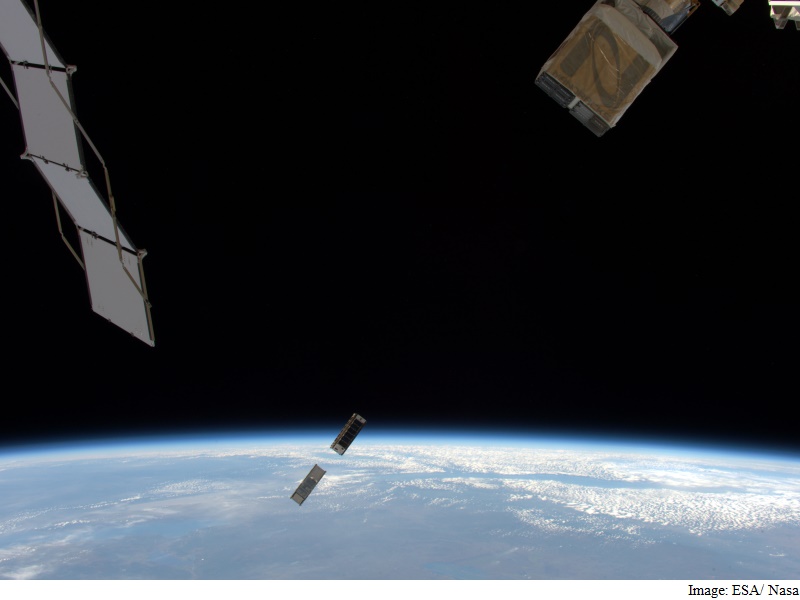
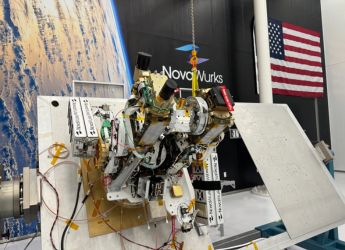
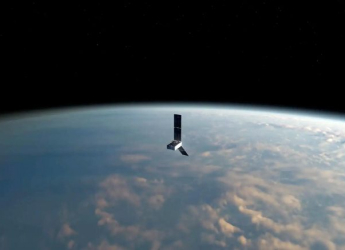
Nasa has deployed a bread loaf-sized Miniature X-Ray Solar Spectrometer (MinXSS) CubeSat from an airlock on the International Space Station (ISS) to study the Sun's soft x-rays that can affect our communications systems.
Soft X-rays can disrupt the Earth's upper atmosphere and hamper radio and GPS signals travelling through the region.
The intensity of the soft X-ray emissions is continuously changing over a large range - with peak emission levels occurring during large eruptions on the Sun called solar flares.
MinXSS will operate for up to 12 months and the data will also help scientists understand the physics behind solar flares.
The soft X-rays carry information about the temperature, density and chemical composition of material in the Sun's atmosphere, allowing scientists to trace how events like flares and other processes heat the surrounding material in the Sun's atmosphere.
CubeSats are a new, low-cost tool for space science missions.
Instead of the traditional space science missions, CubeSats are designed to take narrowly targeted scientific observations, with only a few instruments.
For example, MinXSS uses a commercially purchased X-ray spectrometer for a detector and an extendable tape measure as a radio antenna.
MinXSS was launched via the Nasa CubeSat Launch Initiative programme on December 6 last year aboard Orbital ATK's Cygnus spacecraft through Nasa's Commercial Resupply Services contract.
Comments
Get your daily dose of tech news, reviews, and insights, in under 80 characters on Gadgets 360 Turbo. Connect with fellow tech lovers on our Forum. Follow us on X, Facebook, WhatsApp, Threads and Google News for instant updates. Catch all the action on our YouTube channel.
Related Stories




Advertisement
Follow Us




-

09:53
iPhone 18 Goes On Sale In India: Huge Crowds, Long Queues At Apple Stores -
06:32
Google Pixel 11 Pro XL Review: The Most Exciting Pixel Yet? | 120X Zoom + Tensor G6 -
05:20
Samsung Galaxy Watch Ultra 2 Review: Is This the Best Android Smartwatch? -
07:01
Samsung Galaxy Z Fold 8 Review: Is This the Best Foldable Phone? -
06:39
Samsung Galaxy Z Fold8 Ultra Review: Cameras, Battery, Performance Tested
-
10 मिनट में घर पहुंचेंगे iPhone 18 Pro, Pro Max: सेल हुई शुरू
-
Lava ने लॉन्च किया 6000mAh बैटरी वाला Bold N4 Pro 5G
-
itel Zeno 300 भारत में होगा लॉन्च, मिलेगी 6,000mAh बैटरी और डुअल कैमरा
-
₹5075 सस्ता मिल रहा 50 हजार एमआरपी वाला लेटेस्ट Vivo 5G फोन! 50MP दो कैमरा, 7050mAh बैटरी
-
Ai+ Pulse 2 FE जल्द होगा भारत में लॉन्च, 4 कलर के होंगे ऑप्शन
Advertisement
Popular on Gadgets
- Samsung Galaxy S26 Ultra
- Motorola Razr Fold
- ChatGPT
- OPPO Find N6
- Mobiles Under Rs. 40,000
- Vivo X300 Ultra
- Asus Zenbook S14
- iQOO 15
- Vivo X300 Pro
- Lenovo Yoga Slim 7i Aura Edition
- iQOO 15R
- Vivo X Fold 5
- Sony PlayStation 5
- HP OmniPad 12
- OnePlus Nord CE 6 Lite
- OnePlus Pad 4
- OPPO F33 Pro 5G
- Cryptocurrency
- HP OmniBook Ultra 14 (2026)
- iPhone 17
- Eureka Forbes AP 355 Room Air Purifier
- Latest Mobile Phones
- Compare Phones
Latest Gadgets
- Lava Bold N4 Pro 5G
- Samsung Galaxy A08
- Itel Muzik 450L
- OPPO K14 Lite
- Samsung Galaxy A18 4G
- iPhone Duo
- OPPO A7 Pro
- Huawei Mate XT 2 Ultimate Design
- Asus Vivobook S14 (S5452MA)
- Acer Aspire G 3D 16
- Xiaomi Pad 9 Pro
- Xiaomi Pad 9
- Apple Watch Ultra 4
- Apple Watch Series 12
- Haier M70 Mini LED 65-inch
- Xiaomi TV FX Mini LED 65
- Acer Predator Atlas 8
- Asus ROG Ally
- Blue Star 1.5 Ton 5 Star Inverter Split AC (IE518ZNURS)
- Blue Star 2 Ton 3 Star Inverter Window AC (WIE324L)

- About Us
- Sitemaps
- Feedback
- Archives
- Contact Us
- RSS
- Advertise
- Career
- Privacy Policy
- Ethics
- Editorial Policy
- Terms & Conditions
- Complaint Redressal
Download Our Apps
Available in Hindi
© Copyright Red Pixels Ventures Limited 2026. All rights reserved.