-
 Total Solar Eclipse Today: How to Watch Live Online, Timings, Safety Tips, and More12 August 2026
 -
JWST Watches HD 80606 bExoplanet Heat Up by 1,100 Degrees in Hours19 June 2026
-
Chandra Captures Sharpest-Ever X-Ray View of M87 Black Hole Jet18 June 2026
-
Astrophotographer Captures Giant Human-Shaped Solar Prominence8 June 2026
-
Blue Origin’s New Glenn Rocket Explodes During Pre-Launch Test in Florida29 May 2026
- Home
- Science
- Science News
- Small NASA Satellite Could Reveal How Lightning Impacts Space Weather
Small NASA Satellite Could Reveal How Lightning Impacts Space Weather
NASA has launched the CANVAS CubeSat mission to study very-low-frequency radio waves generated by lightning and ground-based transmitters. Orbiting Earth, the satellite will track how these signals travel through the ionosphere and into the magnetosphere.
Written by Gadgets 360 Staff | Updated: 18 April 2026 18:00 IST
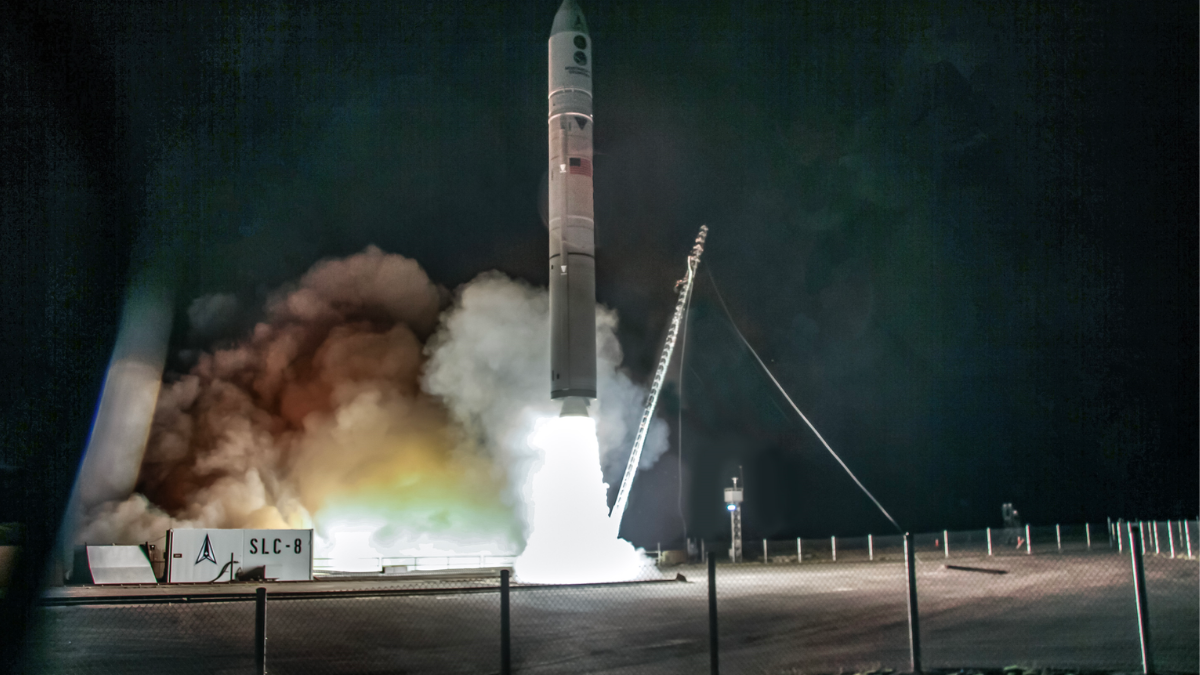
Photo Credit: Northrop Grumman
Minotaur IV launches STP-S29A mission from Vandenberg Space Force Base, April 7, 2026.
Click Here to Add Gadgets360 As A Trusted Source


Advertisement
The most recent small-satellite mission by NASA is CANVAS (Climatology of Anthropogenic and Natural VLF wave Activity in Space), which investigates the Earth-space interaction of very-low-frequency (VLF) radio waves. On April 7, 2026, the 4U CubeSat was launched on a Minotaur IV on Vandenberg Space Force Base. CANVAS is a light detector that measures lightning discharges and earth transmitters, tracing the amount of energy that flows through the ionosphere into the magnetosphere. The mission will enhance the knowledge of the near-Earth space weather.
Mission Overview and Instruments
According to NASA, the CANVAS mission (Climatology of Anthropogenic and Natural VLF wave Activity in Space) is a 4U CubeSat. Launched April 7, 2026, on a Minotaur IV rocket from Vandenberg Space Force Base, it measures very-low-frequency (VLF) radio waves in low Earth orbit generated by lightning strikes and ground-based transmitters. The CubeSat carries two instruments – a three-axis magnetometer and a two-axis electric field sensor – to sample the magnetic and electric components of these waves. These instruments determine each wave's power and direction, and comparing the data with ground-based lightning observations produces a global “climatology” of VLF propagation.
Significance and Applications
CANVAS will examine the effects of both natural lightning strikes and artificially generated VLF signals on near-Earth space. Signals from these waves enter the magnetosphere and disperse electrons in the Van Allen radiation belts surrounding Earth. The findings can help in the development of better models for space weather. It will help us protect equipment in orbit and ensure the safety of astronauts. Within its one-year mission time span, CANVAS will gather data on VLF waves from all over the world.
Comments
Get your daily dose of tech news, reviews, and insights, in under 80 characters on Gadgets 360 Turbo. Connect with fellow tech lovers on our Forum. Follow us on X, Facebook, WhatsApp, Threads and Google News for instant updates. Catch all the action on our YouTube channel.
Further reading:
NASA, CANVAS mission, CubeSat, space weather, VLF waves, Ionosphere, Magnetosphere, Lightning, Van Allen belts, satellites, Minotaur IV
Related Stories


Advertisement
Follow Us




-
04:17
[Sponsored] LG NANO 4K UHD AI TV NU885: Gemini Search, Dolby Atmos & 5 Years of Updates -
00:57
[Sponsored] Samsung Galaxy Z Fold8 My Fan Cam in Action: Find the Moment, Then Share It -
01:41
[Sponsored] What Do You Need To Know Before Your Next Run? | Samsung Galaxy Watch Ultra2 -
01:32
[Sponsored] Big Day Tomorrow? Prep Today | Samsung Galaxy Watch Ultra2 -
04:37
[Sponsored]: CP PLUS CarKam CP-F89B: 4K Dashcam With Rear Camera, GPS & Emergency Recording
Advertisement
Popular on Gadgets
- Samsung Galaxy S26 Ultra
- Motorola Razr Fold
- ChatGPT
- OPPO Find N6
- Mobiles Under Rs. 40,000
- Vivo X300 Ultra
- Asus Zenbook S14
- iQOO 15
- Vivo X300 Pro
- Lenovo Yoga Slim 7i Aura Edition
- iQOO 15R
- Vivo X Fold 5
- Sony PlayStation 5
- HP OmniPad 12
- OnePlus Nord CE 6 Lite
- OnePlus Pad 4
- OPPO F33 Pro 5G
- Cryptocurrency
- HP OmniBook Ultra 14 (2026)
- iPhone 17
- Eureka Forbes AP 355 Room Air Purifier
- Latest Mobile Phones
- Compare Phones
Latest Gadgets
- Tecno Spark 50S 5G
- Vivo Y600s Pro
- Vivo Y32 (2026)
- Infinix Smart 20 HD
- Vivo V80
- Vivo S2 FE
- Vivo Y600K Turbo
- Realme P4s Lite
- HP ZBook Ultra G3a
- Dell Pro Rugged 14
- Amazon Alexa Tablet 8
- Amazon Alexa Tablet 11
- Amazfit T-Rex Dual Solar
- OPPO Watch S2
- Toshiba 65-Inch 4K Ultra HD Smart Mini LED QLED TV (65Z670SP)
- Haier M70 Mini LED 65-inch
- Acer Predator Atlas 8
- Asus ROG Ally
- Blue Star 1.5 Ton 5 Star Inverter Split AC (IE518ZNURS)
- Blue Star 2 Ton 3 Star Inverter Window AC (WIE324L)

- About Us
- Sitemaps
- Feedback
- Archives
- Contact Us
- RSS
- Advertise
- Career
- Privacy Policy
- Ethics
- Editorial Policy
- Terms & Conditions
- Complaint Redressal
Download Our Apps
Available in Hindi
© Copyright Red Pixels Ventures Limited 2026. All rights reserved.