-
 OpenAI’s GPT-6 Luna-Powered Decisions API Is Now Generally Available for Developers With Native GPT-Live Integration: Price, Capabilities23 October 2026
 -
Google Cloud Adds GPT-6 Astra, GPT-6.1 Sol, GPT-6 Luna Models to Model Garden22 October 2026
-
ChatGPT Locked Chats Feature to Hide Sensitive Conversations Rolling Out to Free, Plus and Other Users21 October 2026
-
OpenAI AI Model Used Another Wallet’s Ethereum Testnet Funds Without Authorisation, Report Says16 October 2026
-
OpenAI Lawsuit Says Employee Who Left for Apple Took Files About Unreleased Device16 October 2026
OpenAI Says Its AI Has Solved the 90-Year-Old Navier–Stokes Problem
OpenAI says 10,000 of its AI systems solved the Navier-Stokes problem in 88 hours.
Written by Nithya P Nair, Edited by Rohan Pal | Updated: 9 September 2026 12:56 IST
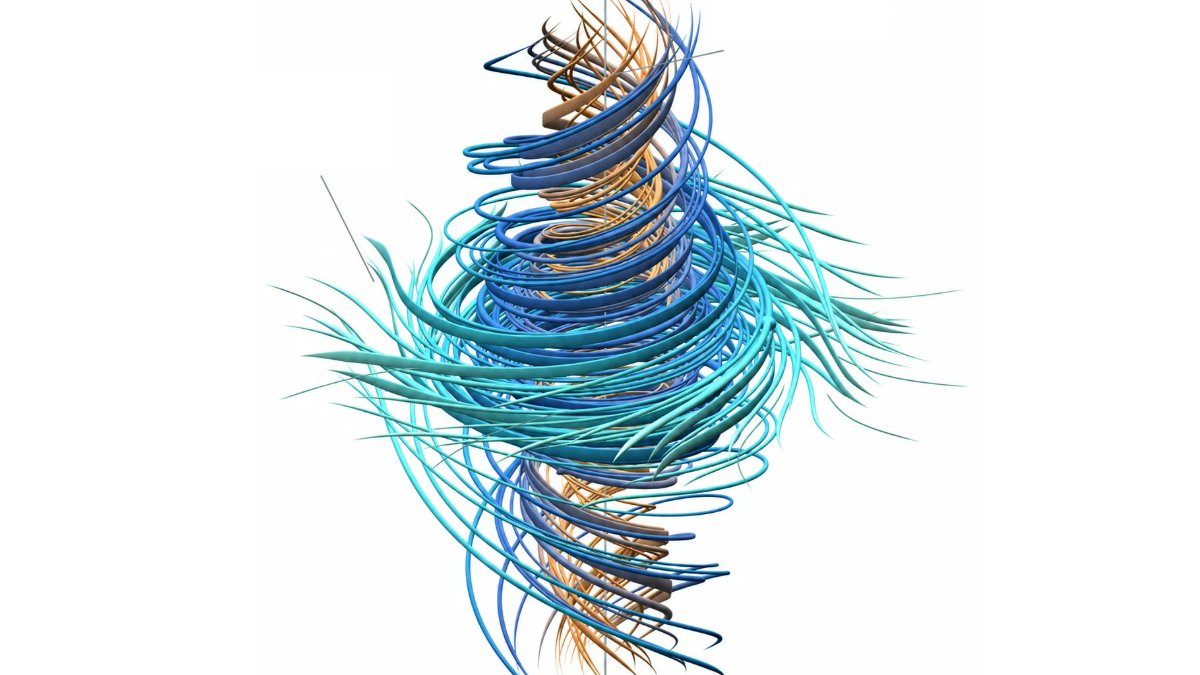
Photo Credit: OpenAI
For solving the Navier–Stokes problem, the OpenAI agents sent 2.7 million messages
Click Here to Add Gadgets360 As A Trusted Source

Advertisement
OpenAI announced a solution to the 90-year-old three-dimensional Navier–Stokes problem on Tuesday. The ChatGPT maker used an internal OpenAI system to generate the solution. It took 88 hours and 10,000 concurrent agents. OpenAI confirmed that it does not plan to claim the official Millennium Prize reward, but the result is shown to demonstrate the capabilities of its AI systems. However, the claim has already raised questions from mathematicians.
OpenAI Claims Breakthrough on Navier–Stokes Millennium Prize Problem
In a blog post, OpenAI confirmed that it has used "an internal model that is significantly more capable than GPT‑6 Astra" to solve the Navier–Stokes problem. The Navier–Stokes equations use Newton's second law of motion to describe the movement of fluids. The company says it has used an internal AI model to produce a proof showing that three-dimensional Navier–Stokes equations can develop a singularity in finite time.
"The fluid has a smooth force applied to it, and its energy remains finite throughout the entire dynamics, from rest to the formation of the singularity. This resolves the Navier–Stokes Millennium Prize problem by establishing statement “C” (and also “D”) in the official Millennium Prize formulation," OpenAI said.
OpenAI says it has used around 10,000 agents and millions of dollars in computing power for the project. It used a multi-agent system, and the solution was generated in about 88 hours. Lean formalisation and verification took an additional 17 hours via GPT‑6 Astra.
The agents sent 4.9 million messages and used about 300 billion output tokens across all attempted problems. Agents sent 2.7 million messages and used around 130 billion output tokens to solve the Navier–Stokes problem.
The company notes that it does not intend to claim the $1 million Millennium Prize associated with the problem. "Our goal in releasing this result is to report on the substantial progress of our AI models", said OpenAI.
New York University mathematician Tristan Buckmaster and Anthropic researcher Levent Alpöge have, however, questioned the result. They have been working on related problems in fluid dynamics. Buckmaster raised concerns over whether OpenAI built upon their work or accessed private Codex data.
OpenAI denied using private user data or searching through unreleased research. In an X post, OpenAI said that its researchers and AI agents did not access Alpöge and Buckmaster's work before its public release. "While unlikely, we cannot rule out that de-identified data derived from their usage of our products helped improve our models", it said.
We congratulate Levent Alpöge and Tristan Buckmaster on their remarkable mathematical work.
— OpenAI (@OpenAI) September 8, 2026
We (the researchers and the agents) did not see any of their work through any means until they released it publicly — in particular, no specific user data was accessed in order to solve… https://t.co/otJKRHnQgb
The company said proofs differ significantly, and even the precise results proved are different in the Euler case.
Comments
Get your daily dose of tech news, reviews, and insights, in under 80 characters on Gadgets 360 Turbo. Connect with fellow tech lovers on our Forum. Follow us on X, Facebook, WhatsApp, Threads and Google News for instant updates. Catch all the action on our YouTube channel.
Further reading:
OpenAI, Navier Stokes
Related Stories




Advertisement
Follow Us




-
![[Sponsored] Galaxy Watch9 for Everyday Health Insights | Smarter Wellness Choices](https://www.gadgets360.com/static/desktop/images/spacer.png)
01:42
[Sponsored] Galaxy Watch9 for Everyday Health Insights | Smarter Wellness Choices -
01:15
[Sponsored] Galaxy Tab S10 Lite for Students: Notes, Solve Math and More -
04:17
[Sponsored] LG NANO 4K UHD AI TV NU885: Gemini Search, Dolby Atmos & 5 Years of Updates -
00:57
[Sponsored] Samsung Galaxy Z Fold8 My Fan Cam in Action: Find the Moment, Then Share It -
01:41
[Sponsored] What Do You Need To Know Before Your Next Run? | Samsung Galaxy Watch Ultra2
-
NVIDIA के सीईओ ने पेश किए माइक्रोडक रोबोट, AI से चलते हैं, क्या काम आएंगे
-
iPhone Duo को बीच से खोला, फोल्डेबल डिस्प्ले से हटाया कवर, फिर क्या दिखा?
-
1 जनवरी से फोन में बिना सिम नहीं चलेगा WhatsApp, सिम बाइडिंग हुआ अनिवार्य
-
Amazon Sale में ₹15 हजार सस्ता हो गया Redmi का 50MP AI कैमरा, 6000mAh बैटरी वाला फोन!
-
OnePlus Ace 7 सीरीज में मिलेगा डुअल-एयरफ्लो डिजाइन, 3 कलर्स के ऑप्शन
Advertisement
Popular on Gadgets
- Samsung Galaxy S26 Ultra
- Motorola Razr Fold
- ChatGPT
- OPPO Find N6
- Mobiles Under Rs. 40,000
- Vivo X300 Ultra
- Asus Zenbook S14
- iQOO 15
- Vivo X300 Pro
- Lenovo Yoga Slim 7i Aura Edition
- iQOO 15R
- Vivo X Fold 5
- Sony PlayStation 5
- HP OmniPad 12
- OnePlus Nord CE 6 Lite
- OnePlus Pad 4
- OPPO F33 Pro 5G
- Cryptocurrency
- HP OmniBook Ultra 14 (2026)
- iPhone 17
- Eureka Forbes AP 355 Room Air Purifier
- Latest Mobile Phones
- Compare Phones
Latest Gadgets
- HMD 2660 Flip Senior Edition
- Lava Aura Curve
- Poco X8s
- Samsung Galaxy F70 5G
- Tecno Spark 50S 5G
- Vivo Y600s Pro
- Vivo Y32 (2026)
- Infinix Smart 20 HD
- Lenovo Yoga 9n 2-in-1
- Lenovo Yoga Pro 9n
- Amazon Alexa Tablet 8
- Amazon Alexa Tablet 11
- Pebble Qore 2
- Amazfit T-Rex Dual Solar
- Toshiba 65-Inch 4K Ultra HD Smart Mini LED QLED TV (65Z670SP)
- Haier M70 Mini LED 65-inch
- Acer Predator Atlas 8
- Asus ROG Ally
- Blue Star 1.5 Ton 5 Star Inverter Split AC (IE518ZNURS)
- Blue Star 2 Ton 3 Star Inverter Window AC (WIE324L)

- About Us
- Sitemaps
- Feedback
- Archives
- Contact Us
- RSS
- Advertise
- Career
- Privacy Policy
- Ethics
- Editorial Policy
- Terms & Conditions
- Complaint Redressal
Download Our Apps
Available in Hindi
© Copyright Red Pixels Ventures Limited 2026. All rights reserved.