-
 Haier In-Vista Five-Door Refrigerator and M3 Series Washing Machine Launched in India: Price, Features14 October 2026
 -
Oppo Pad Mini Matte Display Edition, Enco X4 India Launch Date Announced14 October 2026
-
Mijia Smart Air Purifier 6 Review: Big on Features, Good at Its Job14 October 2026
-
Samsung Galaxy S27 Ultra to Launch Next Year With an Improved Privacy Display, Higher Price Tag, Tipster Claims14 October 2026
-
Samsung Announces Festive Offers on Vision AI TVs in India With Free Soundbars, Cashback Benefits14 October 2026
- Home
- Home appliances
- 5 Star Energy Rating Refrigerator: What to Look for When Choosing an Energy Efficient Fridge
Sponsored Content
5-Star Energy Rating Refrigerator: What to Look for When Choosing an Energy-Efficient Fridge
Updated: 14 October 2026 16:20 IST
Click Here to Add Gadgets360 As A Trusted Source

When you are buying a refrigerator, the BEE star label is often one of the first things you notice. After all, a refrigerator is one of the few appliances at home that keeps working 24/7 — through summer afternoons, late-night snack runs and even those five-minute door-opening sessions where you forget what you were looking for.
So, if keeping electricity consumption in check is important, the obvious question is: what should you actually look for in an energy-efficient refrigerator?
The star rating is a useful starting point. But energy efficiency also comes down to how the refrigerator manages cooling, the compressor it uses, how much space your household actually needs and whether it can intelligently manage its energy consumption over time.
That is where refrigerator technologies make the conversation more interesting.
What Does a 5-Star Refrigerator Rating Actually Mean?
The BEE star rating gives consumers a way to compare the energy efficiency of refrigerators. The label also provides information such as estimated annual energy consumption and the period for which the rating applies.
A higher star rating indicates better energy efficiency within the relevant category and rating period. So, if electricity consumption is high on your list of priorities, checking the current BEE label of the models you are comparing is a sensible first step.
But there is another part of the story.
Your refrigerator doesn't live in a laboratory. It lives in your kitchen.
It gets opened when someone wants cold water, when the kids are looking for ice cream, when vegetables arrive after the weekly grocery run and approximately 17 times while deciding what to eat for dinner.
That everyday usage is where compressor technology, cooling systems and intelligent energy management can make a difference.
What Makes a Refrigerator Energy Efficient?
Think of energy efficiency as a combination of different pieces rather than one number.
The energy rating
The BEE rating gives you a useful benchmark when comparing refrigerators.
The compressor
Digital inverter compressor can adjust its speed according to cooling demand rather than operating at one fixed speed. Samsung's Digital Inverter Compressor is designed to adjust its operation according to cooling requirements, supporting efficient and quieter operation.
The cooling system
How a refrigerator manages cooling across its compartments also matters. Technologies such as Twin Cooling Plus™ and Triple Cooling are designed to manage different compartments separately, helping maintain suitable conditions for different types of food.
The way you use the refrigerator
A refrigerator that is constantly opened, frequently restocked or used differently from week to week has different energy needs from one in a household with a more predictable routine.
And this is where smart energy management enters the picture.
What Is SmartThings AI Energy Mode?
The idea is fairly simple: instead of just knowing that your refrigerator is consuming electricity, you can use connected technology to monitor and manage that consumption.
Samsung's SmartThings Energy allows users to monitor estimated refrigerator energy consumption. AI Energy Mode can analyse usage patterns and estimated consumption and optimise aspects such as compressor operation and defrost cycles. Samsung refrigerators can reduce energy use by up to 10%.
Actual results vary depending on usage and environmental conditions.
So, rather than energy management being something you think about only when the electricity bill arrives, it becomes something you can keep an eye on through the SmartThings app.
And importantly, this isn't about making a refrigerator "smart" just for the sake of it.
The useful question is:
Can the technology help the refrigerator use energy more intelligently?
Three Samsung Refrigerators, Three Different Ways to Save Energy
An energy-conscious refrigerator doesn't have to mean compromising on the things you actually want from it.
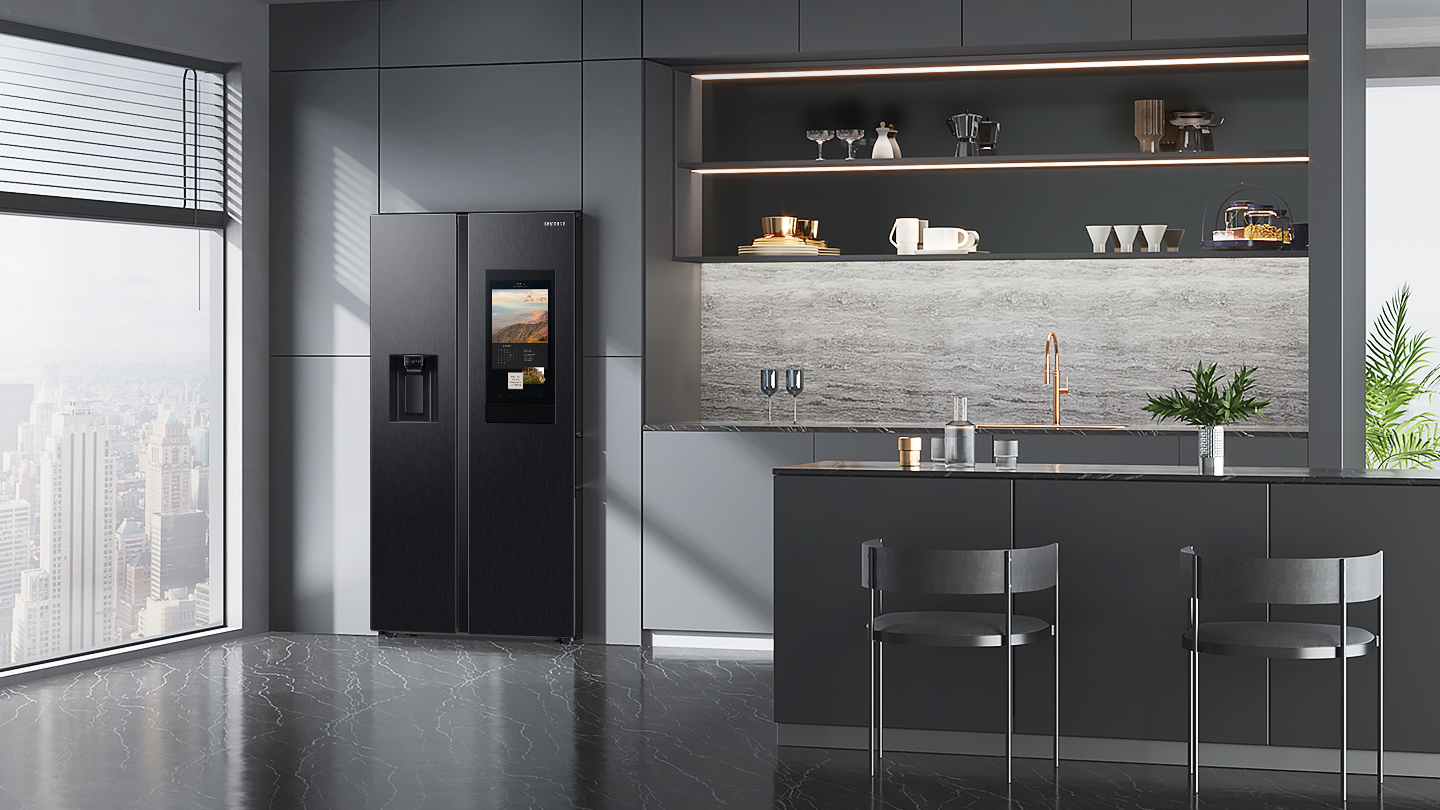
Maybe your refrigerator is the centre of a large, busy kitchen. Maybe you want the convenience of a Side-by-Side. Or perhaps you simply want a familiar double-door refrigerator that can adapt when your storage needs change.
Samsung's range takes a slightly different approach across these three formats — combining smart energy management with the features that make everyday refrigerator use easier.
Samsung Rf71db9950qd: When the Refrigerator Becomes the Heart of the Kitchen
809L | French Door | Triple Cooling | Family Hub+ | SmartThings AI Energy Mode | AI Vision with Google Gemini
If your refrigerator is basically the headquarters of the household, the RF71DB9950QD is built for that kind of life.
Think of the weekend before a family function: vegetables, fruits, drinks, desserts and large containers of food all need somewhere to go. With 809L of space and a flexible four-door layout, the RF71DB9950QD gives large households plenty of room to organise it all.
But its smarter features are what make that space work harder.
Its Triple Cooling system independently manages cooling across compartments, helping maintain suitable temperature and humidity while reducing odour mixing. Its FlexZone can also be set to different temperature modes depending on what you are storing — from meat and fish to fruits, vegetables and beverages.
Then there is SmartThings AI Energy Mode. If estimated electricity consumption is projected to exceed a preset target, it can recommend an energy-saving mode and optimise compressor speed and defrost cycles based on usage patterns and surroundings. It saves upto 10% energy .
And when your hands are full after a grocery run, the Auto Open Door lets you open the refrigerator with a light touch. The Family Hub+ experience adds connected food management, while AI Vision Inside can recognise certain food items and help manage food lists and expiry dates.
Best suited for:
Large households that want generous space, premium convenience and smarter energy management in one refrigerator.
Samsung Rs7hcg8543b1: When Everyday Flexibility Matters
615L | Side-by-Side | Convertible 5-in-1 | Family Hub | SmartThings AI Energy Mode
Not every household needs the biggest refrigerator in the room.
For families that prefer the Side-by-Side format, the RS7HCG8543B1 brings together storage, flexibility and connected features in a slightly more familiar footprint.
Imagine one week your freezer is packed with frozen food. The next, you're preparing for guests and need more room for fresh groceries, drinks and desserts.
That's where Smart Conversion becomes useful. The Convertible 5-in-1 system lets you switch between different storage modes, including converting freezer space into refrigerator space when you need more fresh-food storage.
The RS7HCG8543B1 also uses Twin Cooling Plus™, with independent cooling for the refrigerator and freezer compartments to help maintain suitable conditions and prevent odours from mixing.
And for an appliance that runs every day, energy management becomes part of the experience. SmartThings AI Energy Mode analyses usage patterns and estimated power consumption and can recommend an energy-saving mode when consumption is projected to exceed your target. It saves upto 10% energy.
Add Family Hub features such as View Inside, which lets you check what's in the refrigerator from your phone, and the refrigerator starts doing more than simply keeping food cold.
Best suited for:
Families who want Side-by-Side convenience, flexible storage and connected energy management.
Samsung Rt80h51c3b: When You Want Smarter Energy Management Without Going Oversized
467L | Double Door | Twin Cooling | Convertible 5-in-1 | SmartThings AI Energy Mode
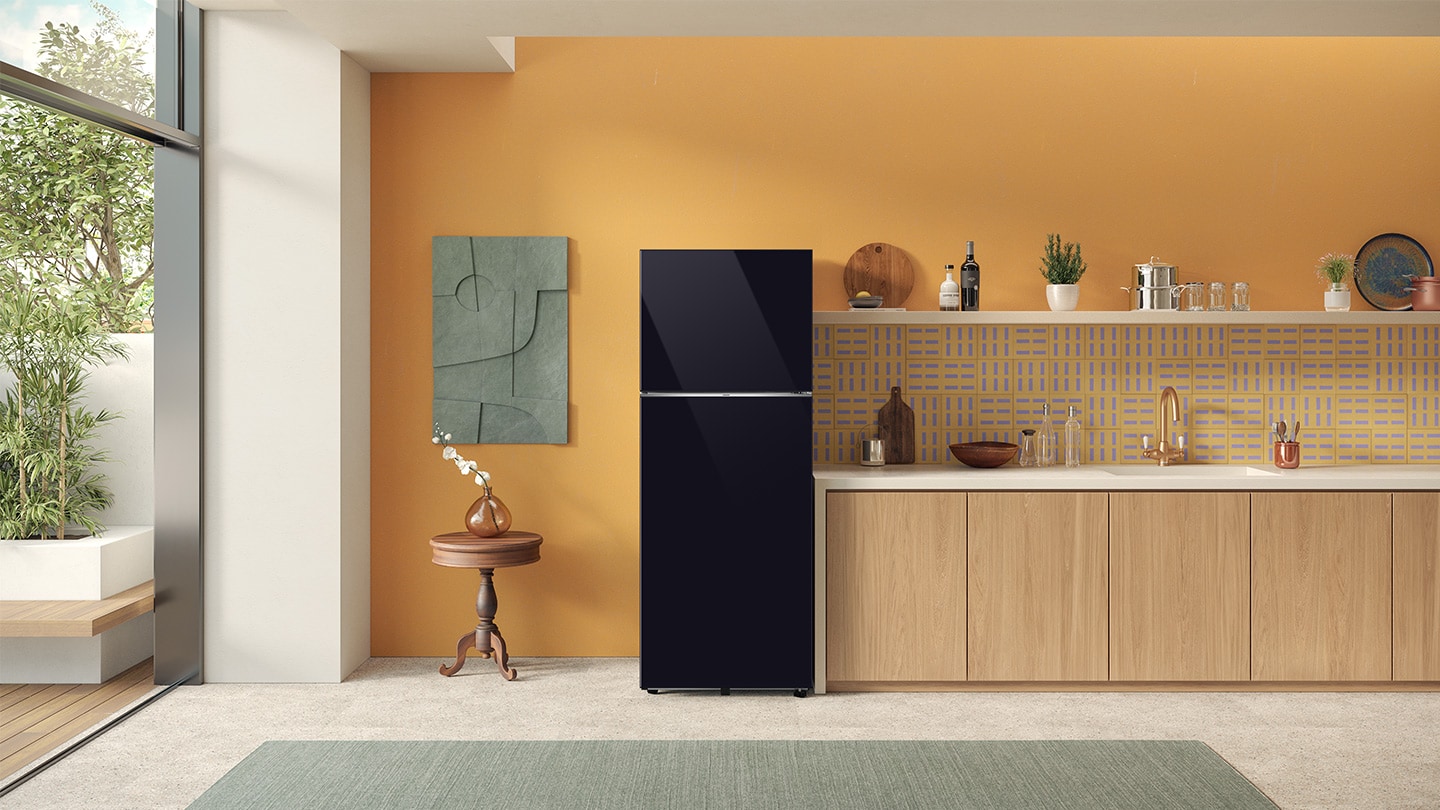
Not every family needs a giant refrigerator — and that is exactly where the RT80H51C3B fits.
It keeps the familiar double-door format, while bringing in features that let the refrigerator adapt to the way you actually use it.
Take a week when you've bought extra vegetables and fresh food but barely have anything frozen. With Convertible 5-in-1, the freezer can be converted into additional refrigerator space. There are also modes that can switch the refrigerator or freezer function off when that space isn't needed, using low electricity to prevent mould and odours.
Its Twin Cooling system independently manages cooling for the refrigerator and freezer, while the Digital Inverter Compressor adjusts operation according to cooling demand.
And just like the larger models, SmartThings AI Energy Mode can analyse usage patterns and estimated consumption and optimise compressor speed and defrost cycles. It saves upto 10% energy.
There is also Active Fresh Filter+, which uses an activated carbon filter and antibacterial mesh; Samsung says it removes 99.99% of certain bacteria under its specified test conditions.
So you don't have to go bigger simply to get smarter.
Best suited for:
Families who prefer a familiar double-door refrigerator but want flexible storage, connected features and smarter energy management
Which Refrigerator Makes Sense for Your Home?
| If you want… | Consider |
| 🏠 Premium space and connected features | |
| 🧊 Large Side-by-Side storage | |
| 🔄 Flexible fridge/freezer space | |
| 🥦 A more familiar double-door format | |
| ⚡ Smart energy monitoring and optimisation | Supported SmartThings AI Energy Mode models |
| 📱 Connected refrigerator controls | Compatible Wi-Fi + SmartThings models |
The point is not that one refrigerator is automatically the most energy-efficient choice for every household.
It is that the right combination of energy performance, capacity, cooling and smart management depends on how you actually use your refrigerator.
Does Bigger Always Mean Higher Electricity Consumption?
Not necessarily.
A larger refrigerator naturally has more space to cool, but capacity alone doesn't tell you how efficiently a particular model operates.
The more useful comparison is the overall energy picture — including its energy rating, compressor technology, cooling system, usage pattern and energy-management features.
That is also why buying the biggest refrigerator available isn't always the smartest decision.
If your household rarely needs extra freezer space, for example, a flexible model that lets you adapt the storage may be more useful than simply adding more litres.
The goal is not to buy more refrigerator.
It is to buy the right refrigerator.
Five Things to Check Before Buying an Energy-Efficient Refrigerator
1. Check the BEE label
Look at the current star rating and estimated annual energy consumption for the exact model.
2. Look at the compressor
Digital inverter compressor can adjust operation according to cooling demand, helping support efficient everyday performance.
3. Understand the cooling system
Features such as Twin Cooling Plus™ or Triple Cooling can be relevant depending on how you store fresh and frozen food.
4. Consider your actual storage needs
A refrigerator that is too small becomes frustrating. One that is unnecessarily large may simply give you space you don't use.
5. Look for useful energy-management features
Connected features such as SmartThings Energy and AI Energy Mode can give you greater visibility into energy use and, on supported models, help optimise consumption.
Energy Efficiency Matters. So Does What Happens After You Bring It Home.
Choosing an energy-efficient refrigerator is ultimately about making a smart long-term decision — and that means looking beyond electricity consumption alone. A refrigerator has to deliver consistent cooling day after day, which is why Samsung tests its refrigerators for temperature maintenance across demanding seasonal conditions and evaluates compartment cooling under different temperature and humidity conditions. That performance is supported by Samsung's ownership ecosystem: Samsung Care+ offers extended warranty and professional care for eligible refrigerators, while Samsung's wider service network provides 3,000+ service touchpoints and 12,500+ trained engineers across India. For consumers shopping during the festive season, Samsung is currently offering a 3-year Care+ extended warranty for the price of a 1-year package on eligible products, adding another layer of long-term reassurance to an energy-conscious purchase.
Bottom Line
When electricity consumption is a priority, the BEE star rating is a useful place to start.
But the buying decision doesn't have to stop there.
Look at the bigger picture: energy rating, compressor technology, cooling system, capacity, usage patterns and intelligent energy management.
Samsung's RF71DB9950QD, RS7HCG8543B1 and RT80H51C3B take different approaches to storage and everyday use, while bringing SmartThings AI Energy Mode into the conversation.
Because an energy-efficient refrigerator isn't simply about a number printed on a label.
It is about how efficiently and intelligently the refrigerator works every day — long after you have stopped thinking about it.
FAQs
What is the difference between Digital inverter compressor and AI Energy Mode?
Digital inverter compressor adjusts its operation according to cooling demand. AI Energy Mode works as an additional energy-management feature that can analyse usage and optimise aspects such as compressor operation and defrost cycles on supported models.
Does SmartThings AI Energy Mode really save electricity?
Samsung states that compatible refrigerators can reduce energy use by up to 10% under specified conditions. Actual savings can vary depending on usage patterns and environmental conditions.
How much electricity does a refrigerator use?
It varies depending on the model, energy rating, capacity, temperature settings, usage patterns and environmental conditions. The BEE label's annual energy-consumption figure is a useful starting point when comparing refrigerators.
Is a bigger refrigerator less energy efficient?
Not necessarily. Size is only one factor. Compressor technology, cooling system, energy rating and how the refrigerator is used also influence energy consumption.
Can I monitor my Samsung refrigerator's energy consumption from my phone?
On compatible connected models, SmartThings Energy can provide information about estimated refrigerator energy consumption and allow users to access energy-management features through the SmartThings app.
Which Samsung refrigerator is best for energy-conscious buyers?
There isn't one answer for every household. The RF71DB9950QD is suited to large households looking for premium space, the RS7HCG8543B1 to buyers who prefer a large Side-by-Side format, and the RT80H51C3B to households looking for a more familiar double-door format. All three bring SmartThings AI Energy Mode into their energy-management proposition.
Affiliate links may be automatically generated - see our ethics statement for details.
Comments
Get your daily dose of tech news, reviews, and insights, in under 80 characters on Gadgets 360 Turbo. Connect with fellow tech lovers on our Forum. Follow us on X, Facebook, WhatsApp, Threads and Google News for instant updates. Catch all the action on our YouTube channel.
Related Stories


5-Star Energy Rating Refrigerator: What to Look for When Choosing an Energy-Efficient Fridge


Follow Us




-
04:17
[Sponsored] LG NANO 4K UHD AI TV NU885: Gemini Search, Dolby Atmos & 5 Years of Updates -
00:57
[Sponsored] Samsung Galaxy Z Fold8 My Fan Cam in Action: Find the Moment, Then Share It -
01:41
[Sponsored] What Do You Need To Know Before Your Next Run? | Samsung Galaxy Watch Ultra2 -
01:32
[Sponsored] Big Day Tomorrow? Prep Today | Samsung Galaxy Watch Ultra2 -
04:37
[Sponsored]: CP PLUS CarKam CP-F89B: 4K Dashcam With Rear Camera, GPS & Emergency Recording
-
Dell Pro Essential 14, Essential 15 लॉन्च, सिक्योरिटी के लिए गजब फीचर्स
-
Flipkart Big Billion Days Sale: ₹15 हजार में स्टूडेंट के लिए बेस्ट लैपटॉप
-
Amazon Great Indian Festival Sale: 10 हजार से सस्ते मिल रहे ये स्मार्टफोन
-
Amazon पर Samsung Galaxy A56 5G, Flipkart पर Motorola Edge 70 Fusion की डील, ₹30 हजार में कौनसा फोन बेहतर?
-
iQOO Neo 12 में मिलेगा Snapdragon 8 Elite Gen 5 चिपसेट, इस महीने होगा लॉन्च
Popular on Gadgets
- Samsung Galaxy S26 Ultra
- Motorola Razr Fold
- ChatGPT
- OPPO Find N6
- Mobiles Under Rs. 40,000
- Vivo X300 Ultra
- Asus Zenbook S14
- iQOO 15
- Vivo X300 Pro
- Lenovo Yoga Slim 7i Aura Edition
- iQOO 15R
- Vivo X Fold 5
- Sony PlayStation 5
- HP OmniPad 12
- OnePlus Nord CE 6 Lite
- OnePlus Pad 4
- OPPO F33 Pro 5G
- Cryptocurrency
- HP OmniBook Ultra 14 (2026)
- iPhone 17
- Eureka Forbes AP 355 Room Air Purifier
- Latest Mobile Phones
- Compare Phones
Latest Gadgets
- Vivo Y600s Pro
- Vivo Y32 (2026)
- Infinix Smart 20 HD
- Vivo V80
- Vivo S2 FE
- Vivo Y600K Turbo
- Realme P4s Lite
- Vivo S60t
- Dell Pro Rugged 14
- Dell Pro Rugged 13 Extreme
- Amazon Alexa Tablet 8
- Amazon Alexa Tablet 11
- Amazfit T-Rex Dual Solar
- OPPO Watch S2
- Toshiba 65-Inch 4K Ultra HD Smart Mini LED QLED TV (65Z670SP)
- Haier M70 Mini LED 65-inch
- Acer Predator Atlas 8
- Asus ROG Ally
- Blue Star 1.5 Ton 5 Star Inverter Split AC (IE518ZNURS)
- Blue Star 2 Ton 3 Star Inverter Window AC (WIE324L)

- About Us
- Sitemaps
- Feedback
- Archives
- Contact Us
- RSS
- Advertise
- Career
- Privacy Policy
- Ethics
- Editorial Policy
- Terms & Conditions
- Complaint Redressal
Download Our Apps
Available in Hindi
© Copyright Red Pixels Ventures Limited 2026. All rights reserved.