
-
 Ledger Addresses Hidden Chip Concerns as Users Claim $92 Million in Crypto Theft12 October 2026
-
Crypto Hack Losses Reach $768 Million in September, Marking 2026’s Worst Month1 October 2026
-
Bitget Hackers Transfer $4 Million to Zcash Privacy Pool to Hide Funds30 September 2026
-
NEAR Intents Blocks Over $50 Million Linked to $387.5 Million Bitget Hack29 September 2026
-
Bitget Restores Bitcoin Withdrawal Services Following $388 Million Hack28 September 2026
- Home
- Cryptocurrency
- Cryptocurrency News
- Qubic Halts Chain as Attacker Exploits Weak Seeds to Drain 1,400 Wallets
Qubic Halts Chain as Attacker Exploits Weak Seeds to Drain 1,400 Wallets
Large Bitcoin holders continue accumulating coins, while traders watch inflation and Federal Reserve policy signals.
Written by Rahul Dhingra, Edited by Ketan Pratap | Updated: 19 October 2026 15:13 IST

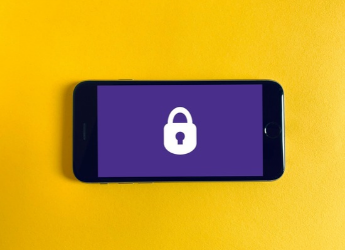
Photo Credit: Unsplash/GuerrillaBuzz
The updated Qubic web wallet uses a cryptographically secure method to generate random values
Click Here to Add Gadgets360 As A Trusted Source

Advertisement
The cryptocurrency Qubic has shut down its own layer-1 blockchain after hackers exploited a security issue in users' wallets and stole about 2.94 quadrillion QU tokens worth $1.4 million (roughly Rs. 13.3 crore). According to an official statement from the Qubic Core Team dated October 18th, the attacker targeted wallets with weak seeds due to insufficient randomness, allowing them to discover private keys. The network paused at tick 85,371,949 to prevent further transfers of the stolen tokens.
Qubic Investigates Wallet Seed Vulnerability as Recovery Plans Remain Pending
Qubic reported that 87.1 percent of the stolen money remained inside the system until its termination, whereas 12.9 percent was already transferred to the cryptocurrency exchange known as MEXC. The project claimed the exchange blocked the receiving account in less than one hour. Qubic has not updated on when the blockchain will restart, as the retrieval of stolen assets is pending a decision from the network operators, referred to as Computors.
Qubic has not updated on when the blockchain will restart, as the retrieval of stolen assets is pending a decision from the network operators, referred to as Computors. The vulnerability exploited a weakness in the mechanism used by specific types of Qubic wallets to create recovery seeds. This can then be exploited to access the wallet without needing to know the recovery phrase.
The reason is that poor randomisation during recovery seed generation makes it easier to reverse-engineer the private key. Qubic categorised these compromised wallets into groups based on the device, browser, and application used to create the recovery seed.
The network freeze has resulted in the theft of most tokens, which are now frozen until the development team finalises a plan to recover them. According to figures Qubic provided, approximately 2.56 trillion QU remained on the blockchain after transactions became unavailable.
The remaining 379.26 billion QU had been moved to MEXC. However, after contacting the exchange, the receiving address was locked. After that, the project halted QUBIC deposits and withdrawals on MEXC at its request. This prevented customers from moving tokens through the network during the investigation.
Qubic claimed that the vulnerability in seed generation has been addressed in the latest version of their web wallet. According to a GitHub commit for version 4.26.4, Qubic now uses crypto.getRandomValues(), a cryptographically secure method for generating random values, instead of JavaScript's Math.random() function.
Qubic stated that its core team is working on determining the impacted wallets and developing recovery solutions for approval by the Computors of the network. The team said it will provide a complete technical report once it finalises the recovery solution. It has yet to announce when the network will resume its operations.
Another similar incident occurred when 500 separate wallets, containing 584 Bitcoin, worth about $38 million (roughly Rs. 360 crore), were attacked and stolen from the Coldcard wallet. The attack was traced to a flaw in how Coldcard generated its keys. 1,324 chunks of BTC were moved across 500 transactions inside a three-block window.
In another report, Galaxy Digital chief researcher Alex Thorn said in August that at least 15 different hackers have used this Coldcard vulnerability. Thorn explained that the victims' reports were useful because they enabled the firm to tag new hackers who would otherwise remain anonymous, since it was a different kind of exploit than the one carried out on a centralised exchange.
Comments
Get your daily dose of tech news, reviews, and insights, in under 80 characters on Gadgets 360 Turbo. Connect with fellow tech lovers on our Forum. Follow us on X, Facebook, WhatsApp, Threads and Google News for instant updates. Catch all the action on our YouTube channel.
Related Stories





Advertisement
Follow Us


-

04:17
[Sponsored] LG NANO 4K UHD AI TV NU885: Gemini Search, Dolby Atmos & 5 Years of Updates -
00:57
[Sponsored] Samsung Galaxy Z Fold8 My Fan Cam in Action: Find the Moment, Then Share It -
01:41
[Sponsored] What Do You Need To Know Before Your Next Run? | Samsung Galaxy Watch Ultra2 -
01:32
[Sponsored] Big Day Tomorrow? Prep Today | Samsung Galaxy Watch Ultra2 -
04:37
[Sponsored]: CP PLUS CarKam CP-F89B: 4K Dashcam With Rear Camera, GPS & Emergency Recording
-
iPhone 16 आज भी Amazon सेल में मिल रहा ₹15 हजार से ज्यादा सस्ता
-
OnePlus 15 को Amazon Great Indian Festival Sale में खरीदें सस्ता
-
₹2250 सस्ता मिल रहा Motorola का 7000mAh बैटरी वाला फोन! Flipkart पर ऑफर
-
Flipkart Sale में ₹14000 सस्ता मिल रहा Vivo का 50MP कैमरा, 9020mAh बैटरी वाला फोन
-
Redmi K100 के जल्द लॉन्च की तैयारी, 6.83 इंच डिस्प्ले
Advertisement
Popular on Gadgets
- Samsung Galaxy S26 Ultra
- Motorola Razr Fold
- ChatGPT
- OPPO Find N6
- Mobiles Under Rs. 40,000
- Vivo X300 Ultra
- Asus Zenbook S14
- iQOO 15
- Vivo X300 Pro
- Lenovo Yoga Slim 7i Aura Edition
- iQOO 15R
- Vivo X Fold 5
- Sony PlayStation 5
- HP OmniPad 12
- OnePlus Nord CE 6 Lite
- OnePlus Pad 4
- OPPO F33 Pro 5G
- Cryptocurrency
- HP OmniBook Ultra 14 (2026)
- iPhone 17
- Eureka Forbes AP 355 Room Air Purifier
- Latest Mobile Phones
- Compare Phones
Latest Gadgets
- Samsung Galaxy F70 5G
- Tecno Spark 50S 5G
- Vivo Y600s Pro
- Vivo Y32 (2026)
- Infinix Smart 20 HD
- Vivo V80
- Vivo S2 FE
- Vivo Y600K Turbo
- HP ZBook Ultra G3a
- Dell Pro Rugged 14
- Amazon Alexa Tablet 8
- Amazon Alexa Tablet 11
- Amazfit T-Rex Dual Solar
- OPPO Watch S2
- Toshiba 65-Inch 4K Ultra HD Smart Mini LED QLED TV (65Z670SP)
- Haier M70 Mini LED 65-inch
- Acer Predator Atlas 8
- Asus ROG Ally
- Blue Star 1.5 Ton 5 Star Inverter Split AC (IE518ZNURS)
- Blue Star 2 Ton 3 Star Inverter Window AC (WIE324L)

- About Us
- Sitemaps
- Feedback
- Archives
- Contact Us
- RSS
- Advertise
- Career
- Privacy Policy
- Ethics
- Editorial Policy
- Terms & Conditions
- Complaint Redressal
Download Our Apps
Available in Hindi
© Copyright Red Pixels Ventures Limited 2026. All rights reserved.