- Home
- Glance
This Day, That Year: What Happened on December 17
The Indian Statistical Institute was established in 1931 by scientist Prasanta Chandra Mahalanobis.
Written by Gadgets 360 Staff, Edited by Gadgets 360 Staff | Updated: 15 December 2023 18:44 IST
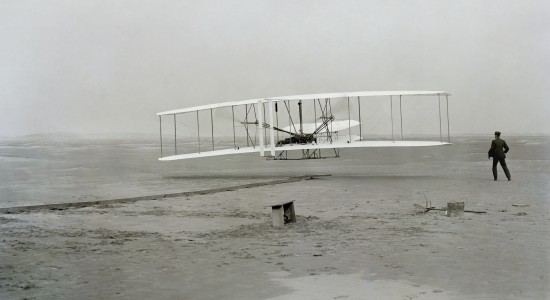
Photo Credit: Unsplash/ History in HD
Click Here to Add Gadgets360 As A Trusted Source


Advertisement
The Visionary Journey of India's Statistical Titan, ISI
Established in 1931 by scientist Prasanta Chandra Mahalanobis, the Indian Statistical Institute (ISI) in West Bengal stands as a beacon of statistical science and academic brilliance. Mahalanobis' vision for ISI was to create a hub for empirical analysis and scholarly exploration, pioneering statistical research in India.
Prasanta Chandra Mahalanobis, a luminary in statistical analysis, envisaged ISI as a stronghold for pioneering statistical research and education. His profound understanding of statistical methodologies laid the groundwork for ISI's foundational principles. With unwavering commitment, Mahalanobis forged a path for empirical analysis to flourish, propelling the Institute to the forefront of academic innovation.
ISI swiftly evolved into a nurturing ground for aspiring statisticians and scientists, fostering an environment where scholarly rigour intersects with inventive thinking. Situated amidst the tranquil beauty of West Bengal, ISI became a cradle of academic pursuit and innovation, attracting minds devoted to advancing statistical science.
Over the years, ISI has upheld its legacy as a leading institution, continuously pushing the boundaries of statistical research. Its enduring impact, deeply intertwined with Prasanta Chandra Mahalanobis's wisdom, continues to resonate, shaping the trajectory of statistical science and academic exploration in India and beyond. The Institute is a testament to Mahalanobis's visionary foresight and unwavering dedication, enriching the scholarly fabric and leaving an indelible imprint on statistical inquiry.
Beyond its academic eminence, ISI has played a pivotal role in shaping India's socio-economic landscape. ISI has contributed significantly to policy formulation, planning, and developmental initiatives in diverse sectors, including agriculture, industry, and public health, through its research and consultancy services. The Institute's impactful collaborations with government bodies, international agencies, and enterprises have catalysed advancements and fostered innovation, amplifying its role as a catalyst for societal progress.
Moreover, ISI's academic programs, including specialised courses and workshops, have nurtured generations of statisticians and researchers, equipping them with the tools and knowledge to tackle contemporary challenges. Its alumni, dispersed across the globe, stand as a testament to ISI's profound influence, spearheading groundbreaking research and contributing to various spheres of academia, industry, and governance.
The Indian Statistical Institute remains an epitome of academic excellence, embodying a legacy of scholarly pursuit and societal impact. Its steadfast commitment to empirical inquiry and statistical innovation inspires generations, perpetuating the spirit of intellectual curiosity and advancement in statistical science.
To the Sky: The Wright Brothers' 1903 Triumph
The dreams of flight, cherished across centuries, were embodied in the historic events of December 17, 1903, the second time after its initial testing 3 days back. Amidst the windswept shores of Kill Devil Hills near Kitty Hawk, North Carolina, Orville Wright etched humanity's first powered flight into the sky. Assisted by his brother, Wilbur, this pioneering venture, the Wright Flyer, soared into the skies for a mere 12 seconds, spanning 120 feet at a remarkable speed of 6.8 miles per hour.
The Wright brothers' innovation was anchored in their bicycle business expertise, fused with a groundbreaking invention: three-axis control, enabling them to manoeuvre and stabilise their aircraft. Amidst their groundbreaking flight, captured by a witness in a historical photograph, the brothers executed three additional flights that day, the longest spanning 852 feet in a remarkable 59 seconds.
This momentous achievement catapulted the world into an era of aviation expansion. The Wrights continued to refine their craft, culminating in the Flyer III's extraordinary 24-mile flight in 1905. Simultaneously, strides in aviation unfolded globally, accelerated by World War I's introduction of aircraft in warfare.
In homage to the Wrights' legacy, Apollo 14 named their Lunar Module "Kitty Hawk," immortalising the brothers' pioneering spirit in the celestial odyssey of human exploration.
Comments
Get your daily dose of tech news, reviews, and insights, in under 80 characters on Gadgets 360 Turbo. Connect with fellow tech lovers on our Forum. Follow us on X, Facebook, WhatsApp, Threads and Google News for instant updates. Catch all the action on our YouTube channel.


Advertisement
Follow Us




-
05:05
Goboult Mustang Racer Smartwatch Review: Should You Get This Mustang Smartwatch? -
04:58
OnePlus Nord Buds 4 Pro Review: Specs, Sound Quality, ANC, and Battery Backup Tested -
02:29
[Sponsored] Samsung Galaxy S26 Ultra First Look: AI Smartphone for Creators, Gaming & Productivity -
04:25
Vivo X200T Review - Full Camera, Gaming & Battery Test | Worth Buying? -
28:31
The Future of Productivity: Logitech's Anatoliy Polyanker On AI, Hybrid Work, And India's Tech Boom
-
200 मेगापिक्सल कैमरा, 7000mAh बैटरी के साथ Vivo V70 FE लॉन्च, जानें सबकुछ
-
Redmi Note 15 SE भारत में लेटेस्ट AI फीचर्स, 5800mAh बैटरी के साथ लॉन्च
-
5100mAh बैटरी, 50MP कैमरा वाला Pixel फोन हुआ 4700 रुपये सस्ता
-
Realme 16 5G 7000mAh बैटरी के साथ भारत में लॉन्च, अच्छी सेल्फी के लिए बैक में लगा है शीशा!
-
Airtel के ग्राहक 65 करोड़ के पार! बनी दुनिया की दूसरी सबसे बड़ी टेलीकॉम कंपनी
Advertisement
Popular on Gadgets
- Samsung Galaxy Unpacked 2026
- iPhone 17 Pro Max
- ChatGPT
- iOS 26
- Laptop Under 50000
- Smartwatch Under 10000
- Apple Vision Pro
- Oneplus 12
- OnePlus Nord CE 3 Lite 5G
- iPhone 13
- Xiaomi 14 Pro
- Oppo Find N3
- Tecno Spark Go (2023)
- Realme V30
- Best Phones Under 25000
- Samsung Galaxy S24 Series
- Cryptocurrency
- iQoo 12
- Samsung Galaxy S24 Ultra
- Giottus
- Samsung Galaxy Z Flip 5
- Apple 'Scary Fast'
- Housefull 5
- GoPro Hero 12 Black Review
- Invincible Season 2
- JioGlass
- HD Ready TV
- Latest Mobile Phones
- Compare Phones
Latest Gadgets
- Nord 6
- Honor X80i
- Honor Play 80 Pro
- Redmi Note 15 SE 5G
- Redmi A7 Pro
- OPPO K15 Pro
- OPPO K15 Pro+
- Lava Bold N2 Lite
- Xiaomi Book Pro 14
- MacBook Neo
- Vivo Pad 6 Pro
- Lenovo Legion Y700 Gen 5
- boAt Valour Watch 1R
- Xiaomi Watch S5
- Xiaomi QLED TV X Pro 75
- Haier H5E Series
- Asus ROG Ally
- Nintendo Switch Lite
- Haier 1.6 Ton 5 Star Inverter Split AC (HSU19G-MZAID5BN-INV)
- Haier 1.6 Ton 5 Star Inverter Split AC (HSU19G-MZAIM5BN-INV)

- About Us
- Sitemaps
- Feedback
- Archives
- Contact Us
- RSS
- Advertise
- Career
- Privacy Policy
- Ethics
- Editorial Policy
- Terms & Conditions
- Complaint Redressal
Download Our Apps
Available in Hindi
© Copyright Red Pixels Ventures Limited 2026. All rights reserved.