-
 From Deep Space: Artemis II Astronauts Capture a Stunning View of the Milky Way11 April 2026
 -
NASA’s Artemis II Mission Completes Lunar Flyby, Sets Farthest Human Spaceflight Record7 April 2026
-
Artemis II Lunar Flyby: Here’s How to Watch NASA’s Historic Mission Live on Netflix, Prime Video, and More6 April 2026
-
Artemis 2: Astronauts Aboard Orion Spacecraft Begin Journey Towards the Moon on Day 23 April 2026
-
iPhones in Deep Space: NASA Breaks Rules for Artemis 2 Crew; 5 Key Facts2 April 2026
- Home
- Science
- Science News
- Artemis 2 Commander Reid Wiseman Teams Up With Astrophotographer for Rare Lunar Mission Photos
Artemis 2 Commander Reid Wiseman Teams Up With Astrophotographer for Rare Lunar Mission Photos
During Artemis II Mission, astronauts captured thousands of images of the Moon’s far side.
Written by Gadgets 360 Staff | Updated: 12 May 2026 20:22 IST
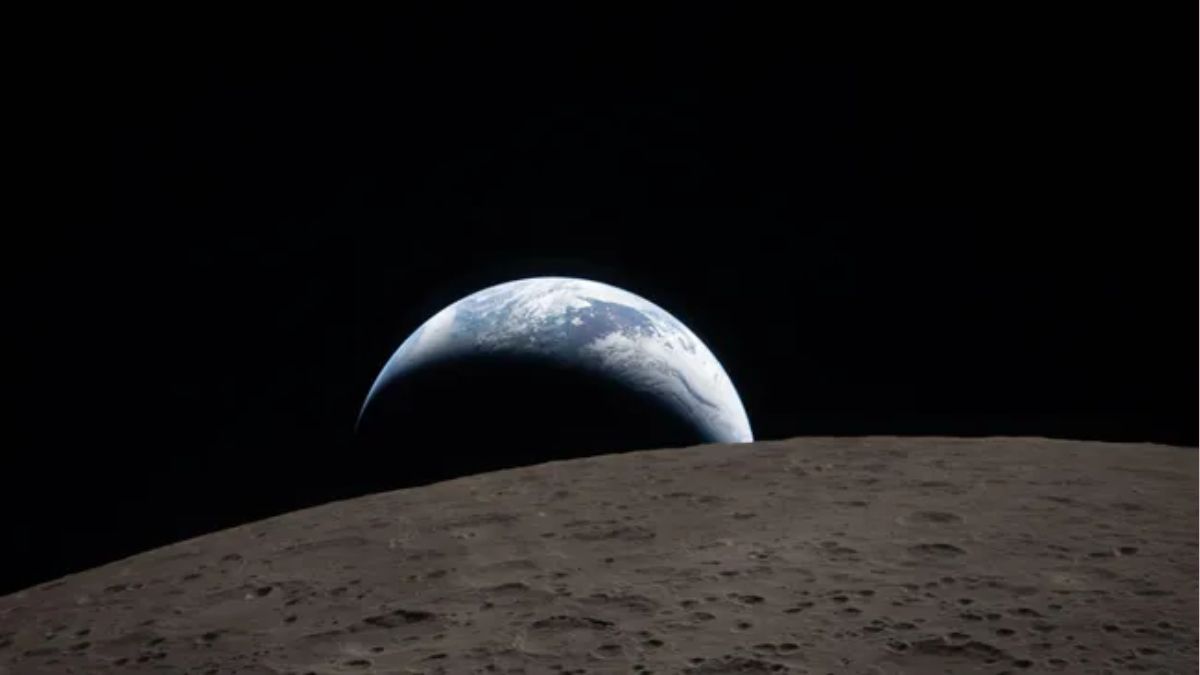
Photo Credit: NASA
NASA's Artemis 2 mission launched on April 1, 2026.
Click Here to Add Gadgets360 As A Trusted Source


Advertisement
When NASA's Artemis 2 mission launched on April 1, 2026, it sent four astronauts on a 10-day journey around the Moon — humanity's first crewed visit to our celestial neighbour since 1972. Before liftoff, astrophotographer Andrew McCarthy made a bold move: he slid into the social media direct messages of mission commander Reid Wiseman with an unusual collaboration request. Wiseman said yes immediately, and the resulting images are unlike anything seen before.
A Far Side Unlike Any Other
According to the news, unlike the near side, the far side of the Moon has geological differences in the sense that it is made up of old, highland areas with anorthosites – light and low-density rock – dominating, with no dark-coloured maria present like those on the near side. One of the 10 scientific missions conducted on the flyby was studying colour changes, because they would give clues about the minerals on the Moon's surface. Colour changes were observed throughout the mission, and they would help in making scientific discoveries about the Moon, including the age of its features.
Turning Raw Data Into a Mineral Map
McCarthy's technique — called image stacking — layers dozens of photos to cancel out random noise and amplify faint colour signals. The colours have scientific significance because basalts rich in titanium will be shown in blue, while older materials containing iron are shown in brown and red tones. Since the pictures were taken above Earth's atmosphere, McCarthy did not need 150 to 200 pictures; instead, 10 to 15 pictures were enough to get very clean data. To date, more than 12,000 images have been provided by NASA after splashdown, and McCarthy claims that he has yet to exhaust his data.
Comments
Get your daily dose of tech news, reviews, and insights, in under 80 characters on Gadgets 360 Turbo. Connect with fellow tech lovers on our Forum. Follow us on X, Facebook, WhatsApp, Threads and Google News for instant updates. Catch all the action on our YouTube channel.
Further reading:
Artemis II, moon, NASA, Lunar exploration, Andrew McCarthy, astrophotography, Lunar Geology, space exploration
Related Stories

Artemis 2 Commander Reid Wiseman Teams Up With Astrophotographer for Rare Lunar Mission Photos


Advertisement
Follow Us




-
00:21
[Sponsored] Samsung Galaxy Z Fold8, Fold8 Ultra -
03:41
[Sponsored] Samsung Galaxy Z Fold8: How It Fits Into an Actor’s Busy Day | Camera, Multitasking & More -
09:53
iPhone 18 Goes On Sale In India: Huge Crowds, Long Queues At Apple Stores -
06:32
Google Pixel 11 Pro XL Review: The Most Exciting Pixel Yet? | 120X Zoom + Tensor G6 -
05:20
Samsung Galaxy Watch Ultra 2 Review: Is This the Best Android Smartwatch?
Advertisement
Popular on Gadgets
- Samsung Galaxy S26 Ultra
- Motorola Razr Fold
- ChatGPT
- OPPO Find N6
- Mobiles Under Rs. 40,000
- Vivo X300 Ultra
- Asus Zenbook S14
- iQOO 15
- Vivo X300 Pro
- Lenovo Yoga Slim 7i Aura Edition
- iQOO 15R
- Vivo X Fold 5
- Sony PlayStation 5
- HP OmniPad 12
- OnePlus Nord CE 6 Lite
- OnePlus Pad 4
- OPPO F33 Pro 5G
- Cryptocurrency
- HP OmniBook Ultra 14 (2026)
- iPhone 17
- Eureka Forbes AP 355 Room Air Purifier
- Latest Mobile Phones
- Compare Phones
Latest Gadgets
- Vivo Y600i
- Mivi One 5G
- Xiaomi 18 Pro Max
- Motorola Signature 27
- OPPO Find X10 E
- OnePlus N6 Lite 4G
- Ai+ Nova 2 Power 5G
- Lava Virat Curve 5G
- Microsoft Surface Laptop, 13-inch (2nd Edition)
- Lenovo LOQ 15AHP11
- Microsoft Surface Pro, 12-inch (2nd Edition)
- Xiaomi Pad 9 Pro
- Amazfit T-Rex Dual Solar
- OPPO Watch S2
- Haier M70 Mini LED 65-inch
- Xiaomi TV FX Mini LED 65
- Acer Predator Atlas 8
- Asus ROG Ally
- Blue Star 1.5 Ton 5 Star Inverter Split AC (IE518ZNURS)
- Blue Star 2 Ton 3 Star Inverter Window AC (WIE324L)

- About Us
- Sitemaps
- Feedback
- Archives
- Contact Us
- RSS
- Advertise
- Career
- Privacy Policy
- Ethics
- Editorial Policy
- Terms & Conditions
- Complaint Redressal
Download Our Apps
Available in Hindi
© Copyright Red Pixels Ventures Limited 2026. All rights reserved.