-
 Scientists Construct 5-Micron Engine Generating Effective Heat of 13 Million Degrees Celsius Without Burning24 October 2025
 -
Scientists Visualize New Gold Quantum Needles at Nanoscale5 September 2025
-
New Nanoscale Optical Sensors Can Measure Magnitude of Force, Claims Study3 January 2025
-
Scientists Test Nanorobots to Treat Brain Aneurysms8 September 2024
-
Iron Nanowires for Bone Cell Formation Developed, Could Pave Way for Degenerative Bone Disease Treatments7 July 2022
- Home
- Science
- Science News
- Soon, You Could Charge Your Smartphone by Walking
Soon, You Could Charge Your Smartphone by Walking
By Indo-Asian News Service | Updated: 12 February 2016 19:06 IST
Click Here to Add Gadgets360 As A Trusted Source

Advertisement
Mechanical engineers from University of Wisconsin-Madison are developing an innovative energy harvesting and storage technology that can reduce reliance on batteries in mobile devices and charge your smartphone as you walk.
Tom Krupenkin, professor of mechanical engineering, and senior scientist J Ashley Taylor described a technology that could capture the energy of human motion to power mobile electronic devices.
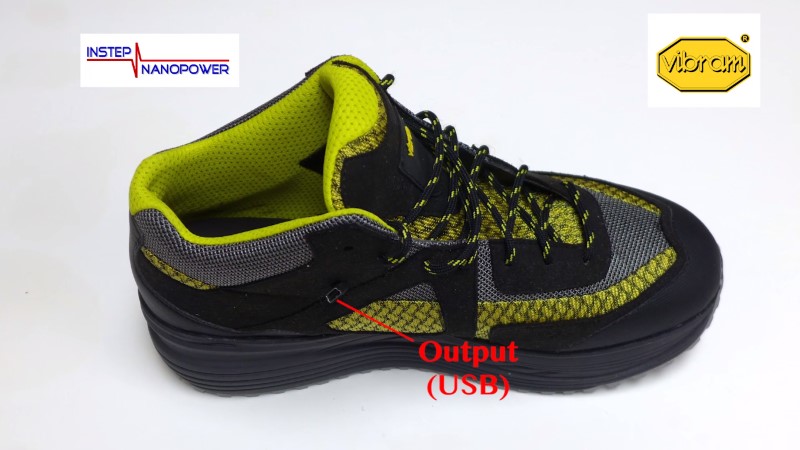
This could enable a footwear-embedded energy harvester that captures energy produced by humans during walking and stores it for later use.
The technology could prove useful for the military as soldiers carry heavy batteries to power their radios, GPS units and night-vision goggles in the field.
"Human walking carries a lot of energy. Theoretical estimates show that it can produce up to 10 watts per shoe and that energy is just wasted as heat. A total of 20 watts from walking is not a small thing, especially compared to the power requirements of the majority of modern mobile devices," explained Krupenkin.
Krupenkin said tapping into just a small amount of that energy is enough to power a wide range of mobile devices, including smartphones, tablets, laptop computers and flashlights.
A typical smartphone requires less than two watts of energy.
"We have been developing new methods of directly converting mechanical motion into electrical energy that are appropriate for this type of application," Krupenkin noted in a paper published in the journal Scientific Reports.
The researchers are using "reverse electrowetting" -- a phenomenon under which mechanical energy is directly converted into electrical energy when a conductive liquid interacts with a nanofilm-coated surface.
The engineers are looking for industry to commercialise the technology through their startup company, InStep NanoPower.
Comments
Get your daily dose of tech news, reviews, and insights, in under 80 characters on Gadgets 360 Turbo. Connect with fellow tech lovers on our Forum. Follow us on X, Facebook, WhatsApp, Threads and Google News for instant updates. Catch all the action on our YouTube channel.
Further reading:
Nanotechnology, Science
Related Stories






Advertisement
Follow Us




-
![[Sponsored] LG NANO 4K UHD AI TV NU885: Gemini Search, Dolby Atmos & 5 Years of Updates](https://www.gadgets360.com/static/desktop/images/spacer.png)
04:17
[Sponsored] LG NANO 4K UHD AI TV NU885: Gemini Search, Dolby Atmos & 5 Years of Updates -
00:57
[Sponsored] Samsung Galaxy Z Fold8 My Fan Cam in Action: Find the Moment, Then Share It -
01:41
[Sponsored] What Do You Need To Know Before Your Next Run? | Samsung Galaxy Watch Ultra2 -
01:32
[Sponsored] Big Day Tomorrow? Prep Today | Samsung Galaxy Watch Ultra2 -
04:37
[Sponsored]: CP PLUS CarKam CP-F89B: 4K Dashcam With Rear Camera, GPS & Emergency Recording
Advertisement
Popular on Gadgets
- Samsung Galaxy S26 Ultra
- Motorola Razr Fold
- ChatGPT
- OPPO Find N6
- Mobiles Under Rs. 40,000
- Vivo X300 Ultra
- Asus Zenbook S14
- iQOO 15
- Vivo X300 Pro
- Lenovo Yoga Slim 7i Aura Edition
- iQOO 15R
- Vivo X Fold 5
- Sony PlayStation 5
- HP OmniPad 12
- OnePlus Nord CE 6 Lite
- OnePlus Pad 4
- OPPO F33 Pro 5G
- Cryptocurrency
- HP OmniBook Ultra 14 (2026)
- iPhone 17
- Eureka Forbes AP 355 Room Air Purifier
- Latest Mobile Phones
- Compare Phones
Latest Gadgets
- Samsung Galaxy F70 5G
- Tecno Spark 50S 5G
- Vivo Y600s Pro
- Vivo Y32 (2026)
- Infinix Smart 20 HD
- Vivo V80
- Vivo S2 FE
- Vivo Y600K Turbo
- HP ZBook Ultra G3a
- Dell Pro Rugged 14
- Amazon Alexa Tablet 8
- Amazon Alexa Tablet 11
- Amazfit T-Rex Dual Solar
- OPPO Watch S2
- Toshiba 65-Inch 4K Ultra HD Smart Mini LED QLED TV (65Z670SP)
- Haier M70 Mini LED 65-inch
- Acer Predator Atlas 8
- Asus ROG Ally
- Blue Star 1.5 Ton 5 Star Inverter Split AC (IE518ZNURS)
- Blue Star 2 Ton 3 Star Inverter Window AC (WIE324L)

- About Us
- Sitemaps
- Feedback
- Archives
- Contact Us
- RSS
- Advertise
- Career
- Privacy Policy
- Ethics
- Editorial Policy
- Terms & Conditions
- Complaint Redressal
Download Our Apps
Available in Hindi
© Copyright Red Pixels Ventures Limited 2026. All rights reserved.