-
 Google's AI Mode Can Now Track Flight Prices and Book Hotels for You28 August 2026
 -
Claude Artifacts Found in Google Search, Raising Fresh Privacy Concerns28 July 2026
-
Google AI Mode Now Supports More Connected Apps Including YouTube Music for Everyday Tasks17 July 2026
-
Google Search Hits All-Time Usage Record During Argentina’s Dramatic World Cup Win Over Egypt9 July 2026
-
German Court Says Google Can Be Held Accountable for AI Overviews Errors, Company Responds11 June 2026
Google I/O 2026: Google Revamps Search Experience With AI Agents, Multi-Modal Queries
Google's latest update allows users to search using text, images, files, videos, and Chrome tabs simultaneously.
Written by Shaurya Tomer, Edited by Rohan Pal | Updated: 20 May 2026 11:22 IST
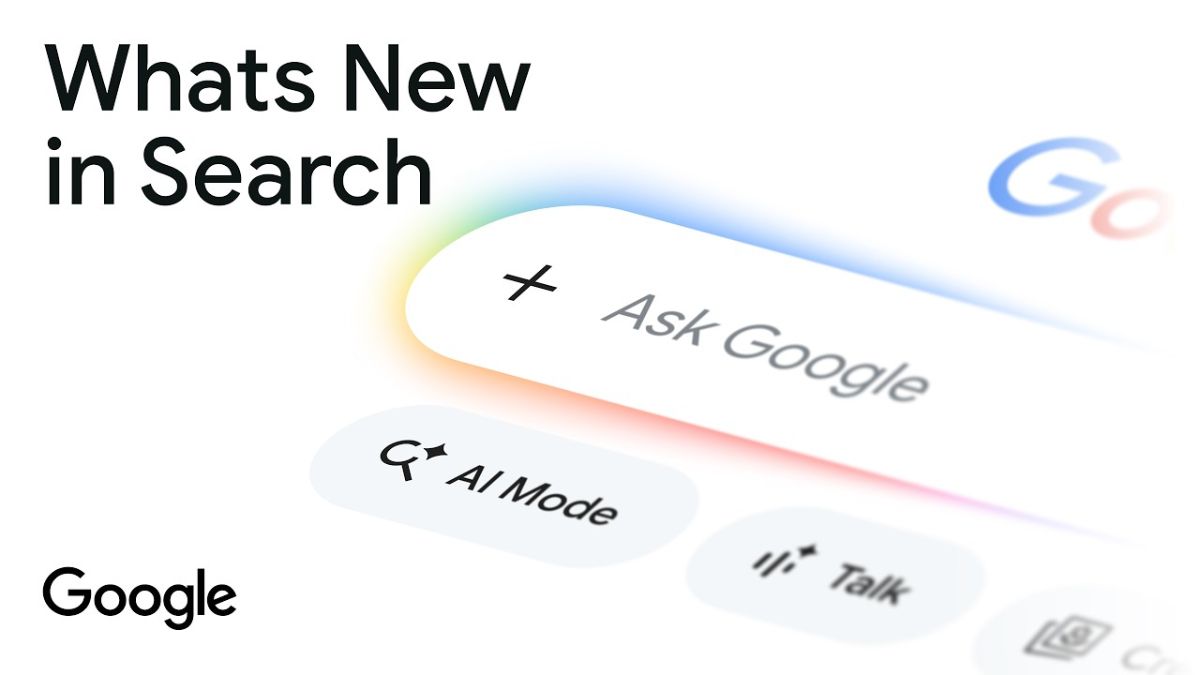
Photo Credit: Google
Several of the new AI features in Search will be rolling out in the summer
Click Here to Add Gadgets360 As A Trusted Source

Advertisement
Google I/O 2026 was held at the Shoreline Amphitheatre in California on Tuesday. During the keynote of the annual developer conference, the tech giant announced a major overhaul of its Search experience, calling it the biggest change to the Search box in over 25 years. Among the most notable changes is the new intelligent Search box, built on Gemini 3.5 Flash. The revamped experience aims to make it easier for users to ask more natural, complex, and multi-modal queries using text, images, videos, files, and even Chrome tabs.
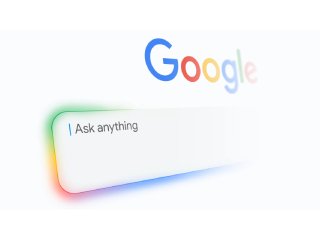
New AI-Powered Intelligent Search Box
In a blog post, Google said that the new intelligent Search box expands dynamically to provide users with more space to type detailed questions. It is claimed to be better designed to understand user intent, while also providing AI-powered suggestions that are more than autocomplete recommendations.
The tech giant has introduced multi-modal support, too. This allows users to search using text, images, files, videos, and Chrome tabs simultaneously. They will continue to receive traditional Search results alongside AI-generated responses.
At IO, Google also confirmed that Gemini 3.5 Flash is now the default model for AI Mode globally. The newer Flash model is claimed to offer improved reasoning, coding, and agentic capabilities while maintaining faster response times. Users can also continue asking follow-up questions directly from AI Overviews and transition into full AI Mode conversations across desktop and mobile devices.
AI Agents, Booking Features and Custom Dashboards
Google also introduced what it calls “Search agents”. As described by the tech giant, these are AI systems that are capable of continuously monitoring information and performing background research tasks for users.
The first implementation of this system will focus on “information agents,” which can monitor blogs, news sites, social platforms, finance data, shopping information, and sports updates based on user-defined objectives. Giving an example, Google explained that while apartment hunting or tracking sneaker releases, AI agents can continuously scan the web and notify users when the set conditions are met.
Information agents will initially be available in the summer for Google AI Pro and Google AI Ultra subscribers.
Agentic booking features within Search are also being expanded. This allows users to search for local services using natural language queries. They can initiate requests such as finding private karaoke rooms with food service availability, and Search can then aggregate pricing and availability information and redirect users to booking providers. AI will also be capable of calling businesses on behalf of users in select categories. These features are expected to roll out in the US later this summer.
Another major addition is agentic coding and AI-generated interfaces powered by Google Antigravity and Gemini 3.5 Flash. The company claims Search is now capable of building custom visual layouts, simulations, graphs, tables, and interactive interfaces tailored to user questions.
Lastly, Personal Intelligence in AI Mode is being expanded to more than 200 countries across 98 languages. Users can connect services such as Gmail and Google Photos, with Google Calendar support arriving later. The company emphasised that users retain full control over whether connected apps can be accessed by AI systems.
Comments
Get your daily dose of tech news, reviews, and insights, in under 80 characters on Gadgets 360 Turbo. Connect with fellow tech lovers on our Forum. Follow us on X, Facebook, WhatsApp, Threads and Google News for instant updates. Catch all the action on our YouTube channel.
Related Stories




Advertisement
Follow Us




-
![[Sponsored]: CP PLUS CarKam CP-F89B: 4K Dashcam With Rear Camera, GPS & Emergency Recording](https://www.gadgets360.com/static/desktop/images/spacer.png)
04:37
[Sponsored]: CP PLUS CarKam CP-F89B: 4K Dashcam With Rear Camera, GPS & Emergency Recording -
04:23
[Partner Content] Your Phone Can Do WAY More Than You Think | OPPO ColorOS 16 -
01:59
Samsung Galaxy Z Fold8 Ultra: Unfold the Ultra Night -
03:24
Apple Pay Launches In India: Supported Devices, Cards And Payments Explained -
00:21
[Sponsored] Samsung Galaxy Z Fold8, Fold8 Ultra
-
Flipkart Big Billion Days: Xiaomi के 5 Redmi स्मार्टफोन्स पर Deals रिवील
-
Delhi Pollution 2026: 50% Work From Home, बिना PUCC नहीं मिलेगा Fuel
-
Oppo K15x हुआ लॉन्च; 6500mAh बैटरी, 120Hz डिस्प्ले के साथ आया बजट 5G फोन
-
200MP Camera और 7,000mAh Battery वाला नया फोन, कीमत और फीचर्स देखकर खरीदने का मन करेगा!
-
इलेक्ट्रिक टू-व्हीलर्स की बिक्री में 7 प्रतिशत की बढ़ोतरी, TVS Motor का पहला रैंक बरकरार
Advertisement
Popular on Gadgets
- Samsung Galaxy S26 Ultra
- Motorola Razr Fold
- ChatGPT
- OPPO Find N6
- Mobiles Under Rs. 40,000
- Vivo X300 Ultra
- Asus Zenbook S14
- iQOO 15
- Vivo X300 Pro
- Lenovo Yoga Slim 7i Aura Edition
- iQOO 15R
- Vivo X Fold 5
- Sony PlayStation 5
- HP OmniPad 12
- OnePlus Nord CE 6 Lite
- OnePlus Pad 4
- OPPO F33 Pro 5G
- Cryptocurrency
- HP OmniBook Ultra 14 (2026)
- iPhone 17
- Eureka Forbes AP 355 Room Air Purifier
- Latest Mobile Phones
- Compare Phones
Latest Gadgets
- Samsung Galaxy F08
- Samsung Galaxy M08
- OPPO K15x
- OPPO K15s
- HMD Vibe 2 Pro 5G
- OPPO K14 Plus 5G
- Lava Shark 2 Pro 5G
- Ai+ Pulse 2 FE
- Dell 14 Plus 2-in-1 (AMD Ryzen AI 7 350, 2025)
- Microsoft Surface Laptop, 13-inch (2nd Edition)
- Samsung Galaxy Tab S12+
- Samsung Galaxy Tab S12 Ultra
- Amazfit T-Rex Dual Solar
- OPPO Watch S2
- Toshiba 65-Inch 4K Ultra HD Smart Mini LED QLED TV (65Z670SP)
- Haier M70 Mini LED 65-inch
- Acer Predator Atlas 8
- Asus ROG Ally
- Blue Star 1.5 Ton 5 Star Inverter Split AC (IE518ZNURS)
- Blue Star 2 Ton 3 Star Inverter Window AC (WIE324L)

- About Us
- Sitemaps
- Feedback
- Archives
- Contact Us
- RSS
- Advertise
- Career
- Privacy Policy
- Ethics
- Editorial Policy
- Terms & Conditions
- Complaint Redressal
Download Our Apps
Available in Hindi
© Copyright Red Pixels Ventures Limited 2026. All rights reserved.