-
 Tesla Model Y L Premium Launched in India With 3-Row Seating, Up to 681km WLTP Range: Price, Features22 April 2026
 -
Intel Joins Elon Musk’s Terafab Project to Build Chips for Humanoid Robots and Data Centres8 April 2026
-
Tesla’s CarPlay Rollout Delayed Due to iOS 26 Maps Changes, Slower Software Adoption: Mark Gurman16 February 2026
-
First Tesla Centre in India to Open Doors on November 27 With Charging, Retail, and After-Sales Services26 November 2025
-
Elon Musk Reveals Tesla Is Starting AI5 Chip Tape Out, to Scale AI Chipset Development24 November 2025
Tesla Robotaxi Gets Longer Austin Hours as Musk Defends Cameras Against Lidar
Elon Musk has highlighted low-light perception as an ongoing issue for Tesla's autonomous driving technology.
Written by Sucharita Ganguly, Edited by Rohan Pal | Updated: 5 October 2026 15:34 IST
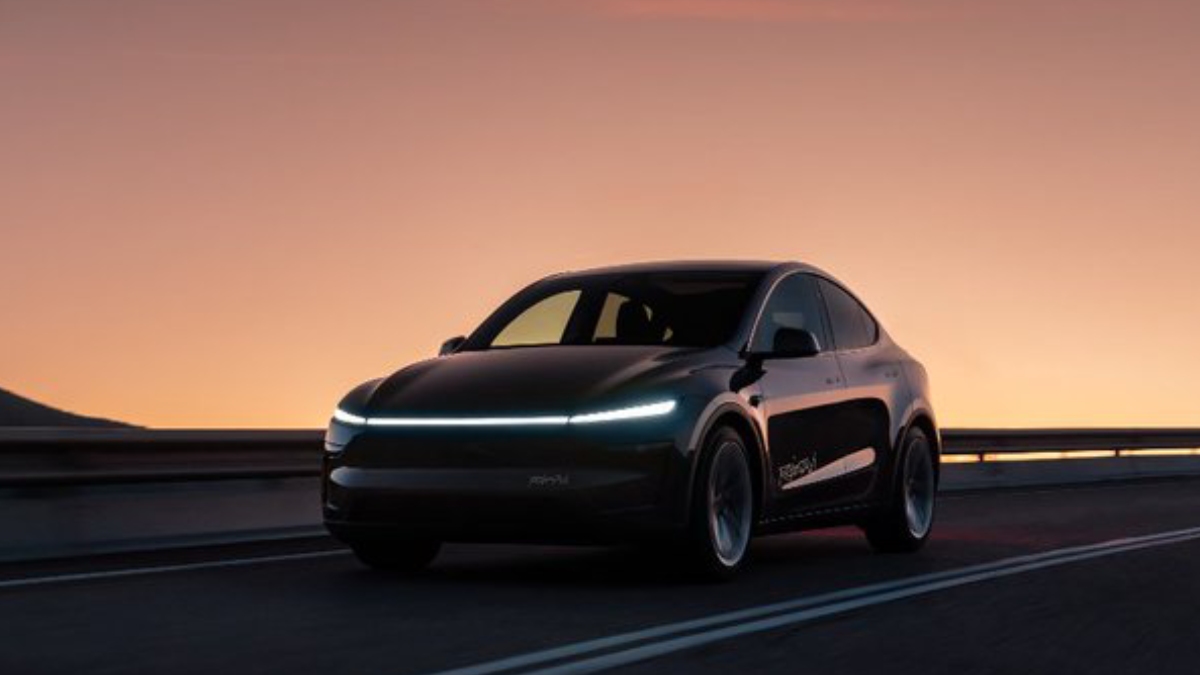
Photo Credit: Robotaxi
Tesla relies on cameras and AI for autonomous driving
Click Here to Add Gadgets360 As A Trusted Source

Advertisement
Tesla has extended its Robotaxi operating hours in Austin, Texas, by one hour, with rides now available until 11pm. Elon Musk, the company's CEO, said the company is still working on a key challenge involving night-time driving, particularly detecting small animals in low-light conditions. His comments followed the service-hours update and a discussion about how Tesla's camera-based system handles dark environments. Musk also responded to a suggestion that Tesla use thermal cameras, saying its existing cameras can provide useful information in darkness with AI-based processing.
Tesla Robotaxi Night-Time Challenge Highlights Musk's Long-Running Lidar Debate
In a recent X post, Musk confirmed the change after the Robotaxi account announced that Austin rides would remain available until 11pm. The service previously stopped accepting rides at 10pm. Musk said the main challenge is detecting animals on the road at night. As an example, he pointed to grey kittens on grey tarmac at night, which could be difficult for a camera to pick out.
An X user suggested that thermal cameras could help Tesla improve night-time visibility. Musk disagreed, saying the company's visual-spectrum cameras can still see in the dark when AI analyses the photons captured by the sensors. Tesla's autonomous driving system continues to rely on cameras and AI rather than lidar or thermal imaging.
The Austin Robotaxi service launched in June 2025 and initially ran from 6am to midnight. Tesla later cut those hours and has now pushed the closing time back to 11pm. The company has also continued adding vehicles to the service, including Cybercab models last month.
Tesla has taken a different route from Waymo when it comes to the hardware used for autonomous driving. It removed radar from its vehicles in 2021 and ultrasonic sensors in 2022, while Waymo uses cameras along with lidar and radar. An Electrek report noted that lidar can measure an object's distance and shape, while radar can still detect objects in conditions such as darkness, fog and glare.
Musk has long argued that Tesla can achieve autonomous driving with cameras and AI, and has repeatedly criticised the use of lidar. Tesla's camera-based approach is also under scrutiny from the US National Highway Traffic Safety Administration, which is investigating crashes involving 3.2 million vehicles in low-visibility conditions.
Comments
Get your daily dose of tech news, reviews, and insights, in under 80 characters on Gadgets 360 Turbo. Connect with fellow tech lovers on our Forum. Follow us on X, Facebook, WhatsApp, Threads and Google News for instant updates. Catch all the action on our YouTube channel.
Related Stories


Advertisement
Follow Us




-
![[Sponsored]: CP PLUS CarKam CP-F89B: 4K Dashcam With Rear Camera, GPS & Emergency Recording](https://www.gadgets360.com/static/desktop/images/spacer.png)
04:37
[Sponsored]: CP PLUS CarKam CP-F89B: 4K Dashcam With Rear Camera, GPS & Emergency Recording -
04:23
[Partner Content] Your Phone Can Do WAY More Than You Think | OPPO ColorOS 16 -
01:59
Samsung Galaxy Z Fold8 Ultra: Unfold the Ultra Night -
03:24
Apple Pay Launches In India: Supported Devices, Cards And Payments Explained -
00:21
[Sponsored] Samsung Galaxy Z Fold8, Fold8 Ultra
-
Primebook 3 Max की सेल शुरू, स्टूडेंट्स के लिए ₹36 हजार में नया लैपटॉप
-
Flipkart Big Billion Days Sale 2026: Vivo के इन 5 स्मार्टफोन्स पर Deals
-
Lenovo Watch Fit 3 स्मार्टवॉच लॉन्च, 2.5D कर्व्ड ग्लास, 9 दिन बैटरी
-
Flipkart Big Billion Days Sale 2026: Realme के 7 स्मार्टफोन्स पर बड़ी डील्स, कीमत ₹16,499 से शुरू
-
Vivo X Fold 6 कल होगा भारत में लॉन्च, 7,000mAh हो सकती है बैटरी!
Advertisement
Popular on Gadgets
- Samsung Galaxy S26 Ultra
- Motorola Razr Fold
- ChatGPT
- OPPO Find N6
- Mobiles Under Rs. 40,000
- Vivo X300 Ultra
- Asus Zenbook S14
- iQOO 15
- Vivo X300 Pro
- Lenovo Yoga Slim 7i Aura Edition
- iQOO 15R
- Vivo X Fold 5
- Sony PlayStation 5
- HP OmniPad 12
- OnePlus Nord CE 6 Lite
- OnePlus Pad 4
- OPPO F33 Pro 5G
- Cryptocurrency
- HP OmniBook Ultra 14 (2026)
- iPhone 17
- Eureka Forbes AP 355 Room Air Purifier
- Latest Mobile Phones
- Compare Phones
Latest Gadgets
- Vivo S60t
- OPPO F35 5G
- OPPO F35 Pro 5G
- Samsung Galaxy F08
- Samsung Galaxy M08
- OPPO K15x
- OPPO K15s
- HMD Vibe 2 Pro 5G
- Dell 14 Plus 2-in-1 (AMD Ryzen AI 7 350, 2025)
- Microsoft Surface Laptop, 13-inch (2nd Edition)
- Samsung Galaxy Tab S12+
- Samsung Galaxy Tab S12 Ultra
- Amazfit T-Rex Dual Solar
- OPPO Watch S2
- Toshiba 65-Inch 4K Ultra HD Smart Mini LED QLED TV (65Z670SP)
- Haier M70 Mini LED 65-inch
- Acer Predator Atlas 8
- Asus ROG Ally
- Blue Star 1.5 Ton 5 Star Inverter Split AC (IE518ZNURS)
- Blue Star 2 Ton 3 Star Inverter Window AC (WIE324L)

- About Us
- Sitemaps
- Feedback
- Archives
- Contact Us
- RSS
- Advertise
- Career
- Privacy Policy
- Ethics
- Editorial Policy
- Terms & Conditions
- Complaint Redressal
Download Our Apps
Available in Hindi
© Copyright Red Pixels Ventures Limited 2026. All rights reserved.