-
 5 Things to Know About Sony’s New Joint Venture With TCL, Including Terms of Deals, Future Plans21 January 2026
 -
Amazon Sale 2025: Best Deals on Smart TVs Under Rs. 15,000 From Samsung, LG, Xiaomi, TCL and More22 September 2025
-
Redmi Fire TV With Fire OS 7, Metallic Bezel-Less Design to Launch in India on March 143 March 2023
-
Best TVs, Home Entertainment, and Streaming Devices of 2022 in India21 December 2022
-
ViewSonic M2e Portable LED Projector Review: Take It and Go4 August 2022
- Home
- Internet
- Internet News
- Samsung to Expand Range of Tizen Powered Smart Appliances
Samsung to Expand Range of Tizen-Powered Smart Appliances
By Agence France-Presse | Updated: 3 February 2015 15:26 IST
Click Here to Add Gadgets360 As A Trusted Source

Advertisement
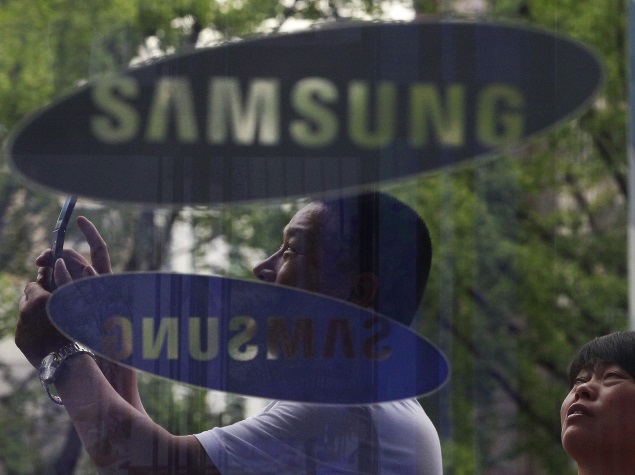
Samsung is to launch a range of smart refrigerators, air conditioners and washing machines as its seeks to expand its business in Internet-connected homes, a top executive said Tuesday.
The South Korean tech giant is seeking to plough more resources into the so-called Internet of Things (IoT) as the market for smartphones one of its core product categories becomes increasingly saturated.
The new appliances will work on Samsung's Tizen operating system, which the company has touted as a platform not just for phones but for a range of connected home appliances that can communicate with one another.
"We are preparing launches of Tizen-powered TVs, refrigerators, air conditioners and other premium-priced home appliances this year," B.K. Yoon, head of Samsung's consumer electronics unit, told reporters.
The firm the world's top mobile phone maker plans to eventually make all its new products Internet-connected by 2020, he added.
"I think we have to make preparations for the IoT for future growth, as we previously grew in size by switching from... feature phones to smartphones," Yoon said.
Yoon unveiled the company's first-ever Tizen smart TVs at a consumer electronics fair in Las Vegas last month.
As part of its efforts to expand beyond the increasingly saturated smartphone market and meet demand for online-connected homes, Samsung bought SmartThings, a US home automation startup last year.
Tizen Samsung's home-grown system is a key part of the firm's campaign to carve out a niche in mobile software and services, to complement its hardware role.
By developing Tizen, Samsung has also tried to lower its reliance on Google's Android platform that powers the vast majority of Samsung's mobile devices.
But the use of Tizen so far has been limited to a handful of Samsung gadgets including a low-end smartphone and wearables.
Comments
Get your daily dose of tech news, reviews, and insights, in under 80 characters on Gadgets 360 Turbo. Connect with fellow tech lovers on our Forum. Follow us on X, Facebook, WhatsApp, Threads and Google News for instant updates. Catch all the action on our YouTube channel.
Related Stories




Advertisement
Follow Us




-
![[Sponsored] LG NANO 4K UHD AI TV NU885: Gemini Search, Dolby Atmos & 5 Years of Updates](https://www.gadgets360.com/static/desktop/images/spacer.png)
04:17
[Sponsored] LG NANO 4K UHD AI TV NU885: Gemini Search, Dolby Atmos & 5 Years of Updates -
00:57
[Sponsored] Samsung Galaxy Z Fold8 My Fan Cam in Action: Find the Moment, Then Share It -
01:41
[Sponsored] What Do You Need To Know Before Your Next Run? | Samsung Galaxy Watch Ultra2 -
01:32
[Sponsored] Big Day Tomorrow? Prep Today | Samsung Galaxy Watch Ultra2 -
04:37
[Sponsored]: CP PLUS CarKam CP-F89B: 4K Dashcam With Rear Camera, GPS & Emergency Recording
-
iPhone 16 आज भी Amazon सेल में मिल रहा ₹15 हजार से ज्यादा सस्ता
-
OnePlus 15 को Amazon Great Indian Festival Sale में खरीदें सस्ता
-
₹2250 सस्ता मिल रहा Motorola का 7000mAh बैटरी वाला फोन! Flipkart पर ऑफर
-
HMD Vibe 2 Max बजट फोन लॉन्च होगा 108MP कैमरा, 6,000mAh बैटरी फीचर के साथ!
-
Moto G47 Power लॉन्च होगा 7,000mAh बैटरी के साथ! IP64 रेटिंग
Advertisement
Popular on Gadgets
- Samsung Galaxy S26 Ultra
- Motorola Razr Fold
- ChatGPT
- OPPO Find N6
- Mobiles Under Rs. 40,000
- Vivo X300 Ultra
- Asus Zenbook S14
- iQOO 15
- Vivo X300 Pro
- Lenovo Yoga Slim 7i Aura Edition
- iQOO 15R
- Vivo X Fold 5
- Sony PlayStation 5
- HP OmniPad 12
- OnePlus Nord CE 6 Lite
- OnePlus Pad 4
- OPPO F33 Pro 5G
- Cryptocurrency
- HP OmniBook Ultra 14 (2026)
- iPhone 17
- Eureka Forbes AP 355 Room Air Purifier
- Latest Mobile Phones
- Compare Phones
Latest Gadgets
- Samsung Galaxy F70 5G
- Tecno Spark 50S 5G
- Vivo Y600s Pro
- Vivo Y32 (2026)
- Infinix Smart 20 HD
- Vivo V80
- Vivo S2 FE
- Vivo Y600K Turbo
- HP ZBook Ultra G3a
- Dell Pro Rugged 14
- Amazon Alexa Tablet 8
- Amazon Alexa Tablet 11
- Amazfit T-Rex Dual Solar
- OPPO Watch S2
- Toshiba 65-Inch 4K Ultra HD Smart Mini LED QLED TV (65Z670SP)
- Haier M70 Mini LED 65-inch
- Acer Predator Atlas 8
- Asus ROG Ally
- Blue Star 1.5 Ton 5 Star Inverter Split AC (IE518ZNURS)
- Blue Star 2 Ton 3 Star Inverter Window AC (WIE324L)

- About Us
- Sitemaps
- Feedback
- Archives
- Contact Us
- RSS
- Advertise
- Career
- Privacy Policy
- Ethics
- Editorial Policy
- Terms & Conditions
- Complaint Redressal
Download Our Apps
Available in Hindi
© Copyright Red Pixels Ventures Limited 2026. All rights reserved.