
-
 James Webb Space Telescope Spots an Exoplanet Losing Its Atmosphere in a Huge Helium Stream4 December 2025
 -
James Webb Space Telescope Finds Unexpected Ultraviolet Radiation Around Young Protostars1 December 2025
-
Extreme Star Factory: ALMA Detects Galaxy Y1 Forming Stars 180 Times Faster Than the Milky Way19 November 2025
-
Webb Finds Phosphorus-Bearing Gas in an Ancient Brown Dwarf10 November 2025
-
James Webb Space Telescope Detects Phosphine on Brown Dwarf Wolf 1130C9 October 2025
- Home
- Science
- Science News
- Kepler and TESS Discoveries Help Astronomers Confirm Over 6,000 Exoplanets Orbiting Other Stars
Kepler and TESS Discoveries Help Astronomers Confirm Over 6,000 Exoplanets Orbiting Other Stars
Exoplanet numbers have increased through projects such as NASA Kepler and its follow-up TESS.
Written by Gadgets 360 Staff | Updated: 13 December 2025 16:00 IST
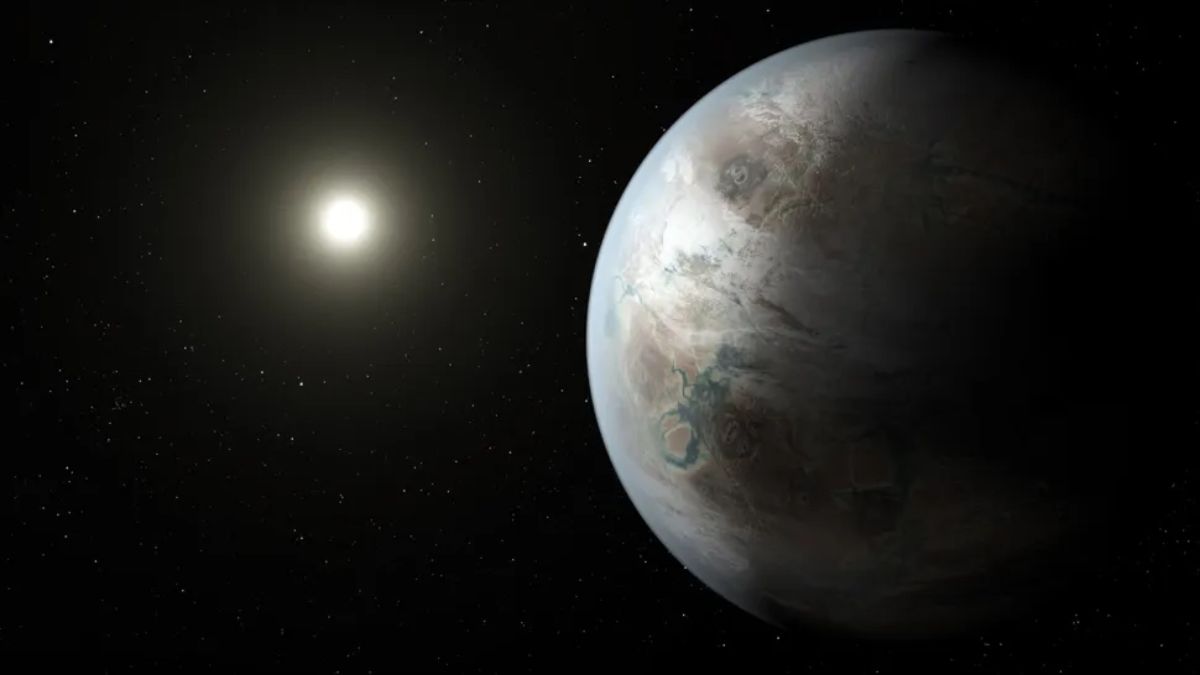
Photo Credit: NASA Ames/JPL-Caltech/T. Pyle
JWST and PLATO to hunt for Earth-like, habitable worlds ahead
Click Here to Add Gadgets360 As A Trusted Source


Advertisement
More than 6,000 exoplanets (planets orbiting other stars), one of the most rapidly expanding frontiers in science, have now been confirmed by astronomers. Their search of other worlds has been transformed within a span of thirty years, which started as a form of speculation, to accurate detection. However, in the midst of this wave of discoveries, scientists believe that the most exciting period is ahead. The following decade might not only change the exoplanet study to counting planets, but also analysing their atmospheres - and possibly even, their habitability.
Key Milestones in Exoplanet Discovery
According to a report, exoplanet science was pioneered in 1995 as the first planet to orbit a Sun-like star (51 Pegasi b ) was discovered. As of 2025, the number has grown through mission projects such as NASA Kepler (launched 2009, 2,600 planets-ish) and its follow-up TESS (2018, hundreds of more).
Exoplanets are confirmed in approximately 6,000 now, increasing from 5,000 in 2022, a realistic exponential increase in exoplanet discoveries. There were numerous gas giants and super-Earths that were not previously known to our solar system, and in most cases, early discoveries were surprising.
Future Horizons in Exoplanet Exploration
The next few decades are set to see the discovery change to characterisation. Such missions as ESA PLATO and NASA Roman Space Telescope will pursue Earth-sized planets in habitable environments, whereas JWST and ARIEL will examine their chemical fingerprints.
NASA has suggested a mission in space, the Habitable Worlds Observatory, to directly image Earth-like worlds by the 2040s, which would mark a milestone that would reshape our cosmic view. It is hoped that the next generation of telescopes will help us finally have an answer to the oldest question that humanity might have ever had --- Are we alone?
Comments
Get your daily dose of tech news, reviews, and insights, in under 80 characters on Gadgets 360 Turbo. Connect with fellow tech lovers on our Forum. Follow us on X, Facebook, WhatsApp, Threads and Google News for instant updates. Catch all the action on our YouTube channel.
Related Stories



Kepler and TESS Discoveries Help Astronomers Confirm Over 6,000 Exoplanets Orbiting Other Stars


Advertisement
Follow Us




-
07:03
Vivo X300 Pro Review | Best Camera Phone You Can Buy For 2026 -
04:56
Vivo X300 Review | Best Flagship of 2025? | Unbelievable Camera & Performance Test -
03:49
Lava Agni 4 Review - Best Indian 5G Phone Under Budget? -
05:23
Motorola G67 Power Review: The Real Battery Beast of 2025? -
06:14
[Partner Content] OPPO F31 Series: The Durable Champion That Stays Smooth & Powerful
Advertisement
Popular on Gadgets
- Samsung Galaxy Unpacked 2025
- ChatGPT
- Redmi Note 14 Pro+
- iPhone 16
- Apple Vision Pro
- Oneplus 12
- OnePlus Nord CE 3 Lite 5G
- iPhone 13
- Xiaomi 14 Pro
- Oppo Find N3
- Tecno Spark Go (2023)
- Realme V30
- Best Phones Under 25000
- Samsung Galaxy S24 Series
- Cryptocurrency
- iQoo 12
- Samsung Galaxy S24 Ultra
- Giottus
- Samsung Galaxy Z Flip 5
- Apple 'Scary Fast'
- Housefull 5
- GoPro Hero 12 Black Review
- Invincible Season 2
- JioGlass
- HD Ready TV
- Laptop Under 50000
- Smartwatch Under 10000
- Latest Mobile Phones
- Compare Phones
Latest Gadgets
- Redmi Note 15 5G
- Redmi Note 15 Pro 5G
- Redmi Note 15 Pro+ 5G
- Lava Play Max
- Poco C85 5G
- Honor Magic 8 Lite
- Jolla Phone
- Realme P4x 5G
- Asus ProArt P16
- MacBook Pro 14-inch (M5, 2025)
- OnePlus Pad Go 2
- Poco Pad M1
- Just Corseca Skywatch Pro
- Honor Watch X5
- Acerpure Nitro Z Series 100-inch QLED TV
- Samsung 43 Inch LED Ultra HD (4K) Smart TV (UA43UE81AFULXL)
- Asus ROG Ally
- Nintendo Switch Lite
- Haier 1.6 Ton 5 Star Inverter Split AC (HSU19G-MZAID5BN-INV)
- Haier 1.6 Ton 5 Star Inverter Split AC (HSU19G-MZAIM5BN-INV)

- About Us
- Sitemaps
- Feedback
- Archives
- Contact Us
- RSS
- Advertise
- Career
- Privacy Policy
- Ethics
- Editorial Policy
- Terms & Conditions
- Complaint Redressal
Download Our Apps
Available in Hindi
© Copyright Red Pixels Ventures Limited 2025. All rights reserved.