-
 Saturn’s Icy Moon Enceladus Organic Molecules May Have Been Fromed by Cosmic Rays, Scientists Find27 October 2025
 -
Saturn’s Moon Enceladus Spouts Complex Organics That Could Hold Clues to Life5 October 2025
-
Scientists Explore Role of Space Radiation in Powering Alien Microbial Life6 August 2025
-
Scientists Puzzled by a Strange Dark Spot Fading on Saturn’s Moon Enceladus16 December 2024
-
NASA Develops Robotic Technologies for Autonomous Exploration of Ocean Worlds4 December 2024
- Home
- Science
- Science News
- Enceladus' Geysers May Not Come from Underground Ocean, Study Suggests
Enceladus' Geysers May Not Come from Underground Ocean, Study Suggests
New research suggests Enceladus’ water plumes may originate from a slushy ice layer rather than its underground ocean.
Written by Gadgets 360 Staff | Updated: 7 March 2025 23:00 IST

Photo Credit: NASA
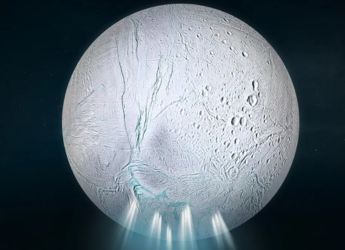
New research suggests Enceladus' water plumes may come from a slushy ice layer, not its underground ocean
Click Here to Add Gadgets360 As A Trusted Source


Advertisement
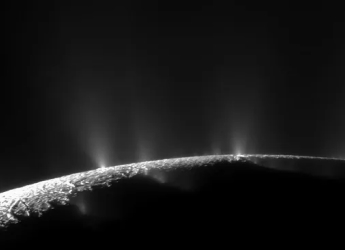
Saturn's moon Enceladus has been a subject of scientific intrigue due to its massive water plumes, which were initially believed to be linked to an underground ocean beneath its icy crust. The idea that this ocean could sustain microbial life made it a prime target for astrobiological studies. However, new research suggests that the source of these geysers may not be the deep subsurface ocean, but rather a mushy layer within the ice shell itself. This finding challenges previous assumptions about the habitability of Enceladus and raises new questions about the mechanisms behind the moon's plumes.
New Theory on Enceladus' Geysers
According to a study published in Geophysical Research Letters, researchers from Dartmouth College propose that the plumes erupting from Enceladus may not require fractures that extend entirely through the ice shell to the underground ocean. Instead, they suggest that a slushy, salt-laden layer within the ice could act as the source of the water vapor and ice particles seen in the plumes. This theory is based on the observation that the moon's icy surface contains salts, which lower the melting point of ice, allowing it to form a semi-liquid state in certain regions.
Shear Heating and Fractures in the Ice
Scientists have pointed to "tiger stripe" fractures in the moon's southern hemisphere as key locations where these eruptions occur. The study suggests that friction between ice layers, known as shear heating, could generate enough warmth to maintain a slushy state within the ice shell. This would create a reservoir of briny water close to the surface, supplying the plumes without requiring a direct connection to the deep ocean.
Gases and Plume Composition
As per the reports, the composition of the plumes observed by NASA's Cassini spacecraft could be explained by the melting of gas-rich ice structures called clathrates. These formations trap molecular hydrogen, carbon dioxide, and methane within the ice. Partial melting of these structures could release hydrogen while retaining other gases, potentially accounting for the chemical composition detected in the plumes.
Future Investigations
While this study provides an alternative explanation for Enceladus' geysers, further research is required to determine how the slushy zone replenishes itself over time. Scientists continue to analyse Cassini's data to refine their understanding of the processes shaping the moon's icy surface and its potential for sustaining life.
Comments
Get your daily dose of tech news, reviews, and insights, in under 80 characters on Gadgets 360 Turbo. Connect with fellow tech lovers on our Forum. Follow us on X, Facebook, WhatsApp, Threads and Google News for instant updates. Catch all the action on our YouTube channel.
Further reading:
Enceladus, Saturn’s Moon, Space Exploration, Cassini, Ice Plumes, NASA, Solar System, Astronomy, Science News
Related Stories




Advertisement
Follow Us




-
09:53
iPhone 18 Goes On Sale In India: Huge Crowds, Long Queues At Apple Stores -
06:32
Google Pixel 11 Pro XL Review: The Most Exciting Pixel Yet? | 120X Zoom + Tensor G6 -
05:20
Samsung Galaxy Watch Ultra 2 Review: Is This the Best Android Smartwatch? -
07:01
Samsung Galaxy Z Fold 8 Review: Is This the Best Foldable Phone? -
06:39
Samsung Galaxy Z Fold8 Ultra Review: Cameras, Battery, Performance Tested
-
10 मिनट में घर पहुंचेंगे iPhone 18 Pro, Pro Max: सेल हुई शुरू
-
Lava ने लॉन्च किया 6000mAh बैटरी वाला Bold N4 Pro 5G
-
itel Zeno 300 भारत में होगा लॉन्च, मिलेगी 6,000mAh बैटरी और डुअल कैमरा
-
Honor ला रही नया मिडरेंज फोन Honor X9e Pro 5G, 108MP दो कैमरा, 11,000mAh बैटरी के साथ!
-
Xiaomi 18 Pro Max में मिल सकता है Snapdragon 8 Elite Gen 6 Pro चिपसेट, Geekbench पर हुई लिस्टिंग
Advertisement
Popular on Gadgets
- Samsung Galaxy S26 Ultra
- Motorola Razr Fold
- ChatGPT
- OPPO Find N6
- Mobiles Under Rs. 40,000
- Vivo X300 Ultra
- Asus Zenbook S14
- iQOO 15
- Vivo X300 Pro
- Lenovo Yoga Slim 7i Aura Edition
- iQOO 15R
- Vivo X Fold 5
- Sony PlayStation 5
- HP OmniPad 12
- OnePlus Nord CE 6 Lite
- OnePlus Pad 4
- OPPO F33 Pro 5G
- Cryptocurrency
- HP OmniBook Ultra 14 (2026)
- iPhone 17
- Eureka Forbes AP 355 Room Air Purifier
- Latest Mobile Phones
- Compare Phones
Latest Gadgets
- Lava Bold N4 Pro 5G
- Samsung Galaxy A08
- Itel Muzik 450L
- OPPO K14 Lite
- Samsung Galaxy A18 4G
- iPhone Duo
- OPPO A7 Pro
- Huawei Mate XT 2 Ultimate Design
- Asus Vivobook S14 (S5452MA)
- Acer Aspire G 3D 16
- Xiaomi Pad 9 Pro
- Xiaomi Pad 9
- Apple Watch Ultra 4
- Apple Watch Series 12
- Haier M70 Mini LED 65-inch
- Xiaomi TV FX Mini LED 65
- Acer Predator Atlas 8
- Asus ROG Ally
- Blue Star 1.5 Ton 5 Star Inverter Split AC (IE518ZNURS)
- Blue Star 2 Ton 3 Star Inverter Window AC (WIE324L)

- About Us
- Sitemaps
- Feedback
- Archives
- Contact Us
- RSS
- Advertise
- Career
- Privacy Policy
- Ethics
- Editorial Policy
- Terms & Conditions
- Complaint Redressal
Download Our Apps
Available in Hindi
© Copyright Red Pixels Ventures Limited 2026. All rights reserved.