-
 Rubin Observatory Discovers Over 11,000 Asteroids Within Weeks of Imaging7 April 2026
 -
Blue Origin Announces NEO Hunter Mission to Track and Deflect Dangerous Asteroids19 March 2026
-
NASA’s Webb Telescope Confirms Asteroid 2024 YR4 Will Safely Pass the Moon in 20329 March 2026
-
Rubin Observatory Discovers Fastest-Spinning Large Asteroid Ever Seen11 January 2026
-
ESA Reveals City-Size ‘Cosmic Butterfly’ Crater on Mars Containing Signs of Ancient Water17 December 2025
- Home
- Science
- Science News
- No Asteroid Threatening to Hit Earth Next Month: Nasa
No Asteroid Threatening to Hit Earth Next Month: Nasa
By Press Trust of India | Updated: 20 August 2015 16:56 IST
Click Here to Add Gadgets360 As A Trusted Source

Advertisement
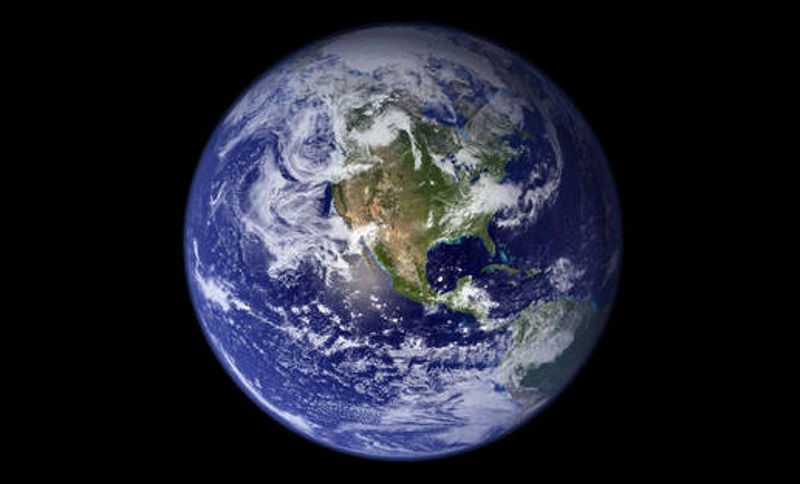
Nasa has rubbished claims that a devastating asteroid will hit Earth sometime between September 15 and 28, saying there is not one shred of evidence of any celestial object impacting our planet next month.
Numerous recent blogs and Web postings are erroneously claiming that an asteroid will impact Earth sometime between September 15 and 28, Nasa said.
On one of those dates, as rumours go, there will be an impact - "evidently" near Puerto Rico - causing wanton destruction to the Atlantic and Gulf coasts of the US and Mexico, as well as Central and South America, it said.
"There is no scientific basis - not one shred of evidence - that an asteroid or any other celestial object will impact Earth on those dates," said Paul Chodas, manager of Nasa's Near-Earth Object office at the Jet Propulsion Laboratory in Pasadena, California.
In fact, according to Nasa's Near-Earth Object Observations Programme, there have been no asteroids or comets observed that would impact Earth any time in the foreseeable future.
All known Potentially Hazardous Asteroids have less than a 0.01 percent chance of impacting Earth in the next 100 years, Nasa said.
The Near-Earth Object office at JPL is a key group involved with the international collaboration of astronomers and scientists who keep watch on the sky with their telescopes, looking for asteroids that could do harm to our planet and predicting their paths through space for the foreseeable future.
If there were any observations on anything headed our way, the group would know about it, the US space agency said.
"If there were any object large enough to do that type of destruction in September, we would have seen something of it by now," Chodas said.
"This isn't the first time a wild, unsubstantiated claim of a celestial object about to impact Earth has been made, and unfortunately, it probably won't be the last. It seems to be a perennial favourite of the World Wide Web," the US space agency said.
In 2011 there were rumours about the so-called "doomsday" comet Elenin, which never posed any danger of harming Earth and broke up into a stream of small debris out in space. Then there were Internet assertions surrounding the end of the Mayan calendar on December 21, 2012, insisting the world would end with a large asteroid impact.
And just this year, asteroids 2004 BL86 and 2014 YB35 were said to be on dangerous near-Earth trajectories, but their flybys of our planet in January and March went without incident.
"Again, there is no existing evidence that an asteroid or any other celestial object is on a trajectory that will impact Earth," said Chodas.
"In fact, not a single one of the known objects has any credible chance of hitting our planet over the next century," he added.
Comments
Get your daily dose of tech news, reviews, and insights, in under 80 characters on Gadgets 360 Turbo. Connect with fellow tech lovers on our Forum. Follow us on X, Facebook, WhatsApp, Threads and Google News for instant updates. Catch all the action on our YouTube channel.
Related Stories


Advertisement
Follow Us




-
![[Sponsored] LG NANO 4K UHD AI TV NU885: Gemini Search, Dolby Atmos & 5 Years of Updates](https://www.gadgets360.com/static/desktop/images/spacer.png)
04:17
[Sponsored] LG NANO 4K UHD AI TV NU885: Gemini Search, Dolby Atmos & 5 Years of Updates -
00:57
[Sponsored] Samsung Galaxy Z Fold8 My Fan Cam in Action: Find the Moment, Then Share It -
01:41
[Sponsored] What Do You Need To Know Before Your Next Run? | Samsung Galaxy Watch Ultra2 -
01:32
[Sponsored] Big Day Tomorrow? Prep Today | Samsung Galaxy Watch Ultra2 -
04:37
[Sponsored]: CP PLUS CarKam CP-F89B: 4K Dashcam With Rear Camera, GPS & Emergency Recording
-
आ गई हवा में उड़ने वाली Tesla Roadster कार, आखिर सच हुआ फिल्मों वाला कमाल
-
रोबोट ने की लड़की से छेड़छाड़, पीछे से पकड़ा और किए गंदे इशारे, जानें
-
PS5 कहां मिलेगा सस्ता, Flipkart या Amazon, जानें सबकुछ
-
Flipkart Big Billion Sale 2026: ₹10 हजार से ₹15 हजार में मिल रहे Mivi, Lava, Boltt के AI कैमरा फोन
-
RedMagic 12 Pro ग्लोबल मार्केट में 3 नवंबर को होगा लॉन्च, 8400mAh बैटरी
Advertisement
Popular on Gadgets
- Samsung Galaxy S26 Ultra
- Motorola Razr Fold
- ChatGPT
- OPPO Find N6
- Mobiles Under Rs. 40,000
- Vivo X300 Ultra
- Asus Zenbook S14
- iQOO 15
- Vivo X300 Pro
- Lenovo Yoga Slim 7i Aura Edition
- iQOO 15R
- Vivo X Fold 5
- Sony PlayStation 5
- HP OmniPad 12
- OnePlus Nord CE 6 Lite
- OnePlus Pad 4
- OPPO F33 Pro 5G
- Cryptocurrency
- HP OmniBook Ultra 14 (2026)
- iPhone 17
- Eureka Forbes AP 355 Room Air Purifier
- Latest Mobile Phones
- Compare Phones
Latest Gadgets
- Tecno Spark 50S 5G
- Vivo Y600s Pro
- Vivo Y32 (2026)
- Infinix Smart 20 HD
- Vivo V80
- Vivo S2 FE
- Vivo Y600K Turbo
- Realme P4s Lite
- HP ZBook Ultra G3a
- Dell Pro Rugged 14
- Amazon Alexa Tablet 8
- Amazon Alexa Tablet 11
- Amazfit T-Rex Dual Solar
- OPPO Watch S2
- Toshiba 65-Inch 4K Ultra HD Smart Mini LED QLED TV (65Z670SP)
- Haier M70 Mini LED 65-inch
- Acer Predator Atlas 8
- Asus ROG Ally
- Blue Star 1.5 Ton 5 Star Inverter Split AC (IE518ZNURS)
- Blue Star 2 Ton 3 Star Inverter Window AC (WIE324L)

- About Us
- Sitemaps
- Feedback
- Archives
- Contact Us
- RSS
- Advertise
- Career
- Privacy Policy
- Ethics
- Editorial Policy
- Terms & Conditions
- Complaint Redressal
Download Our Apps
Available in Hindi
© Copyright Red Pixels Ventures Limited 2026. All rights reserved.