-
 Rubin Observatory Discovers Over 11,000 Asteroids Within Weeks of Imaging7 April 2026
 -
Blue Origin Announces NEO Hunter Mission to Track and Deflect Dangerous Asteroids19 March 2026
-
NASA’s Webb Telescope Confirms Asteroid 2024 YR4 Will Safely Pass the Moon in 20329 March 2026
-
ESA Reveals City-Size ‘Cosmic Butterfly’ Crater on Mars Containing Signs of Ancient Water17 December 2025
-
NASA’s Perseverance Rover Finds Metal-Rich Rock on Mars: What You Need to Know24 November 2025
- Home
- Science
- Science News
- Rubin Observatory Discovers Fastest Spinning Large Asteroid Ever Seen
Rubin Observatory Discovers Fastest-Spinning Large Asteroid Ever Seen
The Vera C. Rubin Observatory has identified asteroid 2025 MN45, a 710-metre-wide object spinning once every 1.88 minutes. Its extreme rotation suggests it is solid rock, not a loose rubble pile, offering new insight into asteroid formation.
Written by Gadgets 360 Staff | Updated: 11 January 2026 16:00 IST
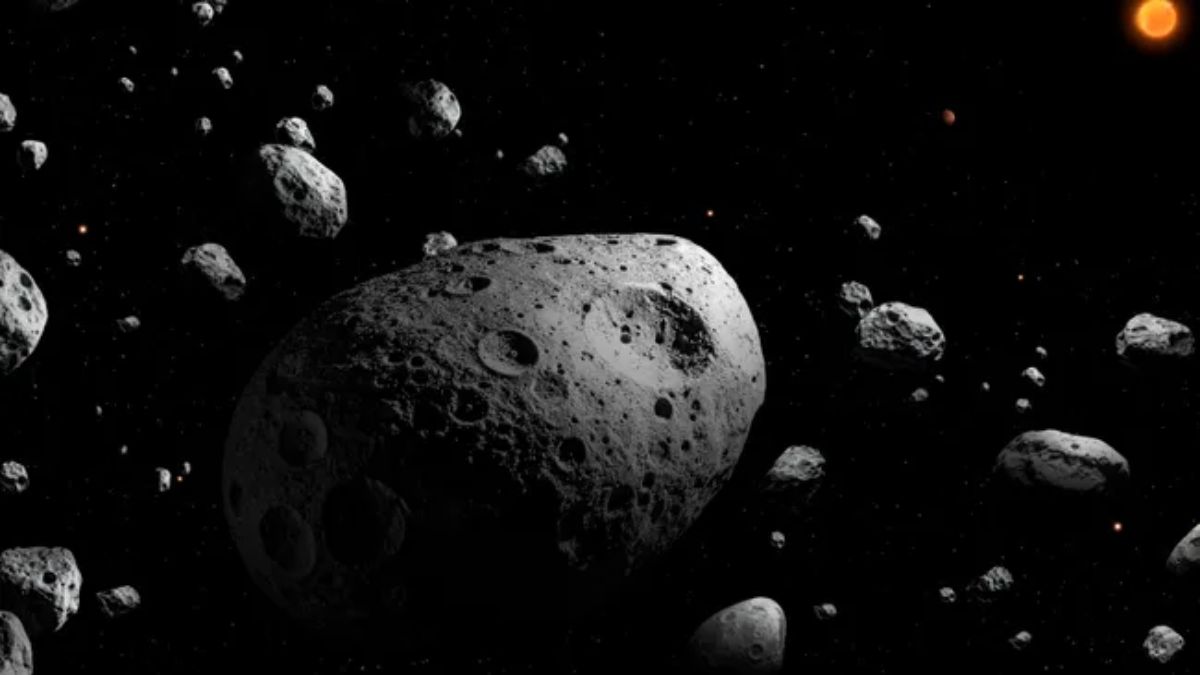
Photo Credit: NSF–DOE Vera C. Rubin Observatory
The fastest-spinning large asteroid ever observed, rotating once every 1.88 minutes.
Click Here to Add Gadgets360 As A Trusted Source


Advertisement
In early 2026, the Vera C. Rubin Observatory spotted an asteroid breaking an extremely fast spin record. Dubbed 2025 MN45, this roughly 0.4-mile-wide rock in the main asteroid belt spins once every 1.88 minutes, making it the fastest-spinning known asteroid over 500 meters across. At 710 meters wide, MN45 is about the size of eight football fields. This record was found in a survey of nearly 2,000 newly discovered asteroids using Rubin's powerful new telescope.
Record-breaking Discovery
According to the new study, astronomers found 2025 MN45 in survey data from the Vera Rubin Observatory. It orbits in the main asteroid belt between Mars and Jupiter, and is about 0.4 miles (710 meters) across. This early survey spotted nearly 2,000 new asteroids; 19 of them proved to be "superfast rotators" (spinning in under 2.2 hours). MN45 finishes a full spin in just 113 seconds (1.88 minutes)—far faster than any other asteroid this large.
Clues from the Spin
Such a high spin rate suggests that MN45 is unusually tough. Scientists have calculated that it needs the strength of solid rock to hold together at 113 seconds per rotation. This is surprising because most asteroids of this size are "rubble piles" of loose debris that would break apart much earlier. In general, very rapid spins often hint that an asteroid was blasted off a larger body in a collision. Rubin Observatory will spend the next 10 years surveying the sky with its 3.2-billion-pixel camera, imaging every 40 seconds. It is expected to find thousands of new asteroids during that time.
Comments
Get your daily dose of tech news, reviews, and insights, in under 80 characters on Gadgets 360 Turbo. Connect with fellow tech lovers on our Forum. Follow us on X, Facebook, WhatsApp, Threads and Google News for instant updates. Catch all the action on our YouTube channel.
Further reading:
asteroids, Vera Rubin Observatory, Space Science, Solar system, planetary defence, astronomy discoveries
Related Stories



Advertisement
Follow Us




-
04:37
[Sponsored]: CP PLUS CarKam CP-F89B: 4K Dashcam With Rear Camera, GPS & Emergency Recording -
04:23
[Partner Content] Your Phone Can Do WAY More Than You Think | OPPO ColorOS 16 -
01:59
Samsung Galaxy Z Fold8 Ultra: Unfold the Ultra Night -
03:24
Apple Pay Launches In India: Supported Devices, Cards And Payments Explained -
00:21
[Sponsored] Samsung Galaxy Z Fold8, Fold8 Ultra
-
एक चार्ज में 1008km रेंज, 9 मिनट में होगी फास्ट चार्ज! BYD Da Han लॉन्च
-
Samsung Galaxy A56 vs Motorola Edge 70 Fusion Deal: 30 हजार में क्या लें
-
Apple का 7 इंच स्क्रीन वाला AI डिवाइस लॉन्च, करेगा बात और चलाएगा गाने!
-
Vivo X Fold 6 की सेल शुरू, ₹26 हजार से ज्यादा सस्ता खरीदें फोल्डेबल फोन
-
Oppo F35 Pro 5G vs iQOO Neo 10 vs OnePlus Nord 6: जानें किसके फीचर्स आपके लिए हैं बेस्ट?
Advertisement
Popular on Gadgets
- Samsung Galaxy S26 Ultra
- Motorola Razr Fold
- ChatGPT
- OPPO Find N6
- Mobiles Under Rs. 40,000
- Vivo X300 Ultra
- Asus Zenbook S14
- iQOO 15
- Vivo X300 Pro
- Lenovo Yoga Slim 7i Aura Edition
- iQOO 15R
- Vivo X Fold 5
- Sony PlayStation 5
- HP OmniPad 12
- OnePlus Nord CE 6 Lite
- OnePlus Pad 4
- OPPO F33 Pro 5G
- Cryptocurrency
- HP OmniBook Ultra 14 (2026)
- iPhone 17
- Eureka Forbes AP 355 Room Air Purifier
- Latest Mobile Phones
- Compare Phones
Latest Gadgets
- Vivo Y600s Pro
- Vivo Y32 (2026)
- Infinix Smart 20 HD
- Vivo V80
- Vivo S2 FE
- Vivo Y600K Turbo
- Realme P4s Lite
- Vivo S60t
- Dell Pro Rugged 14
- Dell Pro Rugged 13 Extreme
- Amazon Alexa Tablet 8
- Amazon Alexa Tablet 11
- Amazfit T-Rex Dual Solar
- OPPO Watch S2
- Toshiba 65-Inch 4K Ultra HD Smart Mini LED QLED TV (65Z670SP)
- Haier M70 Mini LED 65-inch
- Acer Predator Atlas 8
- Asus ROG Ally
- Blue Star 1.5 Ton 5 Star Inverter Split AC (IE518ZNURS)
- Blue Star 2 Ton 3 Star Inverter Window AC (WIE324L)

- About Us
- Sitemaps
- Feedback
- Archives
- Contact Us
- RSS
- Advertise
- Career
- Privacy Policy
- Ethics
- Editorial Policy
- Terms & Conditions
- Complaint Redressal
Download Our Apps
Available in Hindi
© Copyright Red Pixels Ventures Limited 2026. All rights reserved.