-
 Total Solar Eclipse on April 8: How to Watch it Live Online, Time, Duration, and Safety Tips8 April 2024
 -
Solar Eclipse 2020 on June 21: When Are the Next Lunar, Solar Eclipses in 202019 June 2020
-
Solar Eclipse 2019 Today: India Time, Everything You Need to Know2 July 2019
-
Next Total Solar Eclipse on July 2, 2019: When, Where, and How to See It29 May 2019
-
Android O to Be Revealed on Monday, the Day of the US Total Solar Eclipse19 August 2017
- Home
- Science
- Science News
- Total Solar Eclipse Today: How to Watch Live Online, Timings, Safety Tips, and More
Total Solar Eclipse Today: How to Watch Live Online, Timings, Safety Tips, and More
The total solar eclipse will span across Greenland, Iceland, northern Russia, Spain and a small corner of Portugal.
Written by Shaurya Tomer, Edited by Rohan Pal | Updated: 12 August 2026 13:28 IST
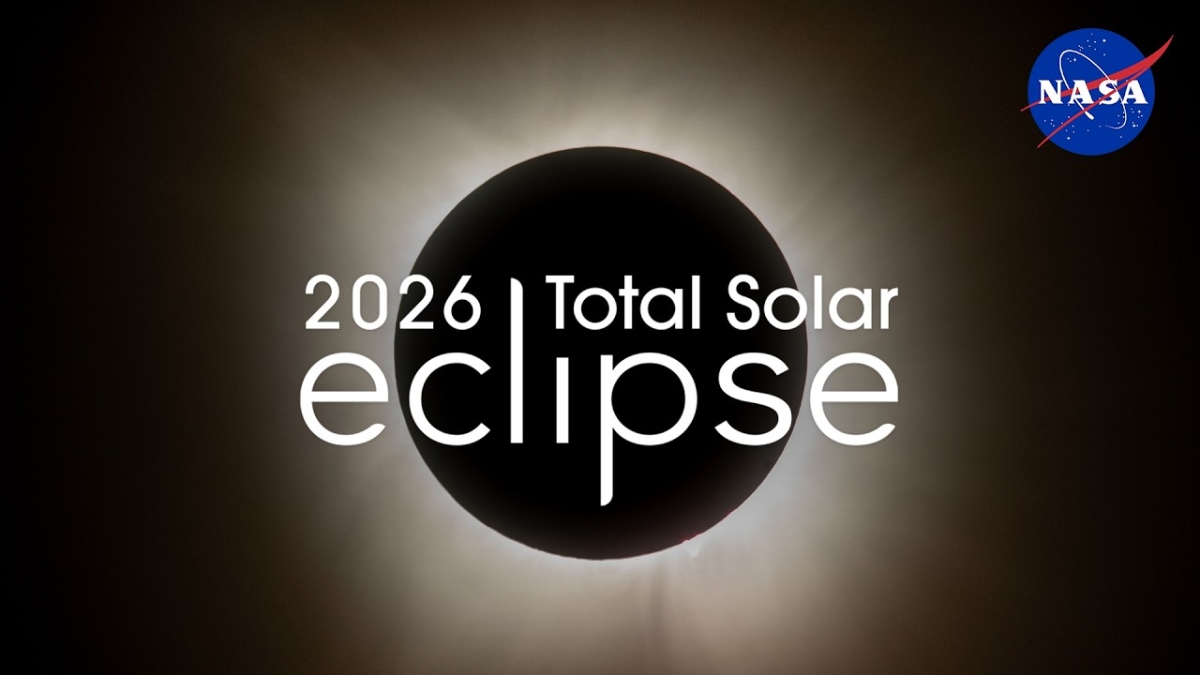
Photo Credit: NASA
NASA says such a phenomenon takes place about every 18 months
Click Here to Add Gadgets360 As A Trusted Source

Advertisement
The first and only total solar eclipse of 2026 is set to take place today (Wednesday). It presents skywatchers across parts of the Northern Hemisphere with an opportunity to witness the Moon completely cover the Sun. NASA says the path of totality will cross Greenland, Iceland, northern Russia, Spain and a small part of Portugal, while a partial eclipse will also be visible over a larger region. Even with the totality lasting for less than two minutes for most, observers will have a small window of opportunity to witness a rare sky phenomenon.
What Is a Total Solar Eclipse?
NASA says a total solar eclipse occurs when the Moon passes between the Sun and Earth. During this manoeuvre, it completely blocks the bright face of the Sun for observers located within the Moon's central shadow. As the Moon covers the Sun, daylight can temporarily become as dark as dawn or dusk.
Such a phenomenon takes place about every 18 months. It also presents a rare opportunity to see the Sun's corona, its outer atmosphere, which is usually hidden by the much brighter solar disk.
Total Solar Eclipse of August 12: Where Will It Be Visible and How Long Will It Last?
The total solar eclipse will span across Greenland, Iceland, northern Russia, Spain and a small corner of Portugal. Meanwhile, much of Europe, northwestern Africa, Canada, and parts of the northern US will witness a partial solar eclipse.
According to NASA, observers located along the path of totality will experience the Sun being completely covered for less than two minutes. Those close to the centre of the eclipse path, including Greenland, Russia and the North Atlantic, can experience totality for a little longer.
The timing of the eclipse will depend on the location. In Reykjavík, Iceland, the partial eclipse will begin at 4:47pm local time, with totality beginning at 5:48pm and ending at 5:49pm. In León, Spain, the partial eclipse begins at 7:32pm, while totality starts at 8:28pm and ends at 8:30pm. In Valencia, totality is scheduled from 8:32pm to 8:33pm local time.
India is not among the regions listed by NASA as visible for the August 12 eclipse. However, viewers in the country can still watch the rare solar phenomenon live through various media.
How to Watch the August 12 Solar Eclipse Online
NASA will livestream the eclipse starting at 1:15pm EDT (10:45pm IST) on August 12. The space agency's coverage will include views from locations along the eclipse path as well, along with commentary and interviews with experts.
The European Space Agency (ESA) will also broadcast the total solar eclipse at around 7:30pm CEST (11pm IST) from the Observatorio Astrofísico de Javalambre in Teruel, Spain, which is located within the path of totality. Like NASA, ESA's coverage will also involve scientists and experts discussing the eclipse and solar science.
The Virtual Telescope Project, a platform founded and directed by Italian astrophysicist Gianluca Masini that allows viewers to participate in real-time observations of the sky, will also livestream the eclipse.
How to Watch the Solar Eclipse Safely
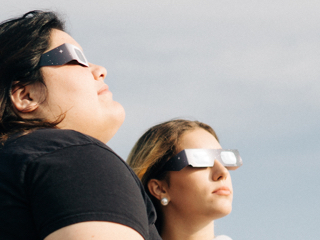
According to NASA, a few precautions should be taken by observers who will witness the total solar eclipse live. Firstly, they should use certified eclipse glasses meeting the ISO 12312-2 international safety standard, or a safe handheld solar viewer, whenever any part of the Sun is visible, as looking directly at the Sun can cause eye injury.
Those using cameras, binoculars, or telescopes should also be careful, as looking at the Sun via optical devices while wearing eclipse glasses can concentrate the sunlight, resulting in severe eye injury. For this, a special-purpose solar filter must be attached to the front of the camera.
Those who do not have dedicated eclipse glasses can view the solar phenomenon indirectly, such as using a pinhole projector, but only during the partial phases.
Comments
Get your daily dose of tech news, reviews, and insights, in under 80 characters on Gadgets 360 Turbo. Connect with fellow tech lovers on our Forum. Follow us on X, Facebook, WhatsApp, Threads and Google News for instant updates. Catch all the action on our YouTube channel.
Related Stories




Advertisement
Follow Us




-
![[Sponsored] Samsung Galaxy Z Fold8, Fold8 Ultra](https://www.gadgets360.com/static/desktop/images/spacer.png)
00:21
[Sponsored] Samsung Galaxy Z Fold8, Fold8 Ultra -
03:41
[Sponsored] Samsung Galaxy Z Fold8: How It Fits Into an Actor’s Busy Day | Camera, Multitasking & More -
09:53
iPhone 18 Goes On Sale In India: Huge Crowds, Long Queues At Apple Stores -
06:32
Google Pixel 11 Pro XL Review: The Most Exciting Pixel Yet? | 120X Zoom + Tensor G6 -
05:20
Samsung Galaxy Watch Ultra 2 Review: Is This the Best Android Smartwatch?
-
Amazon Great Indian Festival: सेल से पहले 6 मोबाइल पर Early Bird Deals
-
Vivo Y600i हुआ लॉन्च; 8000mAh बैटरी और ड्रॉप प्रोटेक्शन के साथ आया फोन
-
लैपटॉप की बैटरी हेल्थ ऐसे करें चेक, नहीं होगा नुकसान
-
iQOO Pad Ultra में 9020mAh बैटरी कंफर्म, प्री-ऑर्डर भी शुरू
-
₹16 हजार सस्ता मिल रहा 50MP तीन कैमरा वाला Samsung 5G फोन! IP67 रेटिंग
Advertisement
Popular on Gadgets
- Samsung Galaxy S26 Ultra
- Motorola Razr Fold
- ChatGPT
- OPPO Find N6
- Mobiles Under Rs. 40,000
- Vivo X300 Ultra
- Asus Zenbook S14
- iQOO 15
- Vivo X300 Pro
- Lenovo Yoga Slim 7i Aura Edition
- iQOO 15R
- Vivo X Fold 5
- Sony PlayStation 5
- HP OmniPad 12
- OnePlus Nord CE 6 Lite
- OnePlus Pad 4
- OPPO F33 Pro 5G
- Cryptocurrency
- HP OmniBook Ultra 14 (2026)
- iPhone 17
- Eureka Forbes AP 355 Room Air Purifier
- Latest Mobile Phones
- Compare Phones
Latest Gadgets
- Vivo Y600i
- Mivi One 5G
- Xiaomi 18 Pro Max
- Motorola Signature 27
- OPPO Find X10 E
- OnePlus N6 Lite 4G
- Ai+ Nova 2 Power 5G
- Lava Virat Curve 5G
- Microsoft Surface Laptop, 13-inch (2nd Edition)
- Lenovo LOQ 15AHP11
- Microsoft Surface Pro, 12-inch (2nd Edition)
- Xiaomi Pad 9 Pro
- Amazfit T-Rex Dual Solar
- OPPO Watch S2
- Haier M70 Mini LED 65-inch
- Xiaomi TV FX Mini LED 65
- Acer Predator Atlas 8
- Asus ROG Ally
- Blue Star 1.5 Ton 5 Star Inverter Split AC (IE518ZNURS)
- Blue Star 2 Ton 3 Star Inverter Window AC (WIE324L)

- About Us
- Sitemaps
- Feedback
- Archives
- Contact Us
- RSS
- Advertise
- Career
- Privacy Policy
- Ethics
- Editorial Policy
- Terms & Conditions
- Complaint Redressal
Download Our Apps
Available in Hindi
© Copyright Red Pixels Ventures Limited 2026. All rights reserved.