- Home
- Tv
- Tv Reviews
- Xiaomi TV S Mini LED 75 (2026) Review: Bright, Bold, and Hard to Ignore
Xiaomi TV S Mini LED 75 (2026) Review: Bright, Bold, and Hard to Ignore
Xiaomi’s new Mini-LED promises a premium viewing experience at a price that doesn’t feel outrageous for a 75-inch panel. Here’s our review.
Written by Shaurya Tomer, Edited by Ketan Pratap | Updated: 21 April 2026 17:35 IST
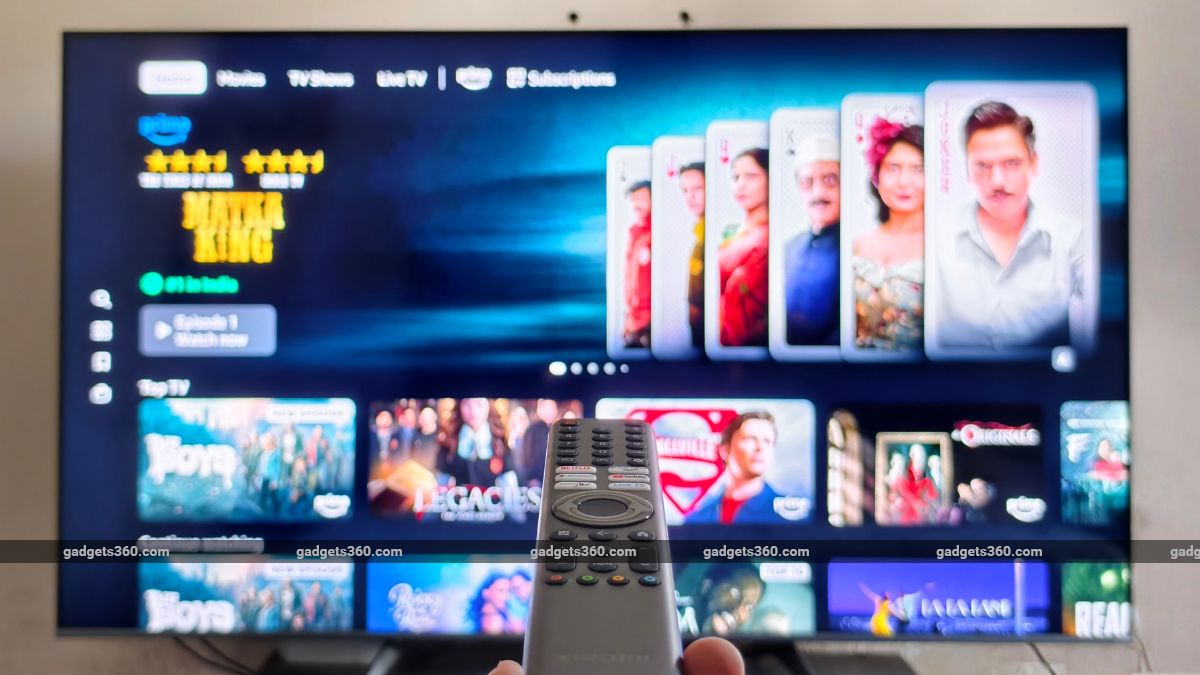
The Mini-LED comes in a variety is sizes, including our 75-inch option
Click Here to Add Gadgets360 As A Trusted Source

Advertisement
For years, the conversation around big-screen televisions in India was a binary choice — you either settled for the entry-level mediocrity of a massive but washed-out LED panel, or you sold a kidney for the infinite blacks of an OLED. The market, however, has slowly transitioned into a phase where good enough is never enough. As such, consumers now expect deep blacks, high brightness, smooth performance, and smart features: all without stretching into ultra-premium pricing territory. Mini-LED TVs have been the industry's answer to this demand, but they've largely remained out of reach for the average buyer. Enter the Xiaomi TV S Mini LED 75 (2026).
The price of the Xiaomi TV S Mini LED 75 (2026) in India is set at Rs. 99,999. This big-screen TV promises high brightness, local dimming, and a premium viewing experience at a price that doesn't feel outrageous for a 75-inch panel. On paper, it's clear that Xiaomi is aiming to disrupt, but does it get everything right? Here's our review.
Xiaomi TV S Mini LED 75 (2026) Design: Big, Minimal, and Functional
The Xiaomi TV S Mini LED 75 (2026) isn't as flashy as perhaps Samsung's The Frame in terms of design. That, however, is not necessarily a bad thing. It sports a minimalist design with thin bezels on three sides, while the chin is thicker. The chin houses the Xiaomi and Mini-LED branding along with the receiver and the power button. Xiaomi has adopted a metal bezel-less design, and it feels significantly more premium than the plastic-heavy frames of earlier X Series models and some competitors.
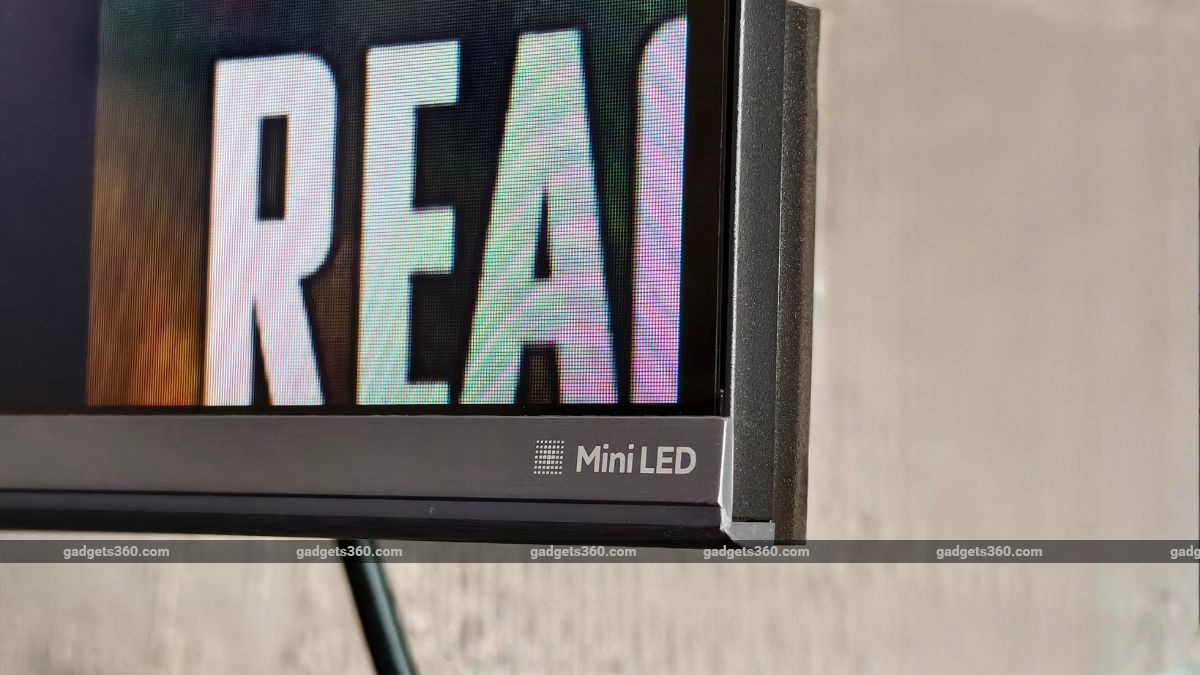
The slightly thicker bottom chin carries the Mini LED branding
The Mini LED TV does feel substantial, though. You will need a bit of planning for space, whether you choose to wall-mount it or place it on a table. I went with the table-top setup. What enhanced the convenience factor for me is that there are multiple mounting points for the stand. It means that if your current TV unit is a bit narrow, you can tuck the stands closer to the centre instead of having to buy a whole new piece of furniture just to fit the TV.
Wall-mounting the Xiaomi TV S Mini LED 75 (2026), however, is still the more practical option if you're looking for a cleaner setup. While the stands keep the TV secure, I wish Xiaomi had chosen a metal build rather than plastic. The TV's large estate induces some anxiety, as a slight tap makes it wobble.
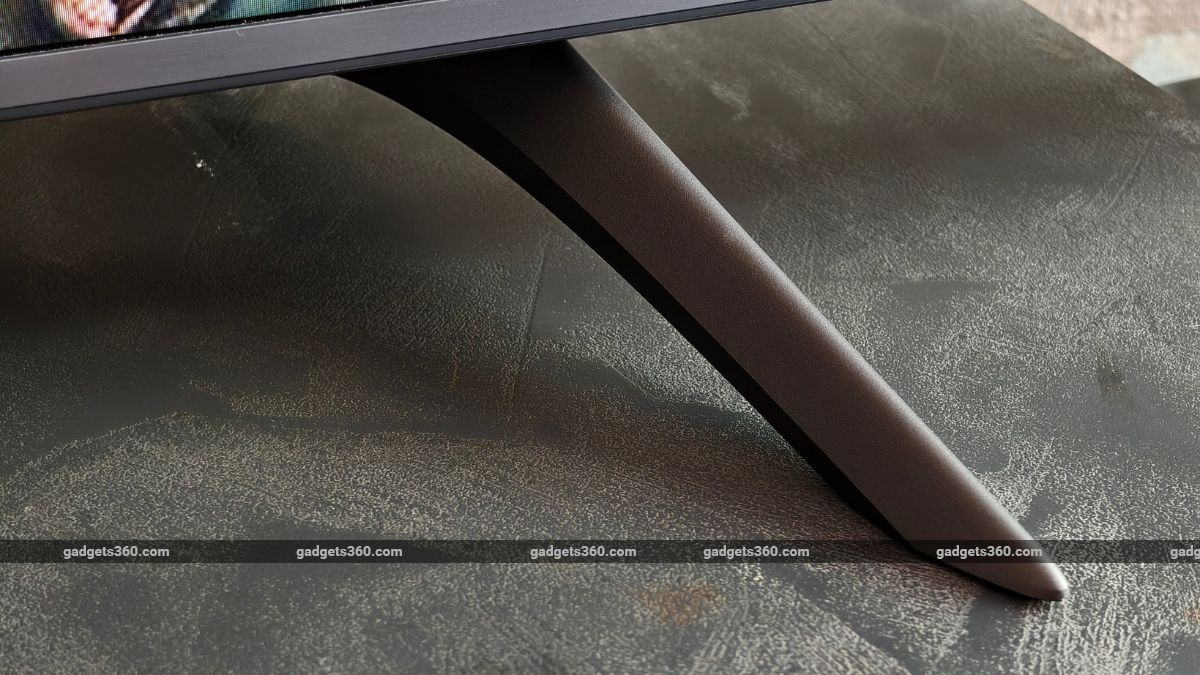
The Xiaomi TV comes with plastic stands, but it would've been better off opting for metal ones
Around the back, you get a fairly standard port layout. The connectivity options include three HDMI ports, one supporting eARC; two USB ports; an Ethernet port; an AV input; optical audio out; a 3.5mm headphone jack; and an antenna input. In regular use, I found the side-facing HDMI ports particularly convenient, since you don't have to awkwardly tilt or move the TV to plug something in.
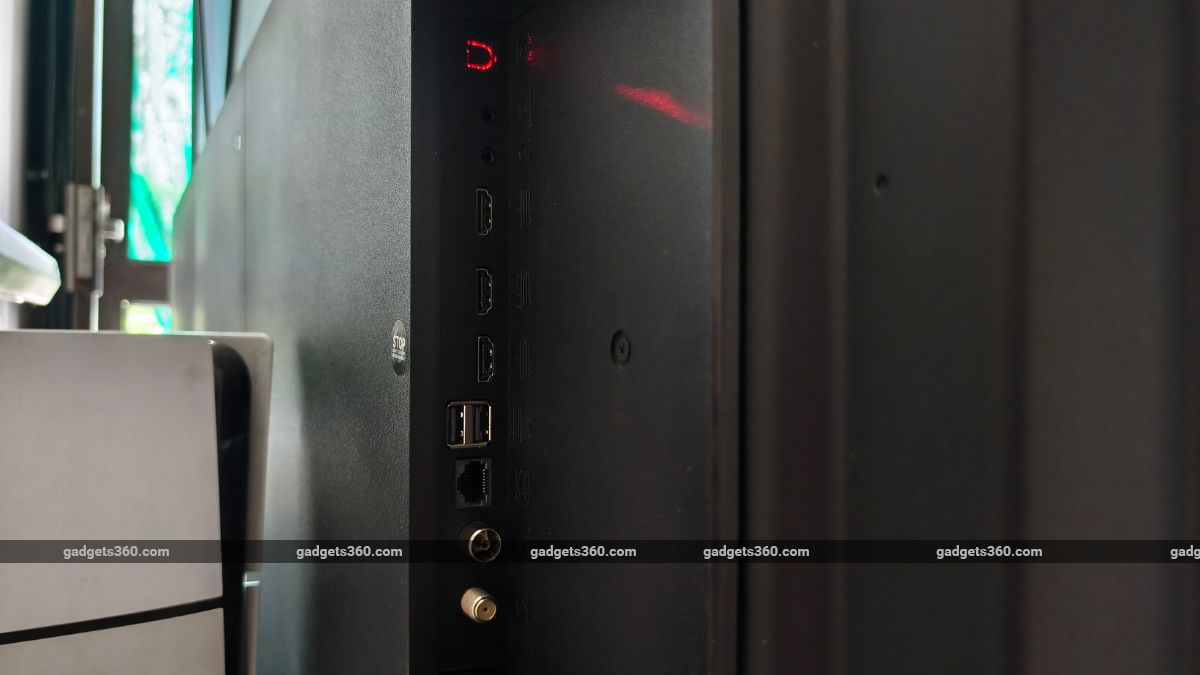
Ports on the Xiaomi TV S Mini LED are easily accessible
Cable management, however, is fairly basic. There are no dedicated clips or channels to guide wires. So, if you are planning to connect multiple devices, things may start to look a bit cluttered behind the panel.
Xiaomi TV S Mini LED 75 (2026) Display: Really Comes Into Its Own
The display is clearly where Xiaomi has put most of its effort. The 75-inch panel offers a 4K resolution and uses a QD-Mini LED backlight. It is backed by a healthy number of local dimming zones. This combination helps the TV deliver a much better contrast profile than conventional LED panels. The most noticeable difference is in terms of contrast. Here, bright highlights stand out, while darker areas retain depth without turning into a grey wash. It is not quite OLED-level black, but a lot closer than you'd expect at this price.
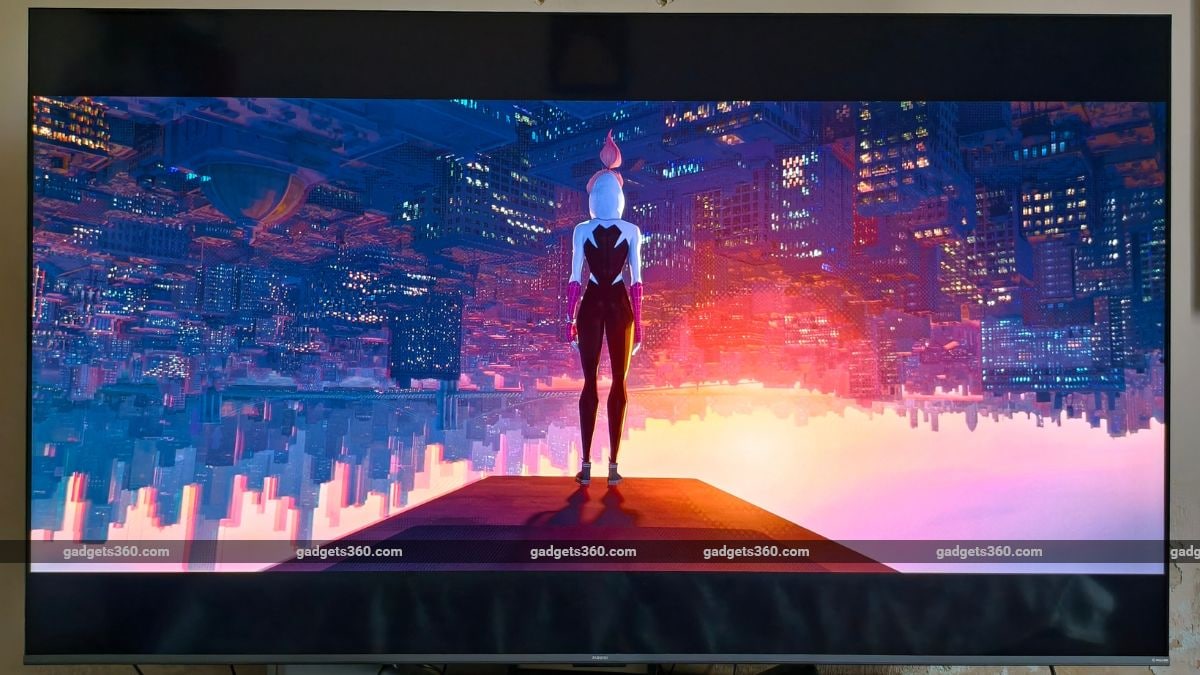
The local dimming is actually handled pretty well. I checked for that annoying “blooming” effect, when white text or streetlights bleed into the black background, but I didn't really see any. The TV definitely prefers a punchier, more vibrant look, but it doesn't feel like it's out of control. Colours pop without looking like a neon sign, and skin tones still look natural in most of the stuff I watched. I also didn't notice any weird colour patches or uneven spots across that massive 75-inch screen, which is a big win. Viewing angles hold up reasonably well, too.
One of the biggest tests for a TV this size is how it handles bright spots on a dark background, like white subtitles or a streetlight in a night scene. I looked closely, and I honestly didn't see any annoying blooming or light bleeding into the black areas. I ran multiple tests to identify any of the aforementioned issues, but the panel remained flawless.
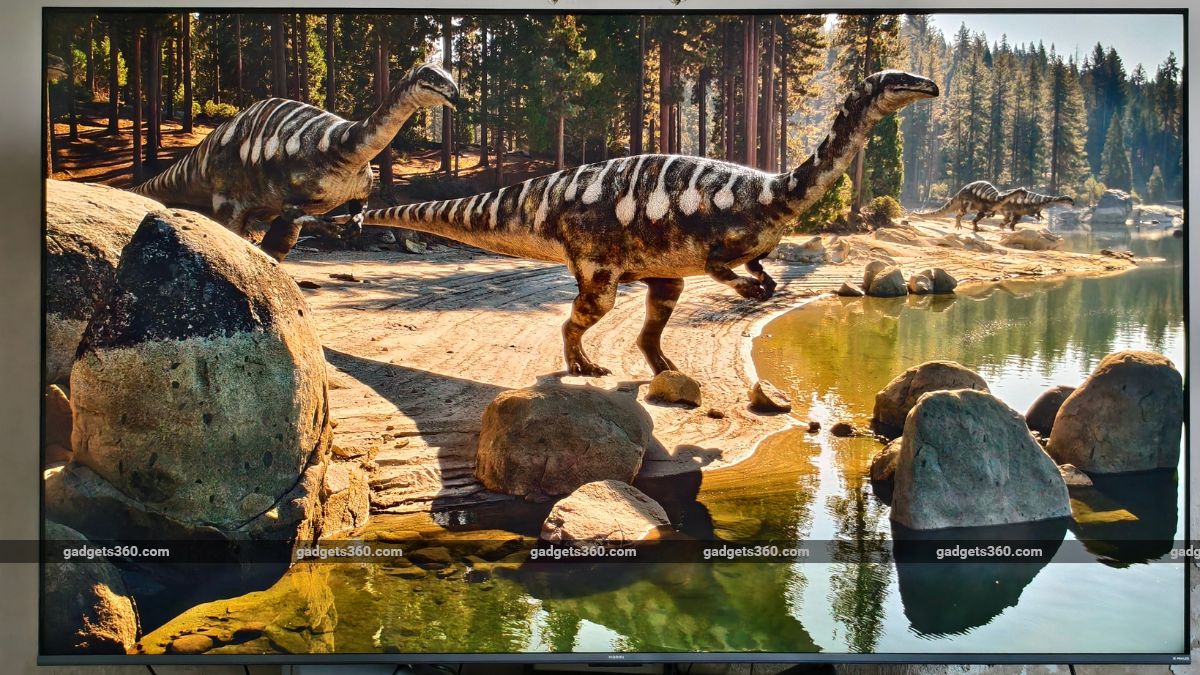
Brightness levels are more than sufficient for HDR content, with bright highlights standing out and reflections remaining well-controlled. Even in a sun-drenched room, the TV remained perfectly usable. However, the auto-brightness sensor is a bit too eager; even minor shifts in ambient light prompt immediate adjustments to the panel's output. I found this highly sensitive behaviour distracting and disabled the feature almost immediately.
Motion is handled well enough for most things, thanks to MEMC and Auto Low Latency Mode (ALLM) doing the heavy lifting behind the scenes. The panel itself is technically 60Hz, but Xiaomi uses a DLG trick to make everything feel a bit smoother when you're actually doing something fast-paced.
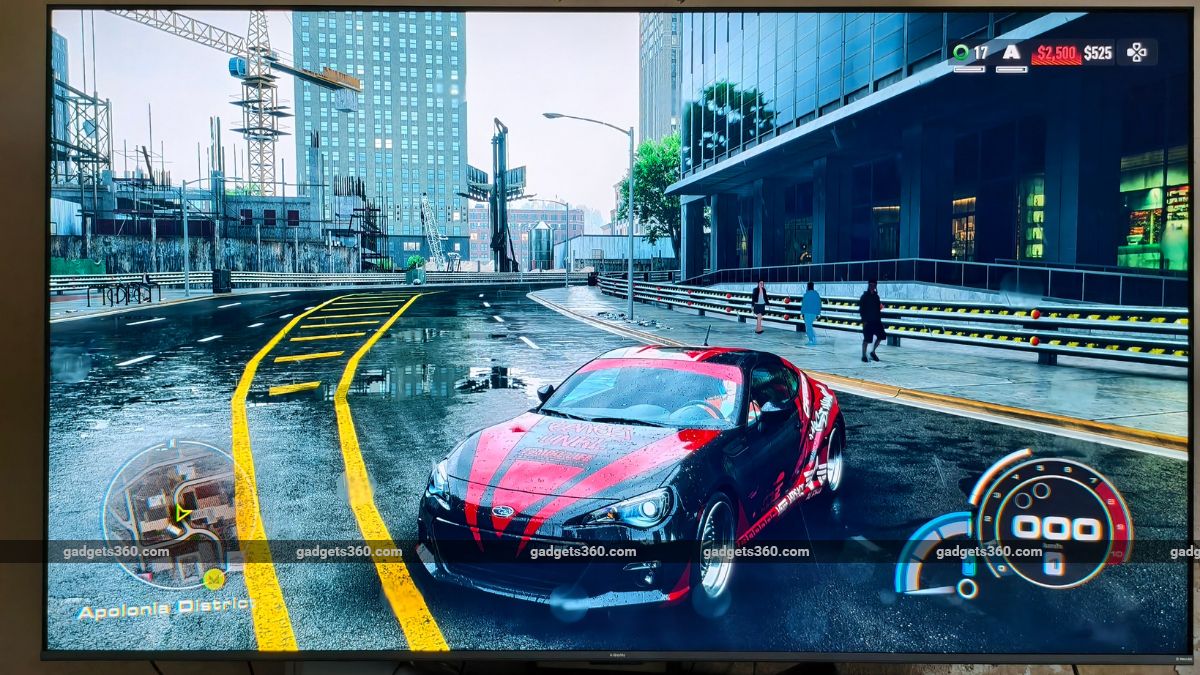
I spent a good chunk of time testing this with a PS5, and while it's not quite the same as having a native high-refresh-rate screen, it definitely cuts down on that jittery look during quick movements. However, competition is rising, with Lumio announcing its Vision 9 (2026), which offers 4K 144Hz support. I hope Xiaomi steps up, too, with the successor to the current model.
There's also a Filmmaker Mode. This feature is increasingly being added to TVs, and I feel it is a change for the better. It essentially tones down processing for a more natural presentation, exactly how the filmmaker would've wanted you to watch it.
Xiaomi TV S Mini LED 75 (2026) Software and Performance: Feature-Rich
On the software side, the Xiaomi TV S Mini LED 75 (2026) runs Google TV, based on Android 14. It is layered with Xiaomi's own PatchWall interface, and the two coexist fairly well without stepping on each other's toes.
The Google TV, as expected, handles the core experience. It delivers a clean interface with personalised recommendations across apps. Meanwhile, I have been an admirer of PatchWall for what it offers compared to standard UI for several years now, and it's the case here, too. It adds another layer of content discovery with features like PatchWall+, curated rows, and even free live TV channels.
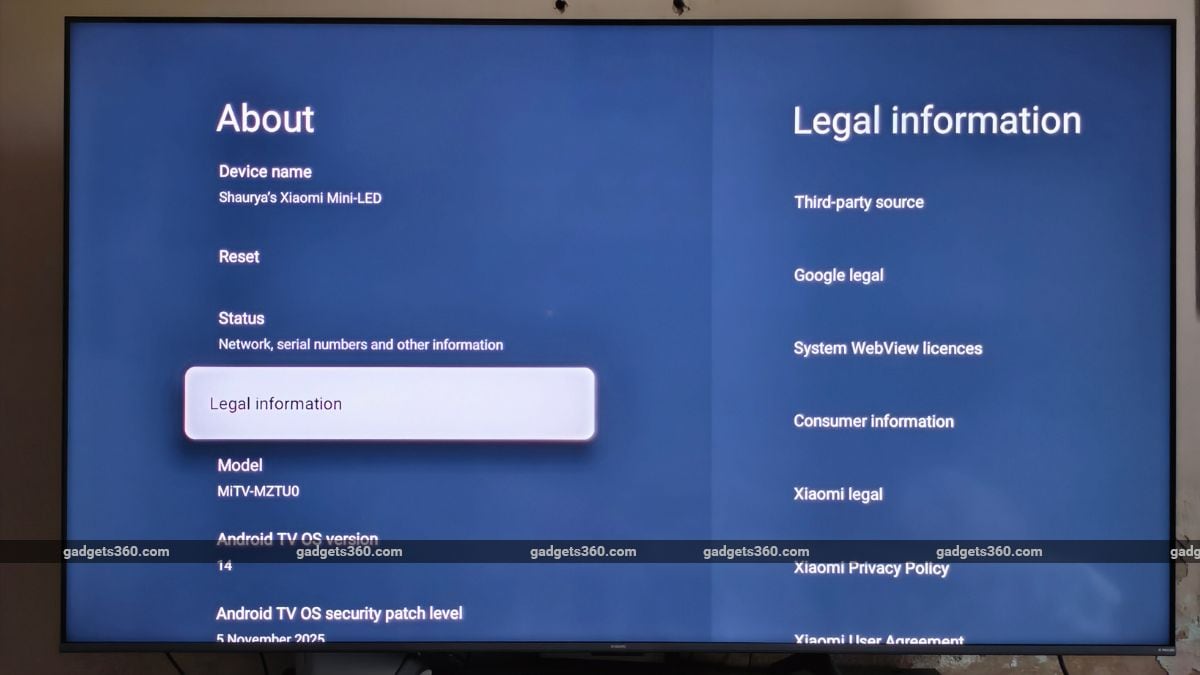
Under the hood, the TV runs on a quad-core processor with 2GB of RAM and 32GB of storage. For the most part, it gets the job done, and navigating the menus and jumping into apps feels snappy enough for daily use. That said, it isn't always buttery smooth. I noticed occasional stuttering, especially when switching between apps too quickly. It is not a dealbreaker by any means, but you'll get a small reminder now and then that you aren't exactly dealing with high-end flagship hardware.
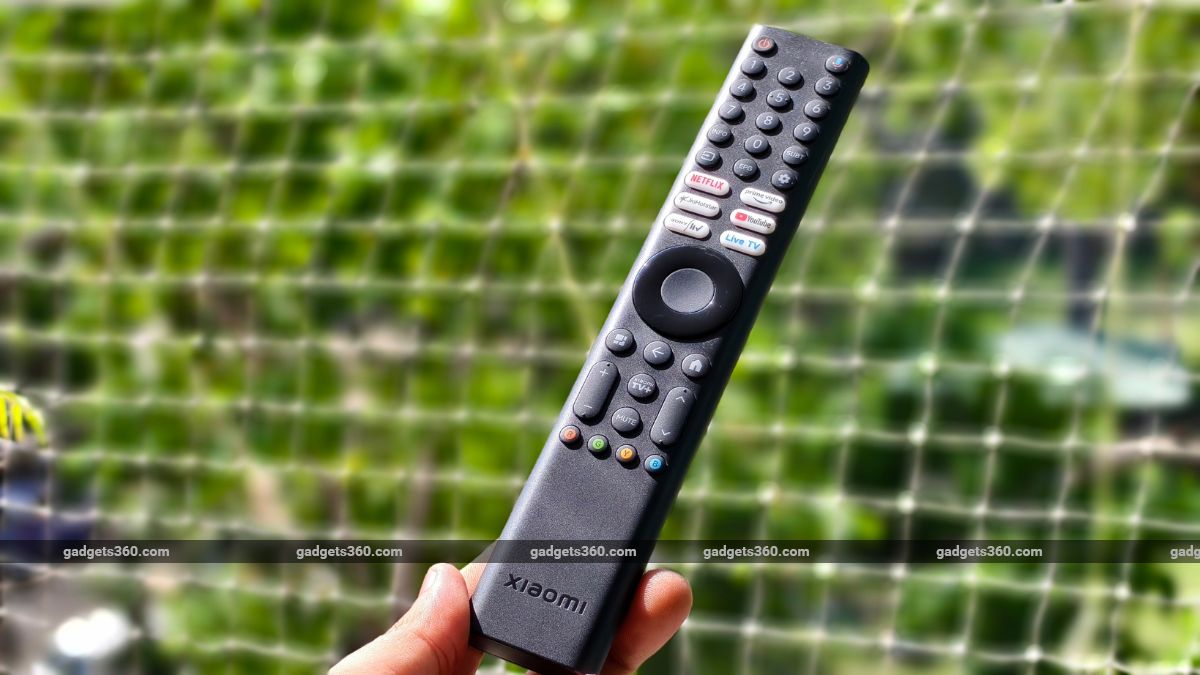
Comparisons, naturally, will again be made with Lumio's Vision 9 (2026), which not only gets a more powerful Pentonic 700 SoC, but also higher RAM and onboard storage. It is about time other brands also invest in higher memory and better chipsets, especially if they want to retain customers for years. On the networking front, the TV supports dual-band Wi-Fi and Bluetooth. The remote is what you typically get with Xiaomi TVs. It features hotkeys for OTT apps as well as a Google Voice assistant toggle.
Casting from your phone to the Xiaomi TV S Mini LED 75 (2026) is a breeze, as it supports just about everything. There's support for Google Cast, Apple AirPlay 2, and Miracast, which means you can mirror content from pretty much any device. Plus, Google Assistant is built in for hands-free voice control, and it works exactly as you'd expect.
For audio, the Xiaomi TV S Mini LED 75 (2026) gets a 34W quad-speaker setup. This includes two tweeters and two full-range drivers. The TV supports Dolby Audio, DTS:X, DTS Virtual:X, and Xiaomi Sound, and for the most part, it does a respectable job. For most content, dialogue comes through clearly and creates a decent sense of width, although it struggles to deliver low-end punch.
While it gets loud enough for a medium-sized room, you'll still be better off pairing it with a soundbar for a more immersive experience.
Xiaomi TV S Mini LED 75 (2026) Verdict
Big screens usually mean big compromises, but the Xiaomi TV S Mini LED 75 (2026) actually delivers. It nails the basics: the Mini-LED panel offers great contrast, high brightness, and consistent colours. Whether you're watching a movie, a match, or gaming, it looks fantastic. The software is packed with features, and casting from your phone works exactly how it should.
It isn't a perfect outing, of course. The software occasionally stutters under its own weight, and the built-in audio is a gentle reminder that you should probably budget for a soundbar.
However, if you're chasing that “theatre-at-home” vibe without the crushing price of a 75-inch OLED, this is an easy recommendation. More than anything, it proves that in a market this competitive, “good enough” is no longer enough to win the day.
- REVIEW
- KEY SPECS
- NEWS
- Good
- Excellent Mini LED panel
- Feature-rich Google TV + PatchWall experience
- Good connectivity with AirPlay 2 and casting
- Strong value for a 75-inch Mini LED TV
- Bad
- Built-in audio lacks depth and bass
- 60Hz native panel (DLG is not true 120Hz)
Read detailed Xiaomi TV S Mini LED 2026 (75-inch) review
Display 65.00-inch
Resolution Standard 4K
Smart TV Yes
Comments
Get your daily dose of tech news, reviews, and insights, in under 80 characters on Gadgets 360 Turbo. Connect with fellow tech lovers on our Forum. Follow us on X, Facebook, WhatsApp, Threads and Google News for instant updates. Catch all the action on our YouTube channel.


Advertisement
Follow Us




-
![[Sponsored] LG NANO 4K UHD AI TV NU885: Gemini Search, Dolby Atmos & 5 Years of Updates](https://www.gadgets360.com/static/desktop/images/spacer.png)
04:17
[Sponsored] LG NANO 4K UHD AI TV NU885: Gemini Search, Dolby Atmos & 5 Years of Updates -
00:57
[Sponsored] Samsung Galaxy Z Fold8 My Fan Cam in Action: Find the Moment, Then Share It -
01:41
[Sponsored] What Do You Need To Know Before Your Next Run? | Samsung Galaxy Watch Ultra2 -
01:32
[Sponsored] Big Day Tomorrow? Prep Today | Samsung Galaxy Watch Ultra2 -
04:37
[Sponsored]: CP PLUS CarKam CP-F89B: 4K Dashcam With Rear Camera, GPS & Emergency Recording
-
iPhone 16 आज भी Amazon सेल में मिल रहा ₹15 हजार से ज्यादा सस्ता
-
OnePlus 15 को Amazon Great Indian Festival Sale में खरीदें सस्ता
-
₹2250 सस्ता मिल रहा Motorola का 7000mAh बैटरी वाला फोन! Flipkart पर ऑफर
-
Poco X8s जल्द हो सकता है लॉन्च, NBTC पर हुई लिस्टिंग
-
OnePlus 16 के जल्द भारत में लॉन्च की तैयारी, 200 मेगापिक्सल हो सकता है प्राइमरी कैमरा
Advertisement
Popular on Gadgets
- Samsung Galaxy S26 Ultra
- Motorola Razr Fold
- ChatGPT
- OPPO Find N6
- Mobiles Under Rs. 40,000
- Vivo X300 Ultra
- Asus Zenbook S14
- iQOO 15
- Vivo X300 Pro
- Lenovo Yoga Slim 7i Aura Edition
- iQOO 15R
- Vivo X Fold 5
- Sony PlayStation 5
- HP OmniPad 12
- OnePlus Nord CE 6 Lite
- OnePlus Pad 4
- OPPO F33 Pro 5G
- Cryptocurrency
- HP OmniBook Ultra 14 (2026)
- iPhone 17
- Eureka Forbes AP 355 Room Air Purifier
- Latest Mobile Phones
- Compare Phones
Latest Gadgets
- Samsung Galaxy F70 5G
- Tecno Spark 50S 5G
- Vivo Y600s Pro
- Vivo Y32 (2026)
- Infinix Smart 20 HD
- Vivo V80
- Vivo S2 FE
- Vivo Y600K Turbo
- HP ZBook Ultra G3a
- Dell Pro Rugged 14
- Amazon Alexa Tablet 8
- Amazon Alexa Tablet 11
- Amazfit T-Rex Dual Solar
- OPPO Watch S2
- Toshiba 65-Inch 4K Ultra HD Smart Mini LED QLED TV (65Z670SP)
- Haier M70 Mini LED 65-inch
- Acer Predator Atlas 8
- Asus ROG Ally
- Blue Star 1.5 Ton 5 Star Inverter Split AC (IE518ZNURS)
- Blue Star 2 Ton 3 Star Inverter Window AC (WIE324L)

- About Us
- Sitemaps
- Feedback
- Archives
- Contact Us
- RSS
- Advertise
- Career
- Privacy Policy
- Ethics
- Editorial Policy
- Terms & Conditions
- Complaint Redressal
Download Our Apps
Available in Hindi
© Copyright Red Pixels Ventures Limited 2026. All rights reserved.