-
 How to Link Your Android Phone With a Windows PC for Calling, Texting, and Sharing Photos11 November 2025
 -
Microsoft Makes File Sharing Between iPhone and PCs Easier With New Link to Windows Feature12 December 2024
-
Microsoft Phone Link Instant Hotspot Feature Rolling Out to More Android Smartphones: Report30 August 2024
-
Microsoft Copilot Reportedly Tests Ability to Perform Tasks on Windows 11-Linked Android Phones3 July 2024
-
Samsung Users Can Now Drag and Drop Files Between Galaxy Phones and Windows 10 PCs Over Wi-Fi14 April 2020
CloudZ RAT Malware Could Exploit Microsoft Phone Link App to Access Messages and OTPs, Researchers Warn
Researchers say malicious actors could gain access to notifications, messages, and OTPs synced between an infected PC and a linked phone.
Written by Shaurya Tomer, Edited by David Delima | Updated: 6 May 2026 17:36 IST

Photo Credit: Microsoft
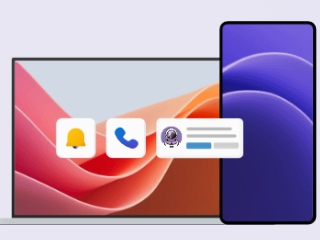
Phone Link is a mobile pairing application which comes preloaded on Windows 11
Click Here to Add Gadgets360 As A Trusted Source

Advertisement
Microsoft's Phone Link app could become a target for threat actors if a connected Windows PC is infected with malware. According to security researchers, an ongoing campaign potentially targets victims with a remote access trojan (RAT) called CloudZ. It reportedly compromises systems and can intercept sensitive information synced between smartphones and PCs when using the Phone Link app. Researchers say the attack began earlier this year and raises concerns regarding notifications, messages, and one-time passwords (OTPs) synced between the phone and the PC.
What Is the CloudZ RAT Phone Link Attack?
According to cybersecurity researchers at Cisco Talos, threat actors are leveraging the Microsoft Phone Link app to access synced mobile data on a compromised Windows computer. The app, notably, serves as a bridge between smartphones and PCs, allowing users to access their phone's notifications, messages, and calls directly from their computers.
Researchers uncovered that attackers are deploying a modular malware called CloudZ RAT, along with an additional plugin named “Pheno.” As per the blog post, the plugin specifically scans systems for active Phone Link sessions and attempts to monitor related processes such as “YourPhone,” “PhoneExperienceHost,” and “Link to Windows.”
Once an active Phone Link connection is detected, attackers can potentially intercept the app's SQLite database files, including “PhoneExperiences-*.db,” which reportedly contains synced SMS messages, call logs, and notification history. Researchers say this could expose sensitive information such as OTPs and authentication notifications synced between a phone and PC.
How the CloudZ RAT Phone Link Attack Works
Talos says the intrusion chain begins with victims being tricked into installing what appears to be a legitimate ScreenConnect software update. The fake installer reportedly drops a malicious Rust-based loader disguised under filenames such as “systemupdates.exe” or “Windows-interactive-update.exe.”
Once executed, the loader installs an intermediate .NET component. This is said to eventually deploy the malicious CloudZ RAT malware onto the system. It can decrypt the configuration data, connect to attacker-controlled servers, and enter a command mode that is capable of downloading plugins and stealing information.
In simple terms, the fake update file, when opened, quietly installs another hidden program on the PC. This program then downloads and installs the CloudZ malware. Once active, the malware connects to servers controlled by hackers and waits for instructions. It can then download extra malicious tools, monitor activity on the device, and steal sensitive information from the infected system.
Researchers also noted that CloudZ uses several evasion techniques to avoid detection, including obfuscation and anti-debugging checks. It reportedly rotates user-agent strings to disguise malicious traffic within legitimate browser activity. The malware uses multiple fallback methods, including curl, PowerShell, and bitsadmin, to download payloads.
What Users Should Know
Researchers have warned that since Phone Link mirrors notifications and messages between devices, an infected PC could potentially expose private conversations, authentication alerts, and OTP codes synced from a phone. According to Talos, the malware reportedly stores gathered reconnaissance data in temporary staging folders before exporting it to attacker-controlled servers.
The Pheno plugin may also reportedly check if Phone Link is actively routing traffic through a local proxy connection before attempting to monitor synced data. Researchers recommend downloading software updates only from trusted sources and keeping antivirus protection enabled on their PCs to detect any suspicious activity.
Comments
Get your daily dose of tech news, reviews, and insights, in under 80 characters on Gadgets 360 Turbo. Connect with fellow tech lovers on our Forum. Follow us on X, Facebook, WhatsApp, Threads and Google News for instant updates. Catch all the action on our YouTube channel.
Related Stories
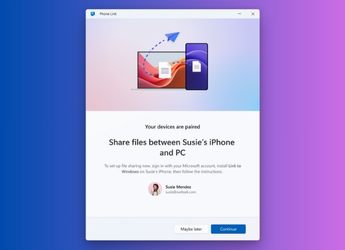




CloudZ RAT Malware Could Exploit Microsoft Phone Link App to Access Messages and OTPs, Researchers Warn


Advertisement
Follow Us




-
12:04
[Partner Content] OPPO Reno16 Series Deep Dive: Built for Creators? -
05:33
Poco M8 Power Review | 8000mAh battery phone | Best budget phone 2026? -
03:28
[Partner Content] OPPO Enco Air5, Flagship ANC for Just Rs. 3,299? -
01:02
[Sponsored] One Shot Away From the Perfect Edit | Galaxy Book6 Pro -
02:00
[Sponsored] Galaxy Book6 Pro vs Lenovo Yoga 7 2-in-1: Which Laptop Wins?
-
Amazon Great Freedom Sale: बंपर डिस्काउंट के साथ मिल रहे 1.5 Ton Split AC
-
Flipkart Freedom Sale में ₹25000 में आने वाले 43 इंच TV पर डिस्काउंट
-
Flipkart Freedom Sale: ₹5000 सस्ता मिल रहा 48MP कैमरा वाला iPhone 17
-
Amazon Great Freedom Sale में ₹11000 तक सस्ते मिल रहे OnePlus N6x, OnePlus 13s, OnePlus Nord 6 जैसे फोन
-
Motorola भारत में ला रही Moto G Max, 7000mAh बैटरी, 50MP दो कैमरा, IP64 रेटिंग, 14 अगस्त को है लॉन्च
Advertisement
Popular on Gadgets
- Samsung Galaxy S26 Ultra
- Motorola Razr Fold
- ChatGPT
- OPPO Find N6
- Mobiles Under Rs. 40,000
- Vivo X300 Ultra
- Asus Zenbook S14
- iQOO 15
- Vivo X300 Pro
- Lenovo Yoga Slim 7i Aura Edition
- iQOO 15R
- Vivo X Fold 5
- Sony PlayStation 5
- HP OmniPad 12
- OnePlus Nord CE 6 Lite
- OnePlus Pad 4
- OPPO F33 Pro 5G
- Cryptocurrency
- HP OmniBook Ultra 14 (2026)
- iPhone 17
- Eureka Forbes AP 355 Room Air Purifier
- Latest Mobile Phones
- Compare Phones
Latest Gadgets
- Redmi 17 5G
- Vivo S2
- Itel Ace 3 Heera
- Motorola Moto G37 Power 128GB
- OPPO A7 Pro Max
- Poco M8 Power
- OnePlus N6x
- Honor X6e
- Huawei MateBook Pro S
- Asus Chromebook CX15 (CX1505CTA)
- Moto Pad 70 Groove
- Honor Pad X9 Max
- Samsung Galaxy Watch 9 (44mm)
- Samsung Galaxy Watch 9 (44mm, LTE)
- Sony Bravia 9 II
- Haier HQLED P7 Pro
- Acer Predator Atlas 8
- Asus ROG Ally
- Blue Star 1.5 Ton 5 Star Inverter Split AC (IE518ZNURS)
- Blue Star 2 Ton 3 Star Inverter Window AC (WIE324L)

- About Us
- Sitemaps
- Feedback
- Archives
- Contact Us
- RSS
- Advertise
- Career
- Privacy Policy
- Ethics
- Editorial Policy
- Terms & Conditions
- Complaint Redressal
Download Our Apps
Available in Hindi
© Copyright Red Pixels Ventures Limited 2026. All rights reserved.