-
 Crypto Hacks Top $1 Billion in H1 2026 as Ethereum and Solana Lead Losses: Report29 July 2026
 -
Blockaid Reports $450,000 Exploit as Garden Finance Disables App27 July 2026
-
Crypto Hacks Hit AFX and Verus Protocol Within Hours, Draining $31.6 Million24 July 2026
-
Ostium Suspends Trading Following Oracle Security Incident Drains Millions16 July 2026
-
Bonzo Lend Hit by $9 Million Oracle Exploit on Hedera Network13 July 2026
- Home
- Cryptocurrency
- Cryptocurrency News
- Bitcoin Wallet Exploit Costs Users $38 Million in 25 Minute Attack
Bitcoin Wallet Exploit Costs Users $38 Million in 25-Minute Attack
Security flaw in Coldcard key generation exposed hundreds of Bitcoin wallets to theft
Written by Rahul Dhingra, Edited by Rohan Pal | Updated: 31 July 2026 18:22 IST

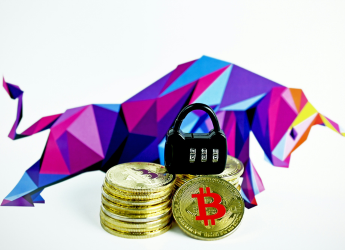
Photo Credit: Unsplash/Kanchanara
Researchers linked the theft to a vulnerability in Coldcard’s key generation process
Click Here to Add Gadgets360 As A Trusted Source

Advertisement
On Friday, 500 separate wallets, containing 584 Bitcoin, worth about $38 million (roughly Rs. 363 crore), were attacked and stolen. The attack was traced to a flaw in how Coldcard hardware wallets generated their keys. 1,324 chunks of BTC were moved across 500 transactions inside a three-block window. In response, 562 Bitcoin tokens were pooled into a single address that has not been moved. All of the emptied wallets were single-signature wallets containing more than 0.15 BTC.
Researchers Trace Attack to Weakness in Coldcard Key Generation
The exploit is now part of the growing number of crypto losses in 2026. Coldcard is a hardware wallet built by a Canadian company called Coinkite. The wallet is a tiny standalone device that stores Bitcoin keys offline, away from internet-connected devices. Mk2, Mk3, Mk4, Q, and Mk5 are subsequent generations of the said product, released after a few years, similar to how a cell phone company releases numbered models. Your exposure is dependent on the version of the firmware your device had when you initially created your wallet.
Every wallet has a seed phrase, which is a secret phrase controlling the funds. All these phrases are drawn at random from a vast pool, and guessing them is next to impossible. But Coldcard's firmware was not doing that. According to the report released by the Bitcoin engineering and security teams at Block, one build flag caused the machine to ignore its own hardware random number generator, and the verification within a library module just checked for the existence of the flag, and not its status. The key generation silently failed back to a primitive software algorithm based on the serial number and time counter registers of the chip.
In this regard, Coinkite informed users who created seeds using an Mk3 device in versions 4.0.1 and above that "Mk4, Q and Mk5 are not affected based on our early analysis." According to Block, the company informed Coinkite about its findings, and the Coinkite team acknowledged the same. The analyses by both companies are considered preliminary; according to Block, it published its findings without confirming the exploitability of the vulnerability, which was already exploited.
The exposure goes past wallet seeds. The generator was used to create Coldcard's paper wallet private keys, wherein the output is taken as the key without any further derivation, in addition to seed splitting masks, cloning keys, and Key Teleport transfers.
Reports by on-chain security platform Blockaid show that crypto losses have hit $1 billion (roughly Rs. 9,547 crore) during the first half of 2026 as the sector witnessed its highest tally of hacks within six months. The two blockchain networks, Ethereum and Solana, experienced the biggest impact of attacks on their systems. While code exploitation was the cause of Ethereum attacks, keys and signing infrastructure breaches were the reason behind Solana losses.
Comments
Get your daily dose of tech news, reviews, and insights, in under 80 characters on Gadgets 360 Turbo. Connect with fellow tech lovers on our Forum. Follow us on X, Facebook, WhatsApp, Threads and Google News for instant updates. Catch all the action on our YouTube channel.
Related Stories



Advertisement
Follow Us




-

04:38
iQOO Z11 Lite Review: Should You Buy The Latest iQOO? -
05:06
OnePlus N6 Full Review: Performance, Camera, Battery & Display Tested -
04:57
Samsung Galaxy Unpacked Everything You Need to Know | Galaxy Z Fold8, Z Fold8 Ultra, Z Flip8 -
04:22
Upcoming Foldable Smartphones in India | Upcoming Foldable Launches : Samsung, Apple, Google & more -
04:37
Redmi Turbo 5 Review: Battery, Cameras, Performance Tested
Advertisement
Popular on Gadgets
- Samsung Galaxy S26 Ultra
- Motorola Razr Fold
- ChatGPT
- OPPO Find N6
- Mobiles Under Rs. 40,000
- Vivo X300 Ultra
- Asus Zenbook S14
- iQOO 15
- Vivo X300 Pro
- Lenovo Yoga Slim 7i Aura Edition
- iQOO 15R
- Vivo X Fold 5
- Sony PlayStation 5
- HP OmniPad 12
- OnePlus Nord CE 6 Lite
- OnePlus Pad 4
- OPPO F33 Pro 5G
- Cryptocurrency
- HP OmniBook Ultra 14 (2026)
- iPhone 17
- Eureka Forbes AP 355 Room Air Purifier
- Latest Mobile Phones
- Compare Phones
Latest Gadgets
- OnePlus N6x
- Honor X6e
- Vivo T5e
- Vivo X300 E
- Itel Zeno 100 Pro
- Itel Zeno 100 Lite
- Lava Virat V1
- Lava Virat V1 5G
- Dell Alienware 18 Area-51 (2026)
- Dell Alienware 16 Area-51 (2026)
- Moto Pad 70 Groove
- Honor Pad X9 Max
- Samsung Galaxy Watch 9 (44mm)
- Samsung Galaxy Watch 9 (44mm, LTE)
- Sony Bravia 9 II
- Haier HQLED P7 Pro
- Acer Predator Atlas 8
- Asus ROG Ally
- Blue Star 1.5 Ton 5 Star Inverter Split AC (IE518ZNURS)
- Blue Star 2 Ton 3 Star Inverter Window AC (WIE324L)

- About Us
- Sitemaps
- Feedback
- Archives
- Contact Us
- RSS
- Advertise
- Career
- Privacy Policy
- Ethics
- Editorial Policy
- Terms & Conditions
- Complaint Redressal
Download Our Apps
Available in Hindi
© Copyright Red Pixels Ventures Limited 2026. All rights reserved.