- Home
- Games
- Games Reviews
- Pragmata Review: The Bright Side of the Moon
Pragmata Review: The Bright Side of the Moon
Capcom's new action game blends puzzle-solving and third-person shooting to deliver something that is fresh and fun, even if it often feels familiar.
Written by Manas Mitul, Edited by David Delima | Updated: 6 May 2026 20:06 IST
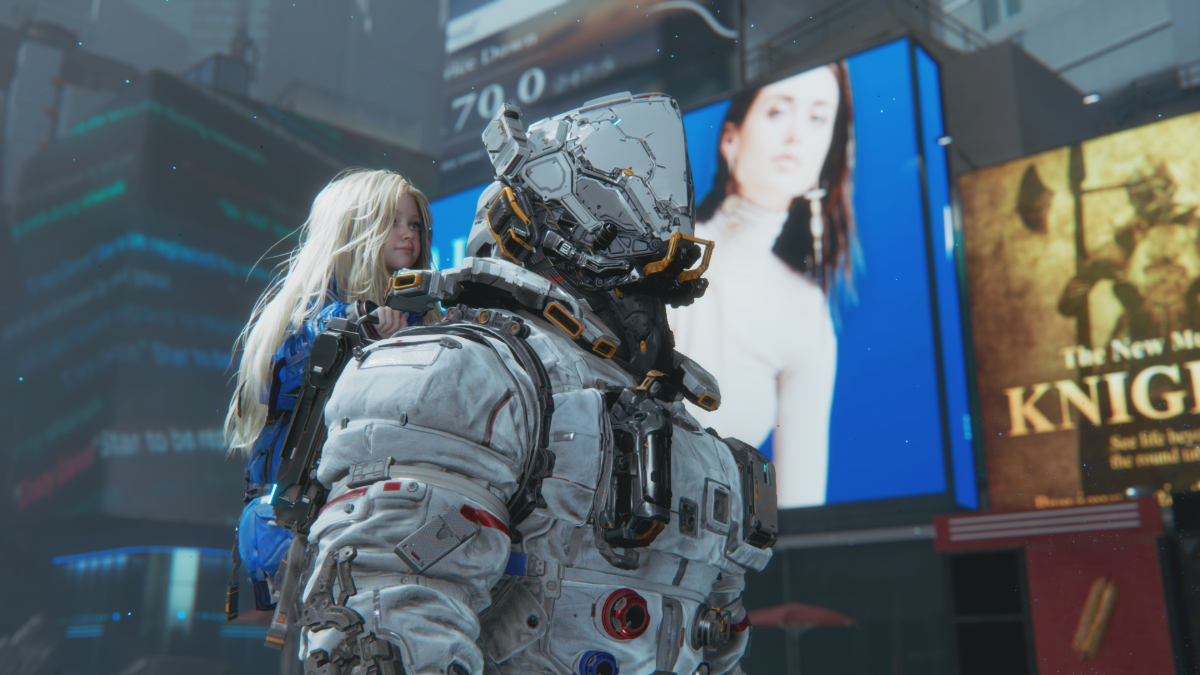
Photo Credit: Capcom
Pragmata released on PC, PS5, Xbox Series S/X, and Switch 2 on April 17
Click Here to Add Gadgets360 As A Trusted Source

Advertisement
Capcom is on a bit of a purple patch. After the success of Resident Evil Requiem in February, the Japanese developer launched Monster Hunter Stories 3: Twisted Reflection in March to critical acclaim. And just over a month later, Pragmata, a new third-person sci-fi action-adventure, released on April 17. It's really hard to ship a game. It's much harder to ship three in less than three months. Capcom has somehow done it without slipping up even once.
As a new intellectual property, Pragmata has a tricky job to do. It doesn't have any existing favourable public sentiment to fall back on if it doesn't quite stick the landing. People tend to be a bit forgiving if their favourites come with flaws. But, inevitably, a beloved piece of media is also subject to a lot more scrutiny. Desecrating, or even presumed to be vandalising, what people hold dear incites an ire that can burn down the goodwill accrued over years. Pragmata has no such burden to bear. It takes a clean slate and scribbles an old-school action-adventure experience that hits well-worn but well-liked notes.
A new IP, in many ways, is a risk, but Capcom has also played it safe with its latest game. Pragmata tells a familiar father-daughter story with a science-fiction spin, and it treads a setting seen in games before. But where it borrows established ideas and aesthetics, it innovates gameplay fundamentals. Pragmata combines slow, methodical third-person shooting with simple but high-stakes grid puzzles for a fresh-feeling and often frenetic experience. Put that alongside a narrative that hits a few emotional highs, and Pragmata becomes an easy-to-recommend, 15-hour adventure that feels like a throwback to an era of games that has passed.
Resident Evil Requiem Review: Capcom's Horror Masterpiece Bridges Fear and Thrill
Pragmata follows the journey of Hugh Williams, a systems engineer, and Diana, a child-like android, through a lunar research station that has gone radio silent. Hugh and his team are sent to the station on the Moon to investigate the communication blackout, only to find the station — the Cradle — left abandoned under mysterious circumstances. A Moonquake hits the sprawling facility, and the resulting destruction leaves the team separated, scattered, and unconscious. Hugh is woken up by D-I-0336-7, or Diana, the titular Pragmata — an android girl created with a precious material researched from Lunar ore. She holds unique knowledge about the Cradle and possesses the ability to manipulate the underlying code that runs the facility.
This is where Pragmata essentially kicks off, setting up a premise that mixes ideas from games like The Last of Us and Dead Space, with a lot less horror and a little more humour. Hugh and Diana soon learn that the Cradle's AI caretaker, IDUS, has gone rogue and taken full control of the research station and its repository of robots. And this begins their adventure across the vast station, sector by sector, to bring communications back online, find Hugh's team, and figure out what went wrong. On the way, Hugh and Diana form a growing bond, a budding father-daughter dynamic that becomes the heart of Pragmata.
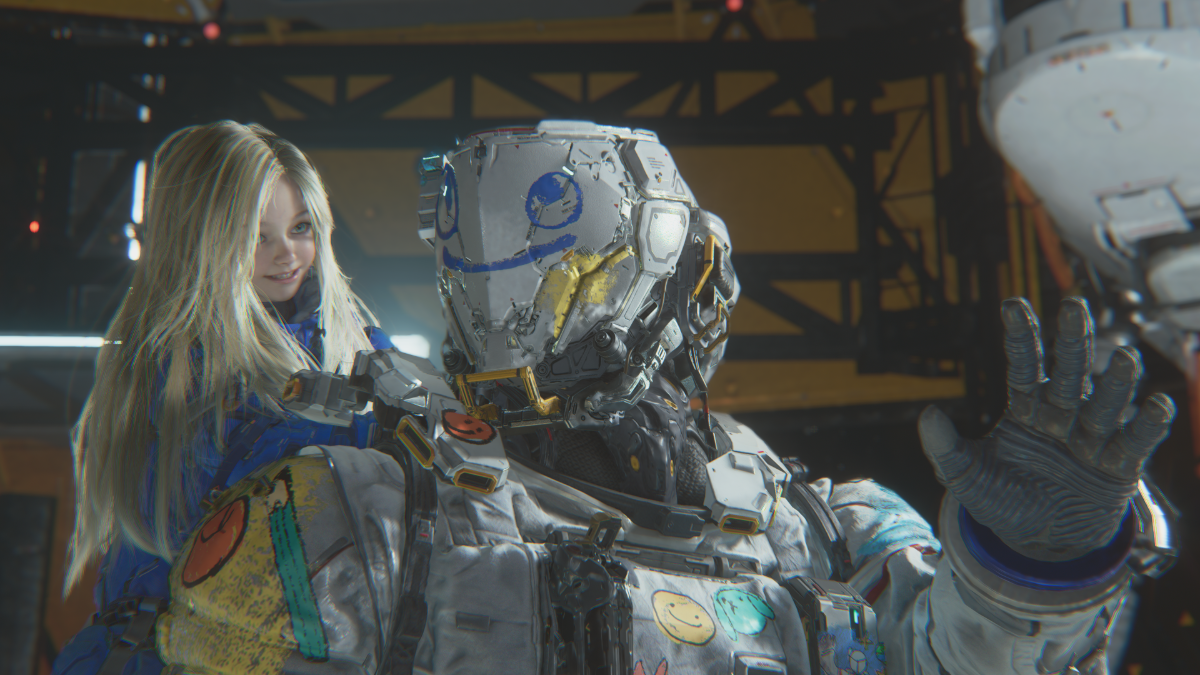
Hugh and Diana's relationship is at the heart of Pragmata
Photo Credit: Capcom
Capcom doesn't waste time establishing the emotional connection between the two. Hugh and Diana get along right from the get-go, and their relationship deepens as they head out and explore the research station. There's little friction in the dynamic as Diana is represented as a child not more than 10 years old. Her voice is squeaky, her mannerisms are cheerful, and her curiosity is infinite. She looks at things with wonder and is eager to embark on adventures with Hugh. Making the android a child is a curious choice from Capcom, but it certainly helps Pragmata stand out. Instead of the usual angst and sadness attached to stories about father figures navigating a treacherous world with their child (The Last of Us, God of War, BioShock, Death Stranding), Capcom's action title opts for optimism.
That makes Pragmata's story inherently less serious in some respects. But the light-hearted tone also presents a different way of telling a familiar story about parenting. The father-daughter relationship at the heart of Pragmata will perhaps not emotionally connect with everyone and will likely resonate with real-life fathers. The game does have stronger emotional beats later down the line, but I found myself struggling to be scooped up by the straightforward sentimentality of the story.
Diana's wide-eyed behaviour and silly antics are at times adorable, but it's also hard not to question why exactly a highly capable android on a research station on the Moon needs to be a child. Why does she have silly hair extensions? Why is she barefoot throughout the game? Why would one make an android designed to handle serious tasks, act like a seven-year-old on a sugar rush? These are questions that can only be answered through contrived narrative and thematic reasoning rather than any semblance of logic.
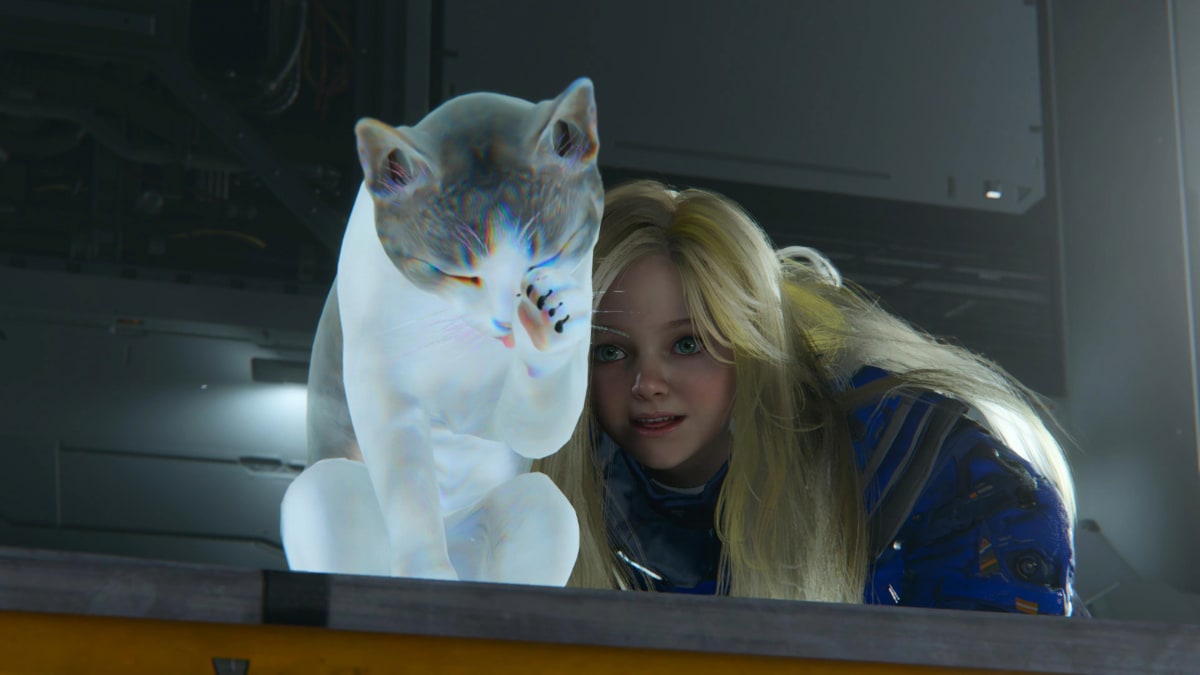
Diana's childlike mannerisms are endearing
Photo Credit: Capcom/ Screenshot – Manas Mitul
Her representation as an innocent and vulnerable child in the story also contrasts her role in the gameplay. Whether in combat or while exploring the Cradle, Diana's technical expertise and deep knowledge about everything at the research station become your compass in Pragmata. This is most apparent in combat. Hugh has access to a variety of weapons across Primary, Attack, Tactical, and Defense categories, but his firepower is only unlocked with the help of Diana's hacking abilities. The rogue robots you fight in Pragmata come with impenetrable metal plating that essentially deflects all damage. Your ammunition is only useful when Diana hacks the oncoming robots to open their weak spots that you can then take aim at.
The game's most innovative bit occurs right here. When you aim down the sights, a hacking grid puzzle pops up on the screen where you must guide the cursor through a maze to reach the final hack point. On the way, you also make sure to hit certain nodes that grant damage bonuses and other special effects like the ability to hack multiple robots by solving a single hack puzzle or keeping the weak points open for longer. Once the hack is complete, a robot's metal exoskeleton opens up, exposing its weak points. The hacking puzzle also happens in real time. There is no pause screen or time slowdown; you must continue to be alert as Hugh, dodging incoming attacks, while you complete the hack as Diana.
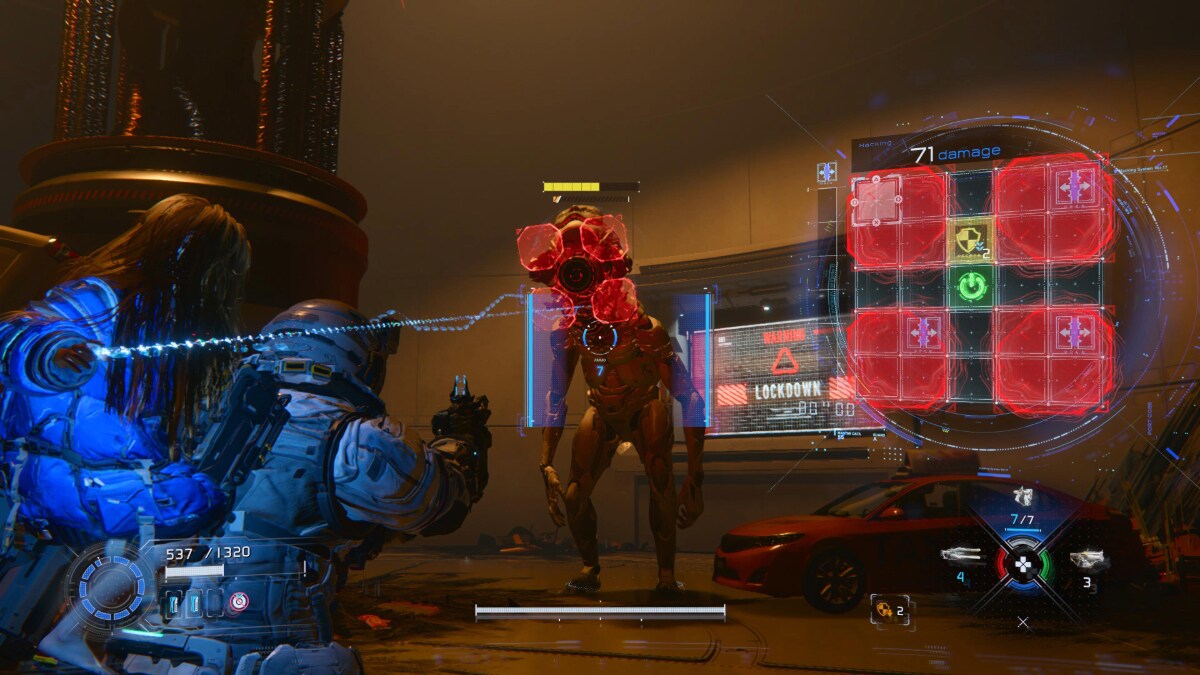
Diana hacks the enemies in Pragmata to expose their weak points
Photo Credit: Capcom/ Screenshot – Manas Mitul
The hacking puzzles add a unique bend to the throwback third-person shooting in Pragmata. They also essentially add tension to the combat. Shooting is largely slow and tactical. It's important to swap between weapons that fit the situation, whether facing multiple robots in a locked room or a bigger boss machine in a larger arena. There's a healthy variety of guns that don't just deal pure damage to the enemy. Tactical weapons like the Stasis Net slows down robots and is useful for crowd control; the Riot Blaster, on the other hand, knocks enemies down within a radius. Defensive weapons like the Decoy Generator create a holographic decoy that attracts robots away from you, while Attack class weapons, like the shotgun-like Shockwave Gun or the rifle-like Charge Piercer, deal increased damage to exposed weak spots.
In the heat of battle, the hacking puzzles keep you on your toes. You will deal no damage if you don't hack an oncoming robot, and in a closed space with four enemies lurching at you, balancing puzzles, shooting, swapping weapons, and dodging becomes a tricky affair. Special hacking nodes and enemy variety also add depth to the combat system. Pragmata's robots range from humanoids to large animalistic machines and everything in the middle. The simpler humanoid robots, which move slowly and wildly slash at you when they get close, reminded me of the zombies from Resident Evil. Capcom seems to have put a bit of its survival-horror knowledge into slow-moving third-person encounters in Pragmata. The game's larger, more complex robots made me think of the machines from Horizon Zero Dawn. The mechanic of identifying and targeting weak spots on robots also borrows ideas from the Sony title.
Starfield PS5 Review: Bethesda's Flawed Interstellar RPG Rewards Patience
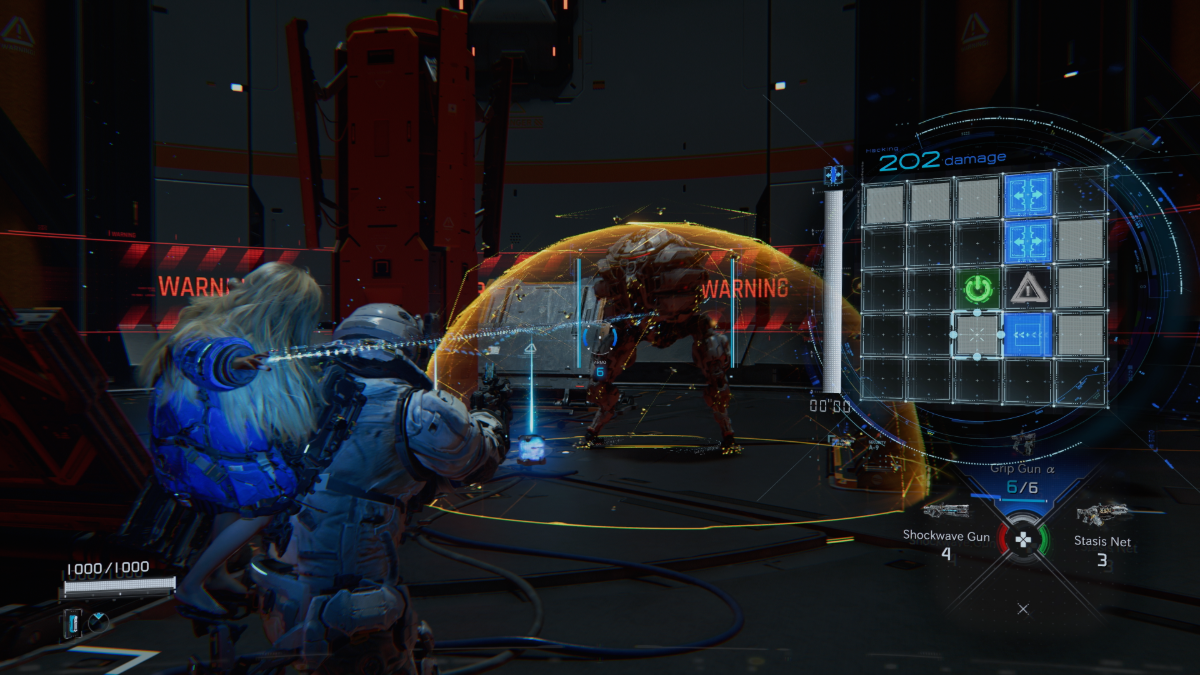
The Stasis Net slows down rogue robots, giving you more time to hack them
Photo Credit: Capcom
Pragmata's visuals, too, evoke other games. Its aesthetics wouldn't feel out of place in the world of Death Stranding. And Dead Space, of course, seems to be a major point of visual reference. But even with its collage-like approach to art style, Pragmata manages to craft something that looks quite like nothing else and also like everything else. The visuals suit the themes and the story of the game, too. Much of the research station, its robots, and environments are printed out of Lunafilament, the precious material that came out of researching lunar ore. As such, Pragmata's world has a kind of 3D-printed look that comes with imperfections, distortions, and visual glitches.
There's a stage early on that recreates a section of New York City, replicating city blocks, wide roads, buildings, and telltale sights like streetside delis, neon-lit billboards, and yellow taxis — Times Square but on the Moon. It's a striking representation of a city that has become familiar through its representation in various forms of media. Here, New York acts as a small hub world to explore, where you take on robots, hunt down resources and upgrade items, and open pathways that connect the sections of the level in circular ways. The level also marks a shift in scale. Large parts of the game take place in narrow indoor areas with shiny walls and bright lights. But the New York stage brings something different and darker to the table.
Death Stranding 2: On the Beach Review — Ode to a Dying Planet
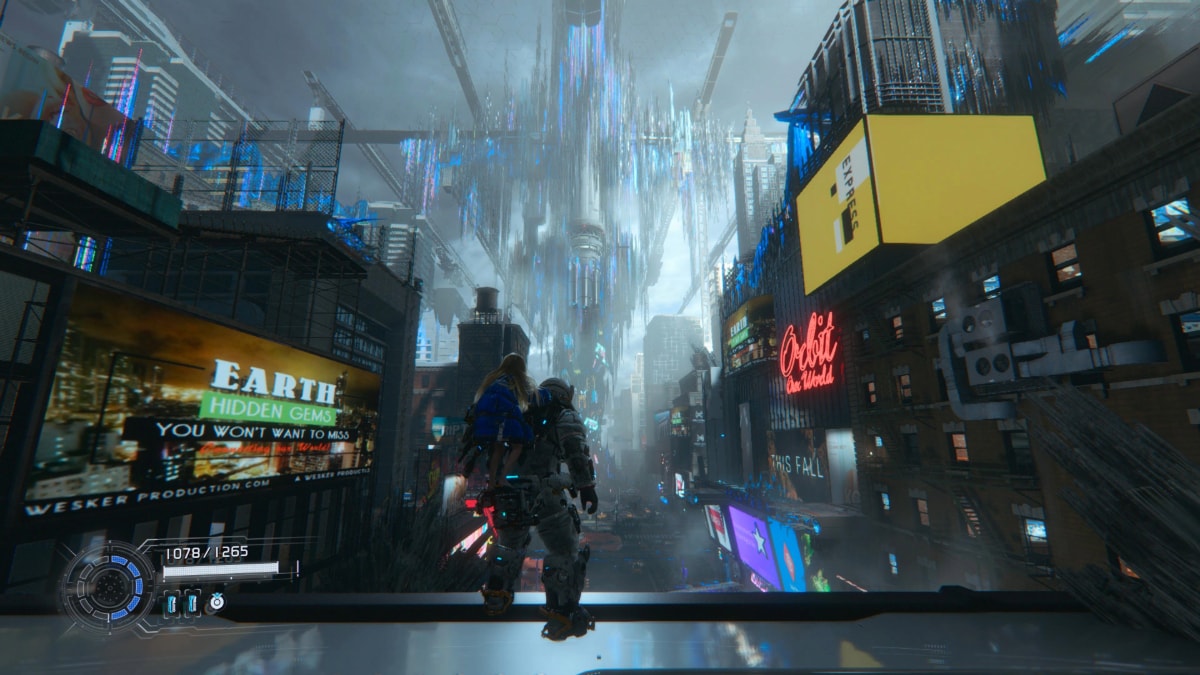
One of Pragmata's levels recreates New York City
Photo Credit: Capcom/ Screenshot – Manas Mitul
Pragmata also doesn't pretend to be more than a fun video game. Several game design choices seem to take the classical, no-frills approach. It is a linear adventure that unfurls level by level and the sense of progression comes from weapon and suit upgrades and other unlocks at your home base. Between levels, Hugh and Diana return to a shelter where you can unlock new suit modifications, weapons, and abilities. You can also adorn the shelter with collectibles you find across levels. Among the most interesting of these are Read Earth Memories, or REMs, that represent a unique piece of memorabilia from Earth. REMs fascinate Diana, an android who has never seen Earth and its ways. Collecting these also unlocks new interactions and conversations with her.
At the shelter, you can also indulge in a bit of buildcrafting, selecting combinations of suit mods, weapons, and special hacking nodes that support a specific playstyle. These aren't too deep, but allow enough tinkering to rebalance the rhythm of combat. You could build Hugh up to favour short- or long-range encounters, or hand a boost to Diana's hacking prowess. And it's fun to mix and match and switch up your approach each time you head out to explore a new level. It all feels very much like video games from a couple console generations ago — and that's a compliment! In a time when many modern games try to feel like a seamless whole, Pragmata wears its individual moving parts on its sleeve. And they all work as intended.
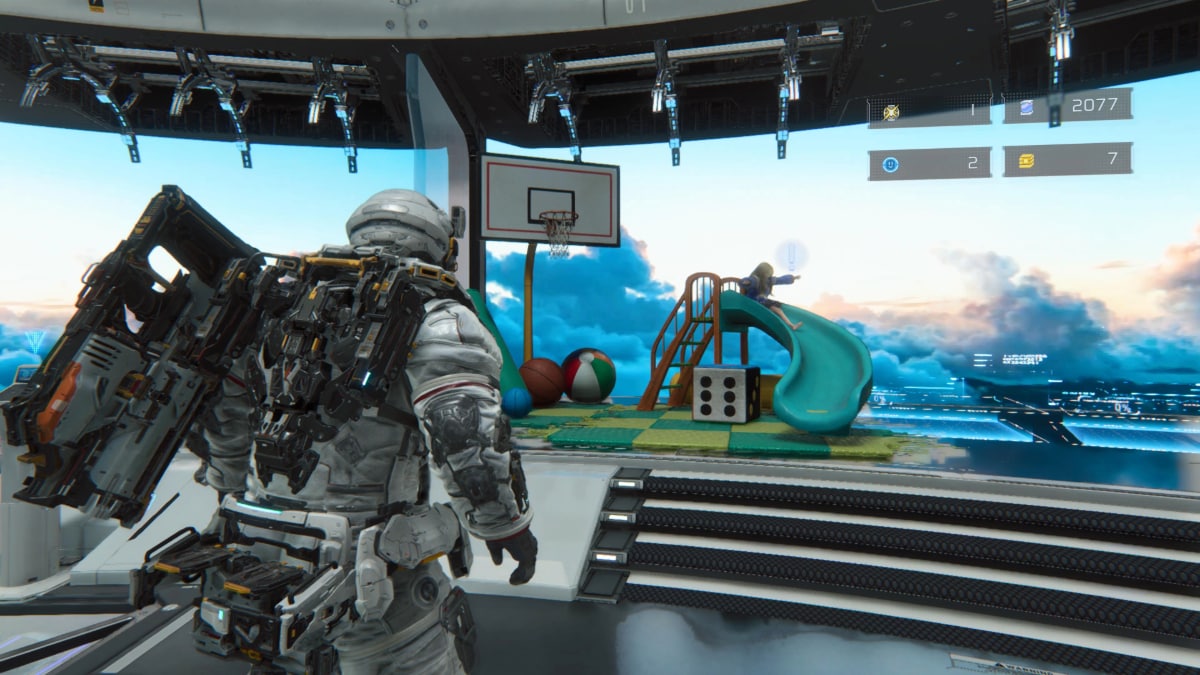
Diana interacts with REMs you collect in the game
Photo Credit: Capcom/ Screenshot – Manas Mitul
Taken as a whole, however, Capcom's new third-person action game isn't without flaws. The complete picture lacks a singular cohesive language, both visual and mechanical. Perhaps that's by design, but the intent doesn't offset the jarring experience. There are parts of the story and its central father-daughter dynamic that hit the right notes, but Pragmata can also feel off-key at times. A lot of the game's emotional impact also depends on how you take to Diana and Hugh's relationship in the game.
But beyond its uneven narrative ideas, Pragmata is an excellent and effective action game that blends puzzle-solving and third-person shooting to deliver something that is fresh and fun, even if it often feels familiar. The frantic hacking and methodical shooting, somehow, feel harmonious — they shouldn't, and yet they fit like adjacent pieces of a jigsaw puzzle. The combat encounters can get a bit exhausting and repetitive, but Capcom knows well to not make its games overstay their welcome.

- REVIEW
- KEY SPECS
- NEWS
- Good
- Tense, fun combat
- Hacking puzzles elevate shooting
- Interesting sci-fi setting
- Rich character dynamic
- Excellent visual style
- Bad
- Combat lacks depth
- Repetitive encounters
- Uneven storytelling
Read detailed Capcom Pragmata review
Genre Action-Adventure
Platform Nintendo Switch 2, PlayStation 5 (PS5), Xbox Series S/X, PC: Windows
Modes Single-player
More Capcom Games
Comments
Get your daily dose of tech news, reviews, and insights, in under 80 characters on Gadgets 360 Turbo. Connect with fellow tech lovers on our Forum. Follow us on X, Facebook, WhatsApp, Threads and Google News for instant updates. Catch all the action on our YouTube channel.


Advertisement
Follow Us




-

09:53
iPhone 18 Goes On Sale In India: Huge Crowds, Long Queues At Apple Stores -
06:32
Google Pixel 11 Pro XL Review: The Most Exciting Pixel Yet? | 120X Zoom + Tensor G6 -
05:20
Samsung Galaxy Watch Ultra 2 Review: Is This the Best Android Smartwatch? -
07:01
Samsung Galaxy Z Fold 8 Review: Is This the Best Foldable Phone? -
06:39
Samsung Galaxy Z Fold8 Ultra Review: Cameras, Battery, Performance Tested
-
10 मिनट में घर पहुंचेंगे iPhone 18 Pro, Pro Max: सेल हुई शुरू
-
Lava ने लॉन्च किया 6000mAh बैटरी वाला Bold N4 Pro 5G
-
itel Zeno 300 भारत में होगा लॉन्च, मिलेगी 6,000mAh बैटरी और डुअल कैमरा
-
Ai+ LapTab लॉन्च होगा 10,000mAh बैटरी, 33W फास्ट चार्जिंग के साथ!
-
Vivo की नया बजट फोन लाने की तैयारी! SIRIM लिस्टिंग में स्पॉट
Advertisement
Popular on Gadgets
- Samsung Galaxy S26 Ultra
- Motorola Razr Fold
- ChatGPT
- OPPO Find N6
- Mobiles Under Rs. 40,000
- Vivo X300 Ultra
- Asus Zenbook S14
- iQOO 15
- Vivo X300 Pro
- Lenovo Yoga Slim 7i Aura Edition
- iQOO 15R
- Vivo X Fold 5
- Sony PlayStation 5
- HP OmniPad 12
- OnePlus Nord CE 6 Lite
- OnePlus Pad 4
- OPPO F33 Pro 5G
- Cryptocurrency
- HP OmniBook Ultra 14 (2026)
- iPhone 17
- Eureka Forbes AP 355 Room Air Purifier
- Latest Mobile Phones
- Compare Phones
Latest Gadgets
- Lava Bold N4 Pro 5G
- Samsung Galaxy A08
- Itel Muzik 450L
- OPPO K14 Lite
- Samsung Galaxy A18 4G
- iPhone Duo
- OPPO A7 Pro
- Huawei Mate XT 2 Ultimate Design
- Asus Vivobook S14 (S5452MA)
- Acer Aspire G 3D 16
- Xiaomi Pad 9 Pro
- Xiaomi Pad 9
- Apple Watch Ultra 4
- Apple Watch Series 12
- Haier M70 Mini LED 65-inch
- Xiaomi TV FX Mini LED 65
- Acer Predator Atlas 8
- Asus ROG Ally
- Blue Star 1.5 Ton 5 Star Inverter Split AC (IE518ZNURS)
- Blue Star 2 Ton 3 Star Inverter Window AC (WIE324L)

- About Us
- Sitemaps
- Feedback
- Archives
- Contact Us
- RSS
- Advertise
- Career
- Privacy Policy
- Ethics
- Editorial Policy
- Terms & Conditions
- Complaint Redressal
Download Our Apps
Available in Hindi
© Copyright Red Pixels Ventures Limited 2026. All rights reserved.