-
 What Is Apple Business: 5 Points to Understand the New Unified Platform25 March 2026
 -
Apple Business Connect Updated to Display Brand Information on Caller ID, Mail and Apple Pay17 October 2024
-
Apple, Google Asked to Offer Improved Compliance Plans on App Store Law by South Korean Regulator3 February 2022
-
Apple Business Essentials Service Launched to Help Small Businesses Manage Employee Devices11 November 2021
-
Apple Starts Charging Reduced App Store Commission From Some Developers25 December 2020
- Home
- Internet
- Internet News
- Apple Business Now Available in Over 200 Countries: What You Need to Know
Apple Business Now Available in Over 200 Countries: What You Need to Know
Apple Business allows organisations to bid for ad placements, which will appear at the top of the search results or within suggested locations.
Written by Shaurya Tomer, Edited by David Delima | Updated: 14 April 2026 13:29 IST
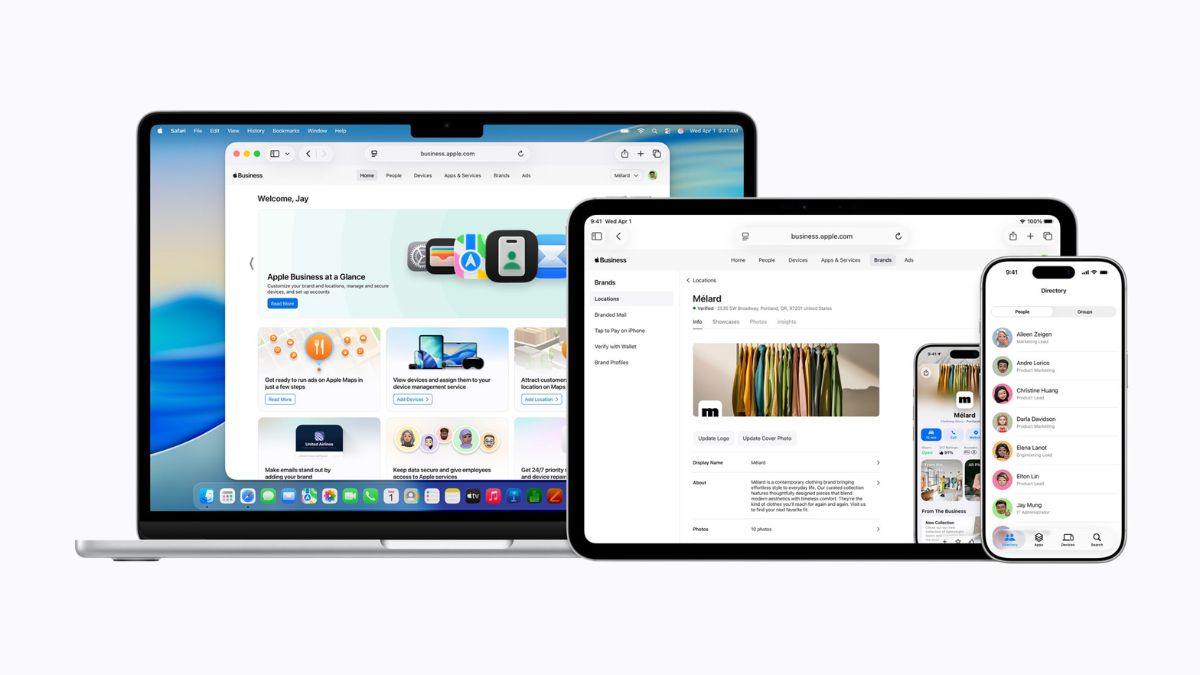
Photo Credit: Apple
Apple's new platform offers optional paid add-ons
Click Here to Add Gadgets360 As A Trusted Source

Advertisement
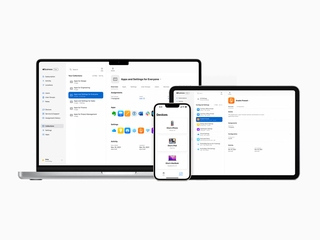
Apple last month announced a new unified platform, aimed at helping companies manage devices, streamline operations, and expand their reach across its ecosystem. Called Apple Business, it is now available in more than 200 countries starting April 14. As the Cupertino-based tech giant described it in March, the platform merges several existing enterprise tools under one umbrella. Enterprise users can access new tools for communication and integrated mobile device management (MDM). There are also advertisements in Apple Maps, a new way for companies to reach customers.
Apple Business Pricing and Availability
Apple Business is available starting Tuesday as a free service in more than 200 countries. Existing Apple Business Connect, Apple Business Essentials, and Apple Business Manager users will be automatically migrated to the new platform, as per the company. It also offers optional paid add-ons. Apple Business requires devices running iOS 26, iPadOS 26, or macOS 26 for full functionality.
iCloud storage plans for businesses start at around $0.99 (roughly Rs. 93) per user per month, going up to higher tiers such as 2TB. Meanwhile, AppleCare+ for Business is offered as a subscription that covers hardware repairs, accidental damage, and priority support, with pricing varying by device and coverage tier.
Pricing details for businesses in India, however, has yet to be announced.
Apple Business Features Include MDM for Apple Devices
Apple Business consolidates existing enterprise tools, such as Apple Business Essentials, Apple Business Manager, and Apple Business Connect, into a single platform. Rather than juggling multiple dashboards, businesses can access a unified interface to manage devices, users, apps, and communication tools. Apple says the platform is integrated deeply with its ecosystem, allowing companies to maintain their presence across services like Apple Maps, Wallet, Mail, and Siri with place cards, branding, and offers.
A key feature is integrated mobile device management (MDM). As per the tech giant, businesses can configure and manage iPhone, iPad, and Mac models without relying on third-party MDM solutions. There is also API-level automation access for larger organisations, too.
Alongside Apple Business, the company also announced last month it would add advertising within Apple Maps. Businesses can bid for ad placements, which will appear at the top of the search results or within suggested locations, similar to other platforms like Google Maps. The unified platform also brings built-in email, calendar, and directory services, allowing organisations to create a professional communication system using custom domain names. They can set up company email addresses, shared calendars, and internal directories for employees.
Apple's initiative also expands brand management capabilities across its ecosystem, with businesses able to maintain consistent branding across Apple Maps, Wallet, Mail, and other services, along with Tap to Pay integration. Lastly, there is a dedicated Apple Business app, which can be used by employees to install work apps, access internal directories, and request IT support directly from their devices.
Comments
Get your daily dose of tech news, reviews, and insights, in under 80 characters on Gadgets 360 Turbo. Connect with fellow tech lovers on our Forum. Follow us on X, Facebook, WhatsApp, Threads and Google News for instant updates. Catch all the action on our YouTube channel.
Related Stories




Advertisement
Follow Us




-

05:58
Motorola Edge 70 Pro Review | Full Specs, Performance & Battery Test -
07:07
Moto g37 Power Review: Best Phone To Buy Under 25,000? -
03:11
[Sponsored] Samsung Galaxy A57 5G: The Perfect Phone Under Rs. 50,000? -
03:58
Dreame D20 Ultra Review: The Most Intelligent Robot Vacuum Cleaner Under ₹40,000? -
03:23
iPhone Fold Leaks & Rumors 2026 | Apple's Foldable iPhone Launch, Price & Specs Revealed
-
5000 रुपये सस्ता मिल रहा Samsung का 50MP कैमरा, 5000mAh बैटरी वाला फोन
-
50MP कैमरा, 6500mAh बैटरी के साथ Xiaomi 17T लॉन्च, जानें कीमत और फीचर्स
-
boAt Storm Call 4, Ultima Vogue 2 लॉन्च, एडवांस हेल्थ, फिटनेस फीचर से लैस
-
Redmi Headphones Neo हुए लॉन्च 72 घंटे बैटरी, 42dB धांसू ANC फीचर के साथ, जानें कीमत
Advertisement
Popular on Gadgets
- Samsung Galaxy S26 Ultra
- Motorola Razr Fold
- ChatGPT
- OPPO Find N6
- Mobiles Under Rs. 40,000
- Vivo X300 Ultra
- Asus Zenbook S14
- iQOO 15
- Vivo X300 Pro
- Lenovo Yoga Slim 7i Aura Edition
- iQOO 15R
- Vivo X Fold 5
- Sony PlayStation 5
- HP OmniPad 12
- OnePlus Nord CE 6 Lite
- OnePlus Pad 4
- OPPO F33 Pro 5G
- Cryptocurrency
- HP OmniBook Ultra 14 (2026)
- iPhone 17
- Eureka Forbes AP 355 Room Air Purifier
- Latest Mobile Phones
- Compare Phones
Latest Gadgets
- Vivo S60 Vitality Edition
- Vivo S60
- Honor Win Turbo
- Vivo T5
- Xiaomi 17T Pro
- Xiaomi 17T
- Lava Shark 2 5G
- Infinix Hot 70
- Acer Aspire Go 15
- Acer Swift Spin 14 AI
- Poco Pad C1
- iQOO Pad 6 Pro
- boAt Ultima Vogue 2
- boAt Storm Call 4
- Lumio Vision 9 (2026)
- Lumio Vision 7 (2026)
- Acer Predator Atlas 8
- Asus ROG Ally
- IFB 1.5 Ton 3 Star Inverter Split AC (CI193GN22RGM3)
- IFB 2 Ton 3 Star Inverter Split AC (CI223GD32RGM3)

- About Us
- Sitemaps
- Feedback
- Archives
- Contact Us
- RSS
- Advertise
- Career
- Privacy Policy
- Ethics
- Editorial Policy
- Terms & Conditions
- Complaint Redressal
Download Our Apps
Available in Hindi
© Copyright Red Pixels Ventures Limited 2026. All rights reserved.