-
 Best Phones Under Rs. 50,000 With Wireless Charging in India: Motorola Edge 70 Pro+, Google Pixel 10a, More19 September 2026
 -
Samsung Gallery Adds Google Photos Integration Ahead of OneDrive Sync Ending: How It Works18 September 2026
-
Samsung Galaxy S26 Series Price Hike Not Happening Anytime Soon, Sources Suggest18 September 2026
-
Samsung Expands One UI 9 Rollout to Galaxy S25, S24, S23 Series and More Devices17 September 2026
-
Samsung Galaxy S27 Ultra Could Get New Image Processing for More Natural Photos: Leak17 September 2026
- Home
- Mobiles
- Mobiles Features
- Exclusive: Samsung’s Next Galaxy AI Challenge: Less Typing, More Agents
Exclusive: Samsung’s Next Galaxy AI Challenge: Less Typing, More Agents
Samsung's MX division EVP Jay Kim, speaking at a roundtable, laid out how Galaxy AI is moving away from typed, app-by-app interactions toward agentic AI.
Written by Ketan Pratap | Updated: 5 August 2026 16:36 IST
Click Here to Add Gadgets360 As A Trusted Source

Advertisement
Samsung is already working on the next era of Galaxy AI where users won't need to type requests into a chat box to get things done. Speaking at an AI roundtable, Jay Kim, Corporate EVP and Head of the Customer Experience Office at Samsung's MX Division, laid out how the company is moving from app-based interactions to a fully agentic AI model, and also talked about why India's linguistic diversity makes that shift especially complex.
Kim's comments came in response to a question from Gadgets360, where we wanted to understand how Samsung is redesigning UX so interactions aren't "always typed in a box," and how the company plans to deliver contextual, cloud-reliant agentic experiences in a market as linguistically fragmented as India.
- Samsung launched newer fridge models right when our old fridge started acting up
- Samsung and LG are making a simple fridge purchase feel unnecessarily serious
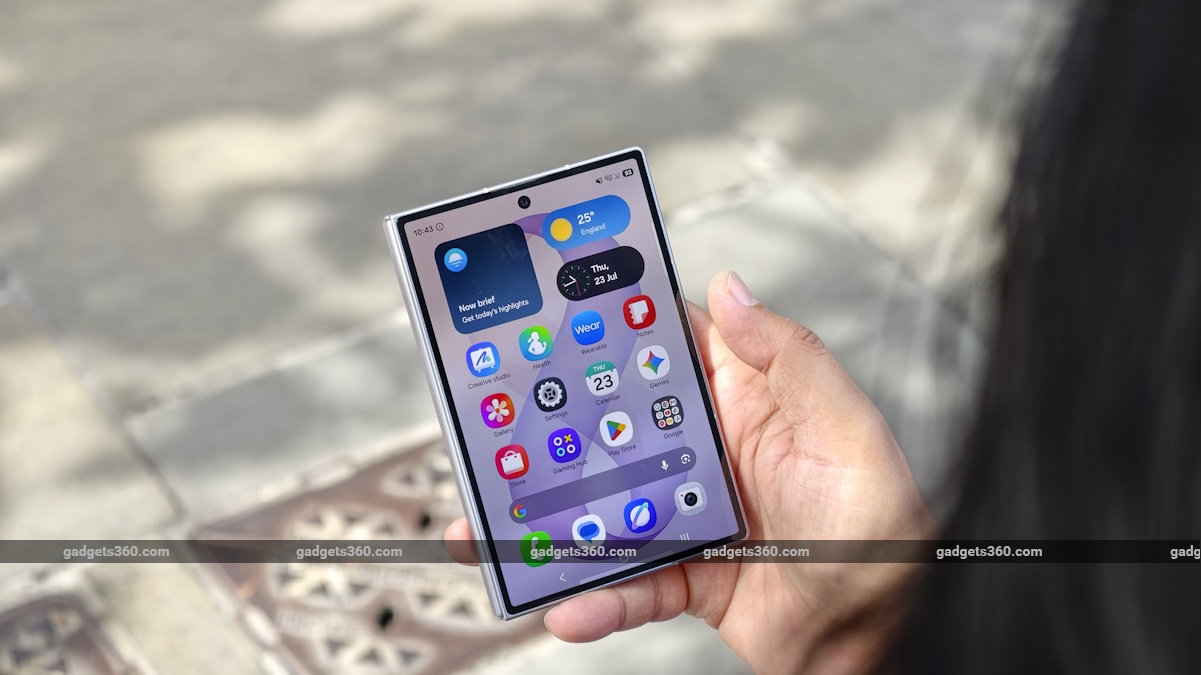
- Samsung Galaxy Z Fold8 Ultra has 15% brighter display then Galaxy Z fold7.
- Samsung Galaxy Z Fold8 Ultra has 200 MP and 50 MP cameras which gives users high resolution photos.
- Samsung Galaxy Z Fold8 Ultra features a 6.5 inch cover screen and 8 inch main screen.
Will Apps Go Away? Probably Not
Kim began by addressing the future of the app itself. He stressed that apps aren't going anywhere, but how people use them is changing as AI takes over more of the legwork.
"Will apps go away? Probably not. It will be there. It's so optimised for mobile devices and the industry. Many players are building their business around it, so there will be a balance between how app usage changes based on the evolution of AI. But definitely, as you have mentioned, the industry is moving into a more agentic area," he said.
What is shifting, Kim said, is how much manual effort users need to put in. That's where "agentic" AI comes in.
"What do you mean by agentic? It's more about letting the consumer spend less time on getting things done. You have tasks to do…earlier, you had to go to different apps back and forth to get things done," he explained further.
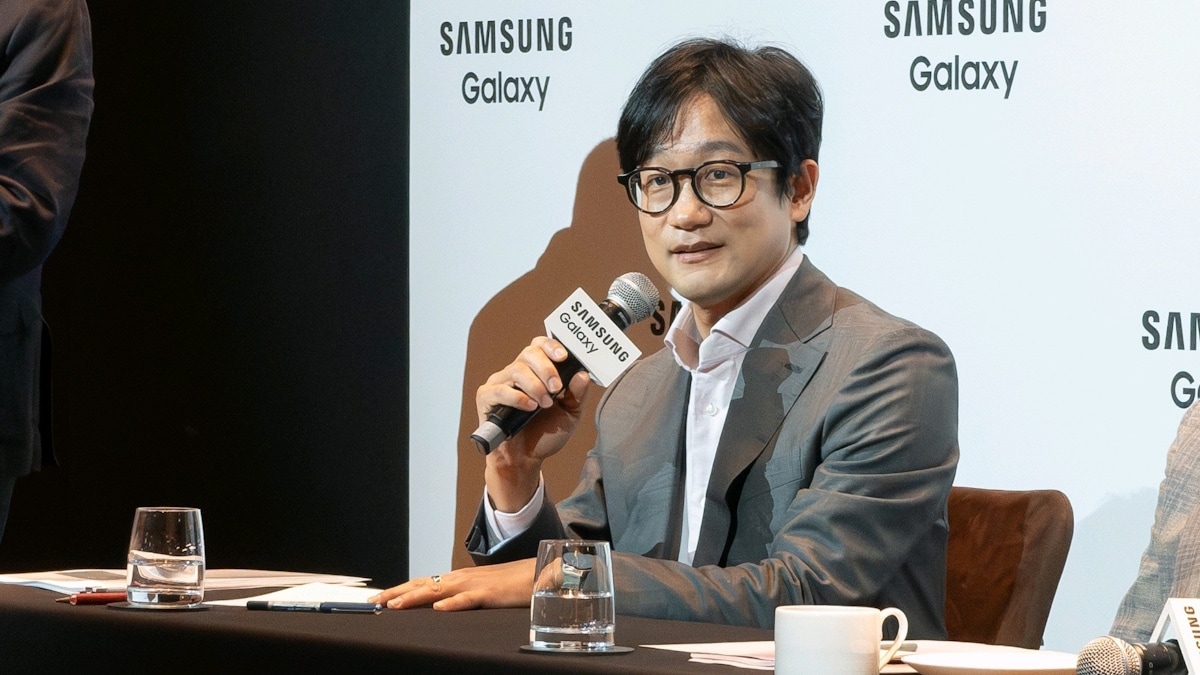
Jay Kim, Corporate EVP, Head of Customer Experience Office, MX Division at Samsung Electronics during AI Roundtable
From App-Stitching to MCP to Automation
Kim then walked through the technical path Samsung has taken to get there. The company's first attempt was to manually connect AI to individual app functions, but that didn't hold up at scale.
He said, "We started with app function, what's called stitching everything to the AI to get things done. But it wasn't scalable. Now you have MCP (Mobile Context Protocol), where it's more of an industry standard that you can have industrial players come and make a standard so that it actually helps the ecosystem."
Because industry-wide standards take time to mature, Samsung also built its own interim solution, a feature that reads the phone's screen and completes tasks on the user's behalf.
"We also launched what we call automation, where we understand the screen and then let the agents go through the process so that if I need to call an Uber, it will do it for you on your behalf. There are many different ways of how you manage agents. And agentic functions will evolve," he added.
But he also made a candid admission that "It's still not perfect".
Interestingly, rather than overselling the feature, Kim was direct about where automation currently stands following its debut on the Galaxy S26.
"The first step that we did was automation at the Galaxy S26 launch. It was a very hard process. It's still not perfect, but we're taking our first step to get there," he further revealed.
He also pointed to the pace problem baked into this kind of work by the time one piece of the AI stack is refined, newer technology, such as generative widgets, is already emerging, forcing Samsung to plan several steps simultaneously.
Why Scale Demands Caution
With Galaxy devices in daily use by more than a billion people, Kim said Samsung can't move on UX changes unilaterally, and its choices ripple across an entire ecosystem of partners.
"So, we have more than a billion users using the product every single day today. We have to be very responsible. We have to make sure that industry moves all together in the right direction, not just us going in one direction," Kim added.
Samsung's approach centres on open partnerships rather than isolated changes and working with the broader industry so that shifts in UX don't disrupt the ecosystem Samsung depends on.
India: The Hardest Test Case
Turning to the India-specific part of our question, Kim acknowledged that the country's linguistic diversity adds a layer of difficulty that global-first design doesn't account for.
"India is a very complex market because you have many different languages. We'll do our best to make sure that we work with local teams because all R&D centres get a lot of feedback. So, we'll make sure that we put a lot of effort to address the local needs," Kim ensured.
What's Next: Voice, Vision, and Wearables
Kim closed by pointing beyond the phone. As agentic AI matures, he expects the interface itself to spread across devices, like smartwatches and smart glasses, with voice and vision becoming central to how people interact with AI day to day.
"I think that UX, not just on the mobile, will actually split to wearables, whether it's a watch or glasses. So that will be another sort of angle that will spread the sort of usage from an UI perspective. I think voice will continue to evolve, because they will continue to have more voice interaction. So how do you have voice playing this sort of UX UI area will be another sort of angle that we're also looking at. And then vision is definitely another key. So, vision, voice, space, and everything that combined will come together, but we'll make sure that we'll work with the industry to take the right direction," he said.
Comments
Get your daily dose of tech news, reviews, and insights, in under 80 characters on Gadgets 360 Turbo. Connect with fellow tech lovers on our Forum. Follow us on X, Facebook, WhatsApp, Threads and Google News for instant updates. Catch all the action on our YouTube channel.
Related Stories


Advertisement
Follow Us




-

09:53
iPhone 18 Goes On Sale In India: Huge Crowds, Long Queues At Apple Stores -
06:32
Google Pixel 11 Pro XL Review: The Most Exciting Pixel Yet? | 120X Zoom + Tensor G6 -
05:20
Samsung Galaxy Watch Ultra 2 Review: Is This the Best Android Smartwatch? -
07:01
Samsung Galaxy Z Fold 8 Review: Is This the Best Foldable Phone? -
06:39
Samsung Galaxy Z Fold8 Ultra Review: Cameras, Battery, Performance Tested
-
10 मिनट में घर पहुंचेंगे iPhone 18 Pro, Pro Max: सेल हुई शुरू
-
Lava ने लॉन्च किया 6000mAh बैटरी वाला Bold N4 Pro 5G
-
itel Zeno 300 भारत में होगा लॉन्च, मिलेगी 6,000mAh बैटरी और डुअल कैमरा
-
Ai+ LapTab लॉन्च होगा 10,000mAh बैटरी, 33W फास्ट चार्जिंग के साथ!
-
Flipkart Big Billion Days सेल में Samsung Galaxy S25, S25 FE को ₹50,000 से कम में खरीदने का मौका!
Advertisement
Popular on Gadgets
- Samsung Galaxy S26 Ultra
- Motorola Razr Fold
- ChatGPT
- OPPO Find N6
- Mobiles Under Rs. 40,000
- Vivo X300 Ultra
- Asus Zenbook S14
- iQOO 15
- Vivo X300 Pro
- Lenovo Yoga Slim 7i Aura Edition
- iQOO 15R
- Vivo X Fold 5
- Sony PlayStation 5
- HP OmniPad 12
- OnePlus Nord CE 6 Lite
- OnePlus Pad 4
- OPPO F33 Pro 5G
- Cryptocurrency
- HP OmniBook Ultra 14 (2026)
- iPhone 17
- Eureka Forbes AP 355 Room Air Purifier
- Latest Mobile Phones
- Compare Phones
Latest Gadgets
- Lava Bold N4 Pro 5G
- Samsung Galaxy A08
- Itel Muzik 450L
- OPPO K14 Lite
- Samsung Galaxy A18 4G
- iPhone Duo
- OPPO A7 Pro
- Huawei Mate XT 2 Ultimate Design
- Asus Vivobook S14 (S5452MA)
- Acer Aspire G 3D 16
- Xiaomi Pad 9 Pro
- Xiaomi Pad 9
- Apple Watch Ultra 4
- Apple Watch Series 12
- Haier M70 Mini LED 65-inch
- Xiaomi TV FX Mini LED 65
- Acer Predator Atlas 8
- Asus ROG Ally
- Blue Star 1.5 Ton 5 Star Inverter Split AC (IE518ZNURS)
- Blue Star 2 Ton 3 Star Inverter Window AC (WIE324L)

- About Us
- Sitemaps
- Feedback
- Archives
- Contact Us
- RSS
- Advertise
- Career
- Privacy Policy
- Ethics
- Editorial Policy
- Terms & Conditions
- Complaint Redressal
Download Our Apps
Available in Hindi
© Copyright Red Pixels Ventures Limited 2026. All rights reserved.