-
 iPhone 17 Pro Max Cleared for Artemis 2 Mission: How NASA Approved It for This Deep Space Mission6 April 2026
 -
Artemis 2: Astronauts Aboard Orion Spacecraft Begin Journey Towards the Moon on Day 23 April 2026
-
iPhones in Deep Space: NASA Breaks Rules for Artemis 2 Crew; 5 Key Facts2 April 2026
-
Artemis 2: NASA's Astronaut Moon Mission Explained in Five Points1 April 2026
-
NASA May Launch Historic Artemis 2 Moon Mission in Just One Month, Astronauts Ready for Flight9 January 2026
- Home
- Science
- Science News
- Artemis 2 Mission Starts Return Trip to Earth After Historic Lunar Flyby
Artemis 2 Mission Starts Return Trip to Earth After Historic Lunar Flyby
The Artemis 2 crew has completed the Return Trajectory Correction 1 burn, propelling Orion towards the Earth.
Written by Akash Dutta, Edited by Ketan Pratap | Updated: 8 April 2026 12:03 IST
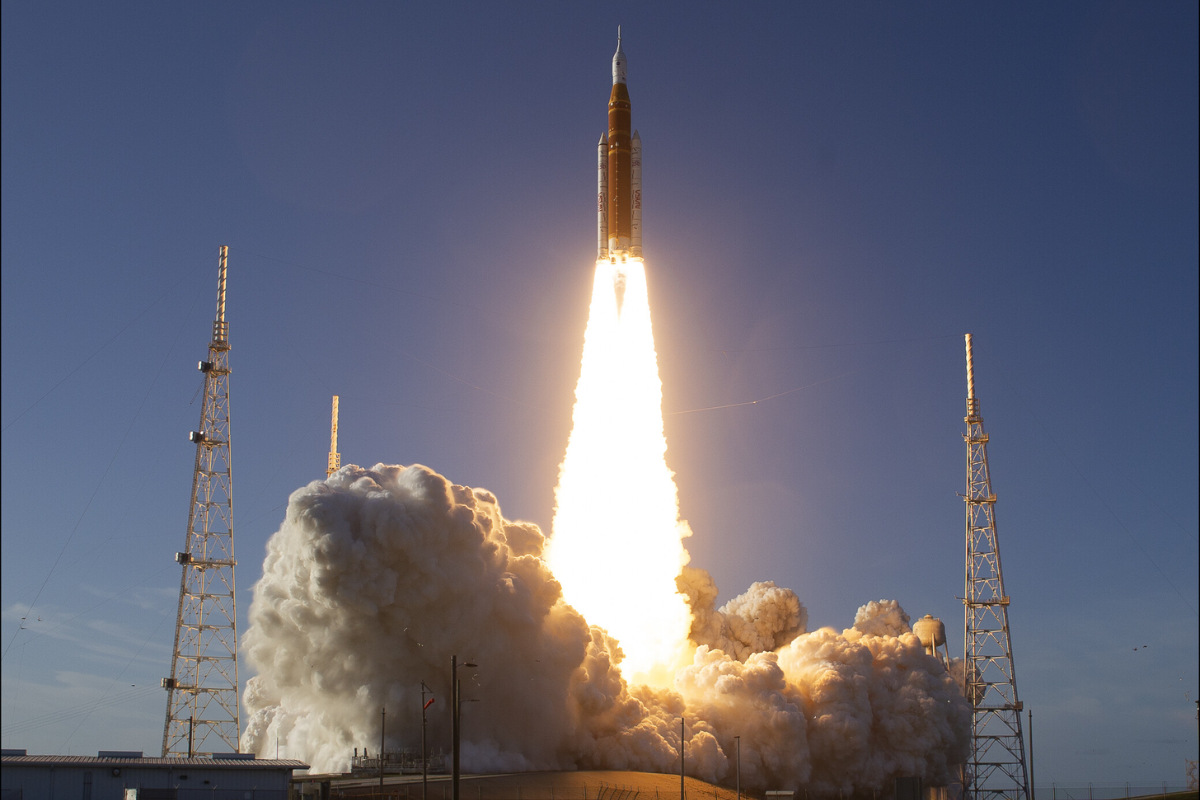
Photo Credit: NASA
On day 8 of the Artemis 2 mission, the crew will take manual control of the Orion spacecraft
Click Here to Add Gadgets360 As A Trusted Source


Advertisement
NASA's Artemis 2 mission has now set its sights on Earth after the successful completion of the lunar flyby. During the flyby, the crew set a new record for the maximum distance travelled by a human from the Earth. They also observed the far side of the lunar surface and had the opportunity to witness a rare solar eclipse as well. Now, on the seventh day of the mission, the astronauts aboard the Orion spacecraft have taken the first step to head back to Earth.
Artemis 2 Heads for the Earth
In a blog post, the US space agency confirmed that the crew had completed the first Return Correction Burn. The process involved igniting the Orion engine thrusters for 15 seconds to fine-tune its velocity and direction towards Earth. The process was reviewed and monitored by NASA astronaut Christina Koch and the Canadian Space Agency's Jeremy Hansen.
After the engine thrust exercise, the crew retired to rest. On the eighth day, the astronauts will find themselves busy with flight test objectives and return to Earth tasks. The NASA post highlighted that the day for the Artemis 2 crew will start with Reid Wiseman, Victor Glover, Koch, and Hansen testing an orthostatic intolerance garment. It is a specialised piece of equipment designed to help astronauts maintain blood pressure and circulation during the transition back to Earth's gravity.
Once the garment testing is complete, the crew will also perform a manual piloting demonstration. NASA revealed that the crew will take manual control of Orion temporarily, and then use the spacecraft's field of view to centre a designated target and guide it to a tail-to-Sun altitude. The crew does not need to control the ship afterwards.
A Space.com report confirmed that on Tuesday, the Artemis 2 crew connected with the International Space Station (ISS) astronauts to share their spaceflight experiences. Koch and others spoke about the views of the lunar surface and the experience of deep-space travel.
“I found myself noticing not only the beauty of the Earth, but how much blackness there was around it, and how it just made it even more special. It truly emphasised how alike we are,” Koch told NASA astronaut Jessica Meir, who reached ISS in February aboard SpaceX's Crew-12 mission (via Space.com).
Comments
Get your daily dose of tech news, reviews, and insights, in under 80 characters on Gadgets 360 Turbo. Connect with fellow tech lovers on our Forum. Follow us on X, Facebook, WhatsApp, Threads and Google News for instant updates. Catch all the action on our YouTube channel.
Related Stories



Advertisement
Follow Us




-
05:05
Goboult Mustang Racer Smartwatch Review: Should You Get This Mustang Smartwatch? -
04:58
OnePlus Nord Buds 4 Pro Review: Specs, Sound Quality, ANC, and Battery Backup Tested -
02:29
[Sponsored] Samsung Galaxy S26 Ultra First Look: AI Smartphone for Creators, Gaming & Productivity -
04:25
Vivo X200T Review - Full Camera, Gaming & Battery Test | Worth Buying? -
28:31
The Future of Productivity: Logitech's Anatoliy Polyanker On AI, Hybrid Work, And India's Tech Boom
-
10 हजार रुपये सस्ती कीमत में खरीदें Xiaomi का फ्लैगशिप स्मार्टफोन, जानें
-
Fujifilm X-T30 III डिजिटल कैमरा लॉन्च, 26.1MP सेंसर के साथ गजब फीचर्स
-
WhatsApp पर पासकी का उपयोग करके कैसे करें बैकअप, जानें पूरी प्रक्रिया
-
Amazon ने 14,000 वर्कर्स की छंटनी से किया इनकार, मीडिया रिपोर्ट्स को गलत बताया
-
BSNL के वर्कर्स की प्रधानमंत्री मोदी से गुहार, सरकारी डिपार्टमेंट्स के लिए अनिवार्य हो कंपनी की 4G सर्विसेज
Advertisement
Popular on Gadgets
- Samsung Galaxy Unpacked 2026
- iPhone 17 Pro Max
- ChatGPT
- iOS 26
- Laptop Under 50000
- Smartwatch Under 10000
- Apple Vision Pro
- Oneplus 12
- OnePlus Nord CE 3 Lite 5G
- iPhone 13
- Xiaomi 14 Pro
- Oppo Find N3
- Tecno Spark Go (2023)
- Realme V30
- Best Phones Under 25000
- Samsung Galaxy S24 Series
- Cryptocurrency
- iQoo 12
- Samsung Galaxy S24 Ultra
- Giottus
- Samsung Galaxy Z Flip 5
- Apple 'Scary Fast'
- Housefull 5
- GoPro Hero 12 Black Review
- Invincible Season 2
- JioGlass
- HD Ready TV
- Latest Mobile Phones
- Compare Phones
Latest Gadgets
- Moto G Stylus (2026)
- OPPO A6k
- Realme C100 5G
- Honor Play 80
- OnePlus Nord 6
- Honor X80i
- Honor Play 80 Pro
- Redmi Note 15 SE 5G
- MSI Prestige 13 AI+ (2026)
- MSI Raider 18 Max HX
- Moto Pad (2026)
- Vivo Pad 6 Pro
- boAt Valour Watch 1R
- Xiaomi Watch S5
- Xiaomi QLED TV X Pro 75
- Haier H5E Series
- Asus ROG Ally
- Nintendo Switch Lite
- Haier 1.6 Ton 5 Star Inverter Split AC (HSU19G-MZAID5BN-INV)
- Haier 1.6 Ton 5 Star Inverter Split AC (HSU19G-MZAIM5BN-INV)

- About Us
- Sitemaps
- Feedback
- Archives
- Contact Us
- RSS
- Advertise
- Career
- Privacy Policy
- Ethics
- Editorial Policy
- Terms & Conditions
- Complaint Redressal
Download Our Apps
Available in Hindi
© Copyright Red Pixels Ventures Limited 2026. All rights reserved.