- Home
- Science
- Science News
- South Korean Startup Innospace Fails on First Orbital Launch Attempt of Hanbit Nano Rocket
South Korean Startup Innospace Fails on First Orbital Launch Attempt of Hanbit-Nano Rocket
Innospace’s debut orbital launch failed after its Hanbit-Nano rocket crashed soon after liftoff.
Written by Gadgets 360 Staff | Updated: 24 December 2025 23:45 IST
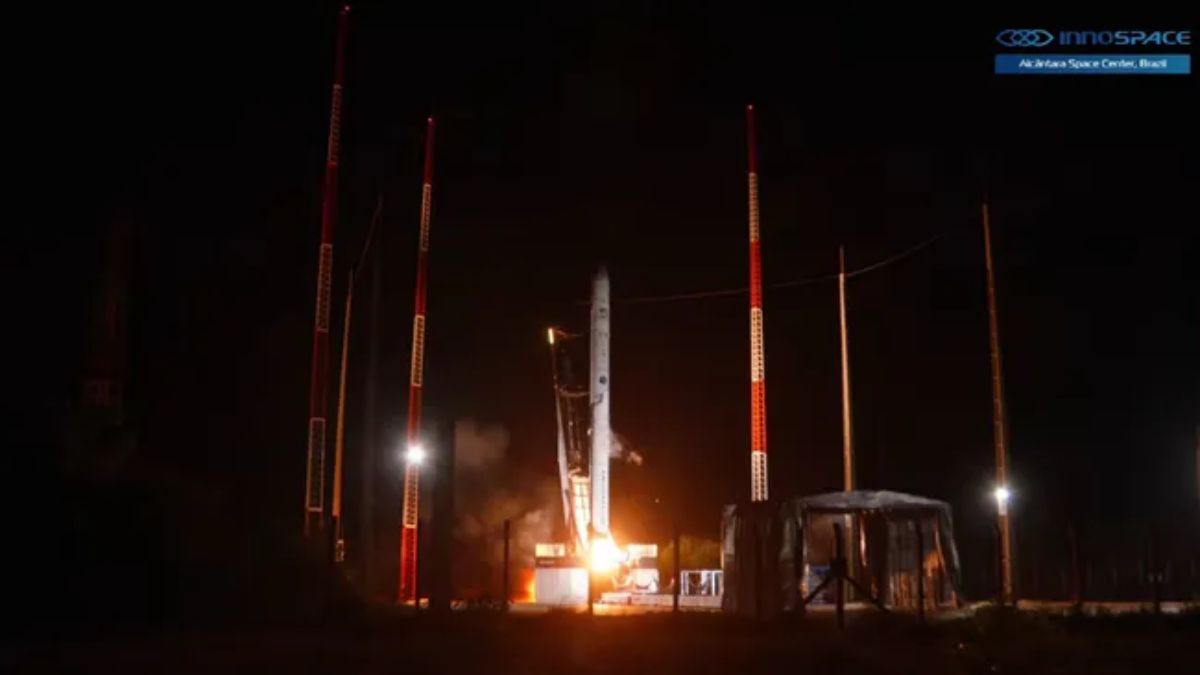
Hanbit-Nano rocket crashes shortly after liftoff during first orbital launch attempt.
Click Here to Add Gadgets360 As A Trusted Source


Advertisement
South Korean startup Innospace failed to reach orbit during its first-ever orbital launch attempt on Monday night, marking a major setback for the country's private space ambitions. The company's Hanbit-Nano rocket took off from Brazil's Alcantara Space Center at 8:13 p.m. EST but plummeted back to the earth roughly a minute after departure. The 57-foot-tall rocket was lifting off some small satellites for Brazil and India. The launch was historic as it would have been the first orbital attempt by a South Korean private company, but it was cut short after an anomaly was detected shortly after liftoff.
Innospace's Hanbit-Nano Rocket Suffers Post-Launch Anomaly After Multiple Delays
According to a Space.com report, the rocket's failure occurred shortly after launch, though the exact cause remains unclear. Innospace had not yet issued a full explanation, and it abruptly concluded its live webcast after acknowledging the anomaly. The mission had been delayed several times, first set for Dec. 17, only to be rescheduled because of technical issues and poor weather.
Innospace's in-house two-stage Hanbit-Nano uses LOX-paraffin and paraffin/methane stages, lifting 90-kilogram payloads to sun-synchronous orbit from Brazil for small satellites.
Hanbit-Nano Failure Hits Multi-Payload Mission as Innospace Eyes Larger Launch Vehicles
The failed mission was hauling eight payloads, comprised of five commercial smallsats and three technology demonstration platforms. These payloads represented customers from Brazil and India, revealing Innospace's ‘early global footprints,' considering it is only around two years old. The company was started in 2017 and now has some 260 employees.
Despite Hanbit-Nano's failure, Innospace is developing Hanbit-Micro and Hanbit-Mini, as early launch attempts often face setbacks before reliability.
Comments
Get your daily dose of tech news, reviews, and insights, in under 80 characters on Gadgets 360 Turbo. Connect with fellow tech lovers on our Forum. Follow us on X, Facebook, WhatsApp, Threads and Google News for instant updates. Catch all the action on our YouTube channel.


Advertisement
Follow Us




-
05:05
Goboult Mustang Racer Smartwatch Review: Should You Get This Mustang Smartwatch? -
04:58
OnePlus Nord Buds 4 Pro Review: Specs, Sound Quality, ANC, and Battery Backup Tested -
02:29
[Sponsored] Samsung Galaxy S26 Ultra First Look: AI Smartphone for Creators, Gaming & Productivity -
04:25
Vivo X200T Review - Full Camera, Gaming & Battery Test | Worth Buying? -
28:31
The Future of Productivity: Logitech's Anatoliy Polyanker On AI, Hybrid Work, And India's Tech Boom
Advertisement
Popular on Gadgets
- Samsung Galaxy Unpacked 2026
- iPhone 17 Pro Max
- ChatGPT
- iOS 26
- Laptop Under 50000
- Smartwatch Under 10000
- Apple Vision Pro
- Oneplus 12
- OnePlus Nord CE 3 Lite 5G
- iPhone 13
- Xiaomi 14 Pro
- Oppo Find N3
- Tecno Spark Go (2023)
- Realme V30
- Best Phones Under 25000
- Samsung Galaxy S24 Series
- Cryptocurrency
- iQoo 12
- Samsung Galaxy S24 Ultra
- Giottus
- Samsung Galaxy Z Flip 5
- Apple 'Scary Fast'
- Housefull 5
- GoPro Hero 12 Black Review
- Invincible Season 2
- JioGlass
- HD Ready TV
- Latest Mobile Phones
- Compare Phones
Latest Gadgets
- Nord 6
- Honor X80i
- Honor Play 80 Pro
- Redmi Note 15 SE 5G
- Redmi A7 Pro
- OPPO K15 Pro
- OPPO K15 Pro+
- Lava Bold N2 Lite
- Xiaomi Book Pro 14
- MacBook Neo
- Vivo Pad 6 Pro
- Lenovo Legion Y700 Gen 5
- boAt Valour Watch 1R
- Xiaomi Watch S5
- Xiaomi QLED TV X Pro 75
- Haier H5E Series
- Asus ROG Ally
- Nintendo Switch Lite
- Haier 1.6 Ton 5 Star Inverter Split AC (HSU19G-MZAID5BN-INV)
- Haier 1.6 Ton 5 Star Inverter Split AC (HSU19G-MZAIM5BN-INV)

- About Us
- Sitemaps
- Feedback
- Archives
- Contact Us
- RSS
- Advertise
- Career
- Privacy Policy
- Ethics
- Editorial Policy
- Terms & Conditions
- Complaint Redressal
Download Our Apps
Available in Hindi
© Copyright Red Pixels Ventures Limited 2026. All rights reserved.