
-
 SpaceX Acquires Cursor, the AI Coding Startup Competing With Claude Code and OpenAI Codex17 June 2026
 -
Starlink Constellation Crosses 10,600 Satellites After Latest SpaceX Launch12 June 2026
-
Starlink's India Launch Plans Said to Face Regulatory Hurdles Over Security Concerns Linked to Iran Conflict10 June 2026
-
Blue Origin’s New Glenn Rocket Explodes During Pre-Launch Test in Florida29 May 2026
-
SpaceX Launches 24 More Starlink Satellites, Nears 10,500 in Orbit20 May 2026
- Home
- Science
- Science News
- SpaceX Falcon 9 Launches Athena Lander, NASA's Lunar Trailblazer to Moon
SpaceX Falcon 9 Launches Athena Lander, NASA's Lunar Trailblazer to Moon
SpaceX Falcon 9 launched Athena and Lunar Trailblazer to advance lunar water ice exploration and future missions.
Written by Gadgets 360 Staff | Updated: 4 March 2025 19:00 IST

Photo Credit: Intuitive Machines
SpaceX Falcon 9 Launches Athena Lander, NASA's Lunar Trailblazer to Moon
Click Here to Add Gadgets360 As A Trusted Source


Advertisement
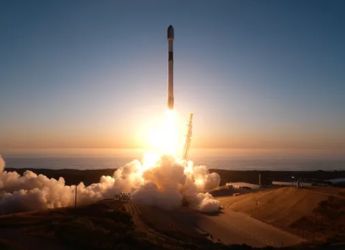
A SpaceX Falcon 9 rocket lifted off from Kennedy Space Center on February 26, 2025, carrying the Athena lunar lander and NASA's Lunar Trailblazer orbiter. The launch, which took place at 7:16 p.m. EST from Launch Complex-39A, marked a significant step in lunar exploration. Athena, developed by Intuitive Machines, is designed to investigate lunar water ice deposits, while Lunar Trailblazer will study similar phenomena from orbit.
Scientific Goals and Technology
As per reports, according to NASA, Athena is equipped with ten scientific instruments, including the Polar Resources Ice Mining Experiment 1 (PRIME-1). The experiment consists of the Regolith Ice Drill for Exploring New Terrain (TRIDENT) and the Mass Spectrometer observing lunar operations (MSolo), both of which will work to extract and analyse samples from beneath the lunar surface. These investigations aim to provide critical data on the presence of water ice, supporting future in-situ resource utilisation (ISRU) efforts.
Lunar Trailblazer, an orbiter developed by NASA, will complement Athena's findings by mapping water ice deposits across the lunar surface. Scientists have stated that its data will enhance the understanding of lunar ice distribution, particularly in the Mons Mouton region, where Athena is expected to land.
Landing Plans and Exploration Vehicles
Reports indicate that Athena will reach lunar orbit in four to five days and attempt a landing between 1.5 and three days after that. The mission will last approximately ten Earth days. To extend its exploration capabilities, Athena carries two secondary vehicles: MAPP, a rover designed by Lunar Outpost, and Grace, a hopping robot developed by Intuitive Machines. Grace will explore shadowed craters inaccessible to wheeled vehicles, while MAPP will establish a lunar cellular network using the Lunar Surface Communications System (LSCS) developed by Nokia Bell Labs.
Challenges and Expectations
This mission follows Intuitive Machines' IM-1 mission, which achieved the first soft lunar landing by a private company but encountered a landing issue that affected data transmission. Trent Martin, Senior Vice President of Space Systems at Intuitive Machines, stated to Space.com that improved landing accuracy is a primary focus for IM-2.
NASA's contract for IM-2 was initially valued at $47 million but increased to $62.5 million due to additional requirements, including temperature data collection. Reports suggest that Athena and Lunar Trailblazer are part of a broader lunar exploration effort, joining missions such as Firefly Aerospace's Ghost Riders in the Sky and ispace's Resilience lander, both launched earlier in 2025.
Comments
Get your daily dose of tech news, reviews, and insights, in under 80 characters on Gadgets 360 Turbo. Connect with fellow tech lovers on our Forum. Follow us on X, Facebook, WhatsApp, Threads and Google News for instant updates. Catch all the action on our YouTube channel.
Further reading:
SpaceX, Falcon 9, Athena lander, Lunar Trailblazer, NASA, lunar exploration, Moon mission, Intuitive Machines, MAPP rover, Grace robot, Moon landing, water ice exploration, lunar orbit, Mons Mouton
Related Stories



Advertisement
Follow Us




-
04:37
[Sponsored]: CP PLUS CarKam CP-F89B: 4K Dashcam With Rear Camera, GPS & Emergency Recording -
04:23
[Partner Content] Your Phone Can Do WAY More Than You Think | OPPO ColorOS 16 -
01:59
Samsung Galaxy Z Fold8 Ultra: Unfold the Ultra Night -
03:24
Apple Pay Launches In India: Supported Devices, Cards And Payments Explained -
00:21
[Sponsored] Samsung Galaxy Z Fold8, Fold8 Ultra
-
OnePlus 16 लॉन्च: 200 मेगापिक्सल कैमरा, 9000mAh की बैटरी से लैस, जानें
-
Vivo का लेटेस्ट फोन Amazon Great Indian Festival में मिल रहा ₹6,300 सस्ता
-
Amazon Great Indian Festival: ₹51000 सस्ता मिल रहा Samsung फोल्डेबल फोन
-
Flipkart Big Billion Sale 2026: ₹5,500 से ज्यादा सस्ता मिल रहा Motorola Signature, 50MP तीन कैमरा वाला फोन
Advertisement
Popular on Gadgets
- Samsung Galaxy S26 Ultra
- Motorola Razr Fold
- ChatGPT
- OPPO Find N6
- Mobiles Under Rs. 40,000
- Vivo X300 Ultra
- Asus Zenbook S14
- iQOO 15
- Vivo X300 Pro
- Lenovo Yoga Slim 7i Aura Edition
- iQOO 15R
- Vivo X Fold 5
- Sony PlayStation 5
- HP OmniPad 12
- OnePlus Nord CE 6 Lite
- OnePlus Pad 4
- OPPO F33 Pro 5G
- Cryptocurrency
- HP OmniBook Ultra 14 (2026)
- iPhone 17
- Eureka Forbes AP 355 Room Air Purifier
- Latest Mobile Phones
- Compare Phones
Latest Gadgets
- Vivo Y600s Pro
- Vivo Y32 (2026)
- Infinix Smart 20 HD
- Vivo V80
- Vivo S2 FE
- Vivo Y600K Turbo
- Realme P4s Lite
- Vivo S60t
- Dell Pro Rugged 14
- Dell Pro Rugged 13 Extreme
- Amazon Alexa Tablet 8
- Amazon Alexa Tablet 11
- Amazfit T-Rex Dual Solar
- OPPO Watch S2
- Toshiba 65-Inch 4K Ultra HD Smart Mini LED QLED TV (65Z670SP)
- Haier M70 Mini LED 65-inch
- Acer Predator Atlas 8
- Asus ROG Ally
- Blue Star 1.5 Ton 5 Star Inverter Split AC (IE518ZNURS)
- Blue Star 2 Ton 3 Star Inverter Window AC (WIE324L)

- About Us
- Sitemaps
- Feedback
- Archives
- Contact Us
- RSS
- Advertise
- Career
- Privacy Policy
- Ethics
- Editorial Policy
- Terms & Conditions
- Complaint Redressal
Download Our Apps
Available in Hindi
© Copyright Red Pixels Ventures Limited 2026. All rights reserved.