-
 Global Xiaomi 18 Pro and 18 Pro Max Reported to Get Smaller Batteries Compared to China Models25 September 2026
 -
iPhone 18 Pro Max Charging Test Shows Major Speed Boost Over iPhone 17 Pro Max18 September 2026
-
iQOO Pad Ultra Tipped to Launch With 8.8-Inch OLED Display, Snapdragon 8 Elite Gen 6 SoC, and More7 September 2026
-
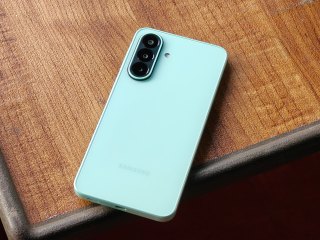
Samsung Galaxy A27 Review: A Bit of Give and Take5 September 2026
-
Vivo V80 Lite with 10,000mAh Battery Listed for Pre-Order in Malaysia, Key Details Revealed2 September 2026
- Home
- Science
- Science News
- Battery Breakthrough Uses New Carbon Material to Boost Stability and Charging Speeds
Battery Breakthrough Uses New Carbon Material to Boost Stability and Charging Speeds
Redesigned fullerene molecules enhance battery safety, durability, and energy storage performance.
Written by Gadgets 360 Staff | Updated: 27 December 2025 19:02 IST
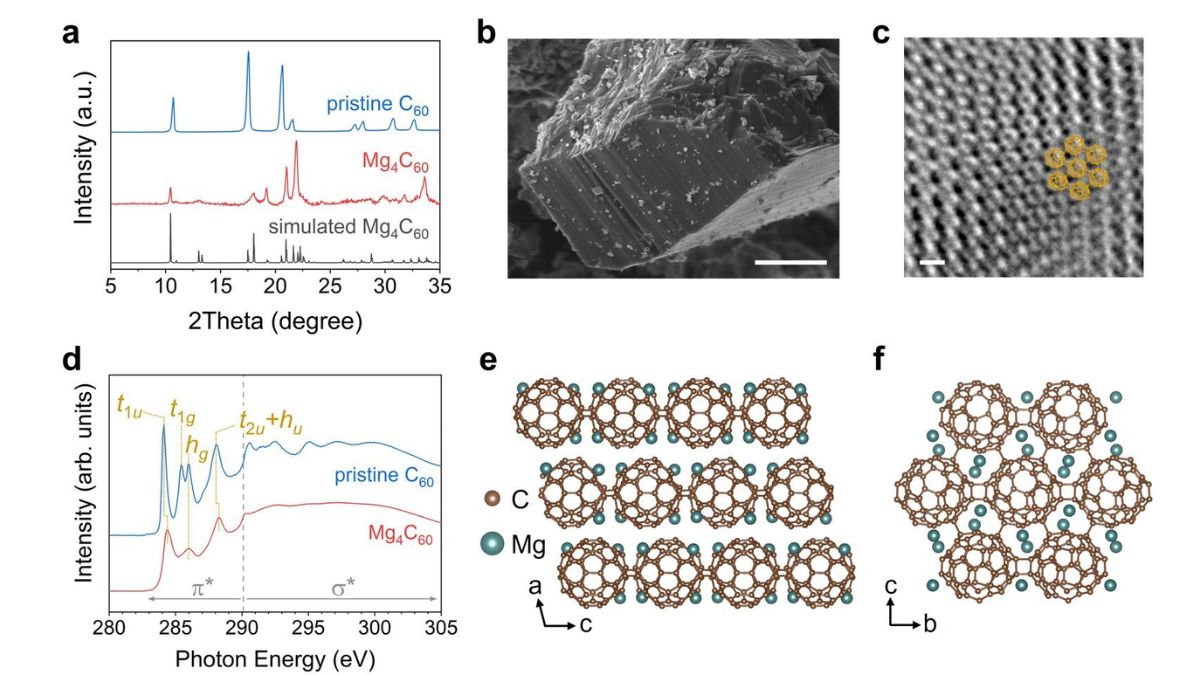
Photo Credit: Journal of the American Chemical Society (2025)
The new carbon design improves battery safety, lifespan, and fast-charging potential
Click Here to Add Gadgets360 As A Trusted Source


Advertisement
New approach to making batteries more stable, longer-lasting, the researchers have found a new way of making battery anodes — one that actually improves capacity and stability at the same time. Current lithium-ion batteries are heavily dependent on graphite, which constrains the minimum fast-charging speed and poses a safety risk from lithium plating. By creating a covalently bridged fullerene framework called Mg₄C₆₀, the researchers demonstrated that carbon can stably store lithium, avoiding structural collapse and the loss of active material. This discovery provides a blueprint for the design and development of next-generation battery materials, which could enable legit faster charging, higher capacity, and longer-lifetime batteries for electric vehicles (EVs) and renewable energy storage.
Covalent-Bridged Fullerenes Boost Battery Anode Stability, Safety, and Performance
According to a report published in the Journal of the American Chemical Society, the covalent-bridging strategy enhances fullerene stability and opens possibilities for a family of high-capacity anode materials. The research team tracks how well the new material resists degradation and is found to have a net-edge over conventional graphite.
- Battery life on the Samsung Galaxy S26
- Battery Query
- I was looking at the new Redmi 17 5G because of the battery, but now Motorola has entered the same price range
- Would you take a Galaxy Watch at Rs. 18,000 or Amazfit at around Rs. 12,000 if battery life is important?
- I have been looking at Amazfit around Rs. 12,000 and the battery life is honestly tempting me
The findings indicate such re-engineered molecules could be used in battery cells to improve safety and longevity, while maintaining a high power output.
Tohoku University Researchers Aim to Scale Covalent-Bridged Carbon Frameworks for Next-Generation Batteries
The method would be further increased to other covalent-bridging approaches and scaled up along with industry partners, as mentioned by Distinguished Professor Hao Li of Tohoku University.
The successful translation of these lab advances into practical applications for energy storage will be key. This is a promising progress in low-cost, long-cycle life, and environmentally friendly battery technologies.
Comments
Get your daily dose of tech news, reviews, and insights, in under 80 characters on Gadgets 360 Turbo. Connect with fellow tech lovers on our Forum. Follow us on X, Facebook, WhatsApp, Threads and Google News for instant updates. Catch all the action on our YouTube channel.
Related Stories




Advertisement
Follow Us




-
03:41
[Sponsored] Samsung Galaxy Z Fold8: How It Fits Into an Actor’s Busy Day | Camera, Multitasking & More -
09:53
iPhone 18 Goes On Sale In India: Huge Crowds, Long Queues At Apple Stores -
06:32
Google Pixel 11 Pro XL Review: The Most Exciting Pixel Yet? | 120X Zoom + Tensor G6 -
05:20
Samsung Galaxy Watch Ultra 2 Review: Is This the Best Android Smartwatch? -
07:01
Samsung Galaxy Z Fold 8 Review: Is This the Best Foldable Phone?
-
Trump-Xi की मुलाकात से महंगे होंगे फोन या घटेंगे दाम?
-
Flipkart Big Billion Days: इन 6 स्मार्टफोन पर सेल से पहले मिल रही है डील
-
Bank Strike 2026: 28 से 30 सितंबर तक बैंक हड़ताल, क्या UPI और ATM चलेंगे?
-
Amazon Great Indian Festival Sale 2026: सेल से पहले 6 स्मार्टफोन्स पर Early Bird Deals, कीमत ₹7,199 से शुरू
-
Honor X9e Pro लॉन्च हुआ 11,000mAh बैटरी, 108MP कैमरा, IP68, IP69 रेटिंग के साथ
Advertisement
Popular on Gadgets
- Samsung Galaxy S26 Ultra
- Motorola Razr Fold
- ChatGPT
- OPPO Find N6
- Mobiles Under Rs. 40,000
- Vivo X300 Ultra
- Asus Zenbook S14
- iQOO 15
- Vivo X300 Pro
- Lenovo Yoga Slim 7i Aura Edition
- iQOO 15R
- Vivo X Fold 5
- Sony PlayStation 5
- HP OmniPad 12
- OnePlus Nord CE 6 Lite
- OnePlus Pad 4
- OPPO F33 Pro 5G
- Cryptocurrency
- HP OmniBook Ultra 14 (2026)
- iPhone 17
- Eureka Forbes AP 355 Room Air Purifier
- Latest Mobile Phones
- Compare Phones
Latest Gadgets
- Vivo Y600i
- Mivi One 5G
- Xiaomi 18 Pro Max
- Motorola Signature 27
- OPPO Find X10 E
- OnePlus N6 Lite 4G
- Ai+ Nova 2 Power 5G
- Lava Virat Curve 5G
- Microsoft Surface Laptop, 13-inch (2nd Edition)
- Lenovo LOQ 15AHP11
- Microsoft Surface Pro, 12-inch (2nd Edition)
- Xiaomi Pad 9 Pro
- Amazfit T-Rex Dual Solar
- OPPO Watch S2
- Haier M70 Mini LED 65-inch
- Xiaomi TV FX Mini LED 65
- Acer Predator Atlas 8
- Asus ROG Ally
- Blue Star 1.5 Ton 5 Star Inverter Split AC (IE518ZNURS)
- Blue Star 2 Ton 3 Star Inverter Window AC (WIE324L)

- About Us
- Sitemaps
- Feedback
- Archives
- Contact Us
- RSS
- Advertise
- Career
- Privacy Policy
- Ethics
- Editorial Policy
- Terms & Conditions
- Complaint Redressal
Download Our Apps
Available in Hindi
© Copyright Red Pixels Ventures Limited 2026. All rights reserved.