- Home
- Science
- Science News
- Supercomputer Study Finds 97,000 Stable Orbits Between Earth and Moon
Supercomputer Study Finds 97,000 Stable Orbits Between Earth and Moon
Using powerful supercomputers, LLNL researchers simulated one million satellite orbits in cislunar space. Fewer than 10% proved stable over six years, but that still leaves roughly 97,000 workable orbits for future missions beyond low Earth orbit.
Written by Gadgets 360 Staff | Updated: 21 February 2026 20:51 IST
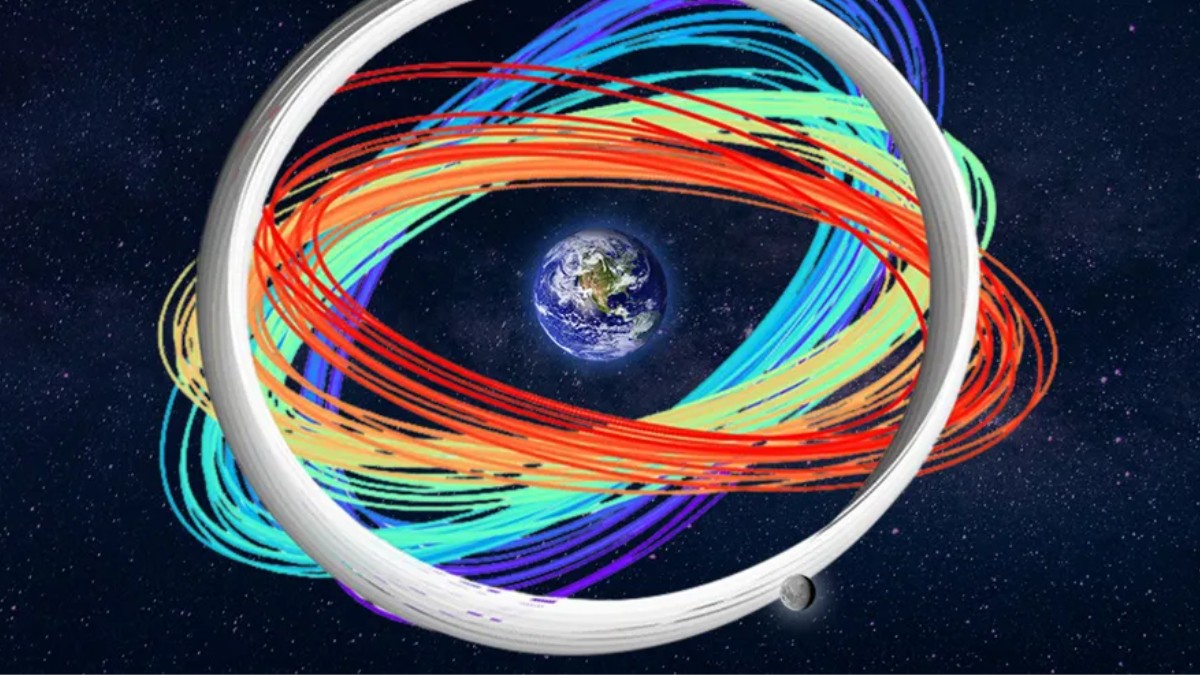
Photo Credit: Dan Herchek
Simulation tested 1 million possible satellite orbits between Earth and the Moon.
Click Here to Add Gadgets360 As A Trusted Source


Advertisement
Lawrence Livermore National Laboratory (LLNL) conducted a study which utilized supercomputers to create a simulation that tested one million theoretical satellite orbits between Earth and the Moon. Fewer than 10% of these cislunar orbits maintained stability throughout six years of observation. The process of satellite placement beyond low Earth orbit presents difficulties which require a solution. The study identified 97000 orbits as operational, from which future missions could select multiple workable routes.
High-performance simulations
According to the study, LLNL scientists employed two of their most powerful supercomputers, Quartz and Ruby, to simulate one million cislunar orbits. The simulation took approximately 1.6 million CPU hours (or about 182 years of computing time) but was completed in only three days because of parallel processing. The researchers chose not to assume any particular orbit in their simulation but instead considered a broad range of initial conditions to characterize the cislunar space. According to lead author Travis Yeager, the researchers chose to ‘pretend we knew nothing' about this area to make sure that no orbits were assumed in advance.
Results and implications
For comparison, the low Earth orbit is already saturated with satellites, and the estimated number of 100,000 is likely the maximum before the risk of collision sets off a chain reaction. The overwhelming number of orbits was unstable, with only about 9.7% of the orbits remaining stable for the entire six years. Still, this represents about 97,000 stable orbits in the earth-moon system, which is a significant number of options for satellite placement. The authors point out that even the unstable orbits are useful data.
Comments
Get your daily dose of tech news, reviews, and insights, in under 80 characters on Gadgets 360 Turbo. Connect with fellow tech lovers on our Forum. Follow us on X, Facebook, WhatsApp, Threads and Google News for instant updates. Catch all the action on our YouTube channel.
Further reading:
Lawrence Livermore National Laboratory, Cislunar Space, Satellite Orbits, Earth-Moon System, Space Navigation, Ruby Supercomputer, Quartz Supercomputer, Supercomputing


Advertisement
Follow Us




-
04:37
[Sponsored]: CP PLUS CarKam CP-F89B: 4K Dashcam With Rear Camera, GPS & Emergency Recording -
04:23
[Partner Content] Your Phone Can Do WAY More Than You Think | OPPO ColorOS 16 -
01:59
Samsung Galaxy Z Fold8 Ultra: Unfold the Ultra Night -
03:24
Apple Pay Launches In India: Supported Devices, Cards And Payments Explained -
00:21
[Sponsored] Samsung Galaxy Z Fold8, Fold8 Ultra
-
Amazon Great Indian Festival Sale 2026: ₹40 हजार वाले फोन पर जबरदस्त छूट
-
Amazon Great Indian Festival: ₹51 हजार सस्ता मिल रहा Samsung फ्लैगशिप फोन
-
Flipkart Big Billion Days Sale 2026: iPhone 15 पर बंपर डील!
-
Flipkart Big Billion Days Sale 2026 हुई शुरू, स्मार्टफोन से इलेक्ट्रॉनिक तक 80% डिस्काउंट
-
HMD Vibe2 Pro 5G सेल भारत में आज से, ₹14,999 में 6000mAh बैटरी वाला फोन
Advertisement
Popular on Gadgets
- Samsung Galaxy S26 Ultra
- Motorola Razr Fold
- ChatGPT
- OPPO Find N6
- Mobiles Under Rs. 40,000
- Vivo X300 Ultra
- Asus Zenbook S14
- iQOO 15
- Vivo X300 Pro
- Lenovo Yoga Slim 7i Aura Edition
- iQOO 15R
- Vivo X Fold 5
- Sony PlayStation 5
- HP OmniPad 12
- OnePlus Nord CE 6 Lite
- OnePlus Pad 4
- OPPO F33 Pro 5G
- Cryptocurrency
- HP OmniBook Ultra 14 (2026)
- iPhone 17
- Eureka Forbes AP 355 Room Air Purifier
- Latest Mobile Phones
- Compare Phones
Latest Gadgets
- Vivo Y32 (2026)
- Infinix Smart 20 HD
- Vivo V80
- Vivo S2 FE
- Vivo Y600K Turbo
- Realme P4s Lite
- Vivo S60t
- OPPO F35 5G
- Lenovo ThinkBook 14x
- Dell 14 Plus 2-in-1 (AMD Ryzen AI 7 350, 2025)
- Samsung Galaxy Tab S12+
- Samsung Galaxy Tab S12 Ultra
- Amazfit T-Rex Dual Solar
- OPPO Watch S2
- Toshiba 65-Inch 4K Ultra HD Smart Mini LED QLED TV (65Z670SP)
- Haier M70 Mini LED 65-inch
- Acer Predator Atlas 8
- Asus ROG Ally
- Blue Star 1.5 Ton 5 Star Inverter Split AC (IE518ZNURS)
- Blue Star 2 Ton 3 Star Inverter Window AC (WIE324L)

- About Us
- Sitemaps
- Feedback
- Archives
- Contact Us
- RSS
- Advertise
- Career
- Privacy Policy
- Ethics
- Editorial Policy
- Terms & Conditions
- Complaint Redressal
Download Our Apps
Available in Hindi
© Copyright Red Pixels Ventures Limited 2026. All rights reserved.