- Home
- Science
- Science News
- Andromeda XXXVI Discovery Sheds Light on Dark Matter Rich Dwarf Galaxies
Andromeda XXXVI Discovery Sheds Light on Dark Matter Rich Dwarf Galaxies
Astronomers have discovered Andromeda XXXVI, an ultra-faint dwarf galaxy orbiting the Andromeda Galaxy, using archival survey data and follow-up observations. With very few stars and a dominant dark matter component, it is likely a fossil from the early universe.
Written by Gadgets 360 Staff | Updated: 9 April 2026 20:17 IST
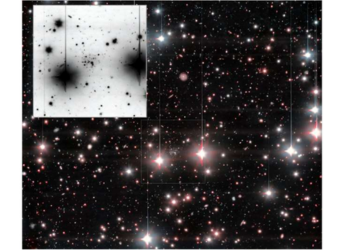
Photo Credit: ESA
ESA / Ultra-faint dwarf galaxy Andromeda XXXVI discovered orbiting the Andromeda galaxy.
Click Here to Add Gadgets360 As A Trusted Source


Advertisement
Andromeda XXXVI is a newly discovered ultra-faint dwarf satellite galaxy of Andromeda. It was spotted in archival Pan-Andromeda Survey images by an amateur and confirmed with deep imaging on the 10.4-m GTC (Gran Telescopio Canarias). It lies ~2.5 million light-years away, is extremely faint (absolute magnitude ~–6), and only about 200 ly across. With very few stars and a massive dark-matter component, it is considered a fossil of the early universe.
Discovery and Characteristics of Andromeda XXXVI
According to the research paper, Andromeda XXXVI was first spotted in PAndAS images by Giuseppe Donatiello and confirmed with deep OSIRIS/GTC imaging. Its color–magnitude diagram matches an old (~12.5 Gyr), metal-poor ([Fe/H] ≈ –2.5) stellar population. This places the galaxy ~2.53 million ly from Earth (388 kly from M31). Its absolute magnitude (M_V ≈ –6.0) and half-light radius (~200 ly) make it among Andromeda's faintest, most compact satellites. Spectroscopic follow-up will be needed to measure its dark matter mass and confirm its classification.
Implications for Dark Matter and Galaxy Formation
Similar to other ultra-faint galaxies, Andromeda XXXVI is quite faint but significantly dark matter-dominated, making it an important laboratory for testing galaxy formation theory and dark matter theories. Should it form most of its stars before cosmic reionization, Andromeda XXXVI can be termed as “fossil”, with its stars being extremely old (~12.5 Gyr), and low on metals. It should also be noted that such a discovery aids the understanding of the complete satellite population around Andromeda. For instance, according to theory, Andromeda is expected to harbour up to ~100 dwarf satellite systems, whereas only about ~50 have been discovered so far.
Comments
Get your daily dose of tech news, reviews, and insights, in under 80 characters on Gadgets 360 Turbo. Connect with fellow tech lovers on our Forum. Follow us on X, Facebook, WhatsApp, Threads and Google News for instant updates. Catch all the action on our YouTube channel.
Further reading:
Andromeda XXXVI, dwarf galaxies, Andromeda Galaxy, dark matter, galaxy formation, astrophysics, ultra-faint galaxies, cosmology, Pan-Andromeda Survey, Gran Telescopio Canarias


Advertisement
Follow Us




-
03:58
Dreame D20 Ultra Review: The Most Intelligent Robot Vacuum Cleaner Under ₹40,000? -
03:23
iPhone Fold Leaks & Rumors 2026 | Apple's Foldable iPhone Launch, Price & Specs Revealed -
04:12
Samsung Galaxy A37 Review: Camera, Gaming & Battery Tested! -
14:16
[Partner Content] OPPO F33 Pro 5G Explained: Built for the Big Moments -
05:21
Poco X8 Pro Max Review | Is This the Ultimate Budget Beast?
-
50MP कैमरा, 8000mAh बैटरी के साथ Realme 16T 5G लॉन्च, जानें सबकुछ
-
Motorola का फ्लिप फोन हुआ 43 हजार से भी ज्यादा सस्ता, जबरदस्त गिरी कीमत
-
Realme Watch S5 लॉन्च, 20 दिन चलेगी बैटरी, जानें क्या हैं खासियतें
-
20 हजार सस्ता मिल रहा Samsung फ्लैगशिप फोन, 50MP 3 कैमरा से लैस, देखें सबसे धांसू डील
-
Motorola Edge 70 Pro+ लॉन्च डेट के साथ फीचर्स का खुलासा, 50MP के तीन कैमरा से होगा लैस!
Advertisement
Popular on Gadgets
- Samsung Galaxy S26 Ultra
- Motorola Razr Fold
- ChatGPT
- OPPO Find N6
- Mobiles Under Rs. 40,000
- Vivo X300 Ultra
- Asus Zenbook S14
- iQOO 15
- Vivo X300 Pro
- Lenovo Yoga Slim 7i Aura Edition
- iQOO 15R
- Vivo X Fold 5
- Sony PlayStation 5
- HP OmniPad 12
- OnePlus Nord CE 6 Lite
- OnePlus Pad 4
- OPPO F33 Pro 5G
- Cryptocurrency
- HP OmniBook Ultra 14 (2026)
- iPhone 17
- Eureka Forbes AP 355 Room Air Purifier
- Latest Mobile Phones
- Compare Phones
Latest Gadgets
- Realme 16T 5G
- Xiaomi 17 Max
- HMD Vibe 2 5G
- iQOO 15T
- Lenovo Legion Y70 (2026)
- Red Magic 11S Pro+
- Red Magic 11S Pro
- Vivo Y60
- Microsoft Surface for Business (2026, 15-Inch)
- Microsoft Surface for Business (2026, 13.8-Inch)
- Poco Pad C1
- iQOO Pad 6 Pro
- Realme Watch S5
- Xiaomi Smart Band 10 Pro
- Lumio Vision 9 (2026)
- Lumio Vision 7 (2026)
- Asus ROG Ally
- Nintendo Switch Lite
- IFB 1.5 Ton 3 Star Inverter Split AC (CI193GN22RGM3)
- IFB 2 Ton 3 Star Inverter Split AC (CI223GD32RGM3)

- About Us
- Sitemaps
- Feedback
- Archives
- Contact Us
- RSS
- Advertise
- Career
- Privacy Policy
- Ethics
- Editorial Policy
- Terms & Conditions
- Complaint Redressal
Download Our Apps
Available in Hindi
© Copyright Red Pixels Ventures Limited 2026. All rights reserved.