-
 NASA’s MAVEN Detects Rare Solar Wind Effect in Mars Atmosphere28 May 2026
 -
Scientists Solve Venus Cloud Puzzle Using Simple Fluid Dynamics15 May 2026
-
Russia Plans Venera-D Mission to Venus in 2036 With Lander, Orbiter, and Balloon Probe18 March 2026
-
Venus May Hide a Vast Underground Tunnel Formed by Ancient Volcanic Eruptions, Scientists Say11 February 2026
-
Scientists Finally Identify What Drives Venus’s Fast Winds29 November 2025
- Home
- Science
- Science News
- Why Venus Is the Brightest Morning Star Visible From Earth
Why Venus Is the Brightest Morning Star Visible From Earth
Venus’ brightness comes from reflective clouds, proximity to Earth, and optical effects like a glory.
Updated: 25 December 2025 13:00 IST
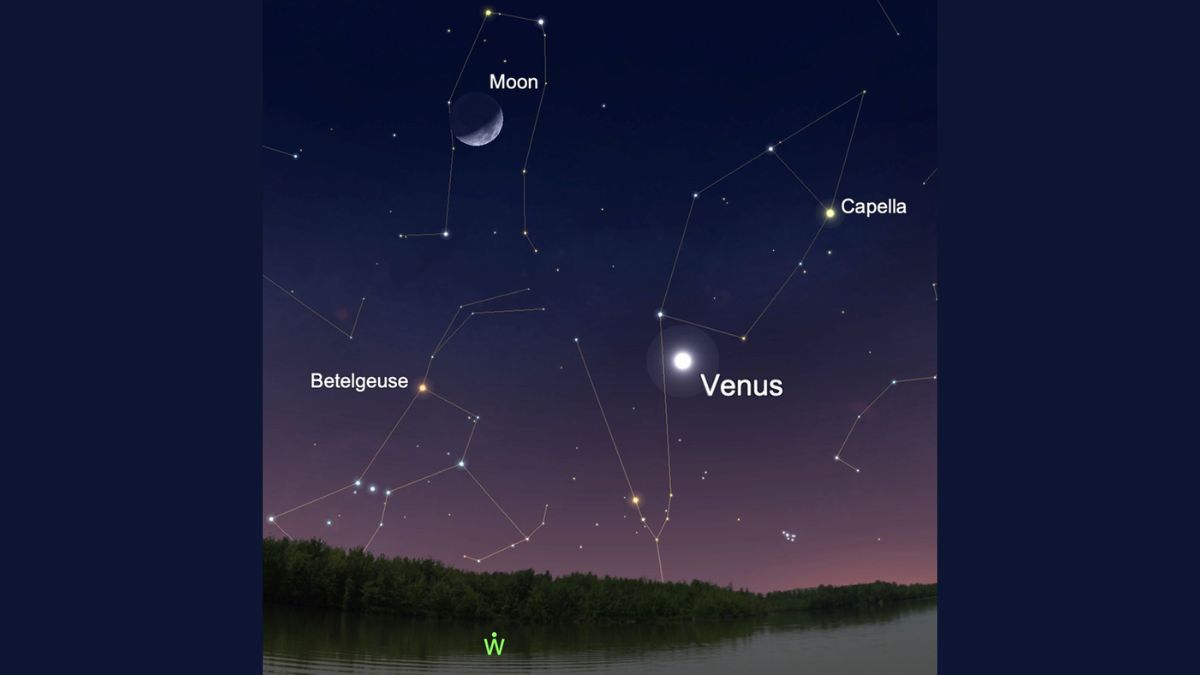
Photo Credit: NASA/JPL-Caltech
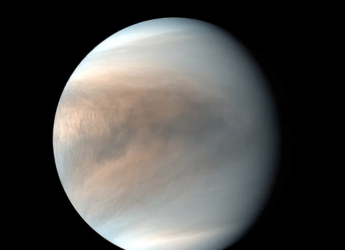
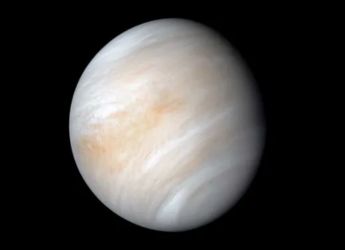
Venus shines brightly as the morning star, visible due to clouds and optical effects from Earth
Click Here to Add Gadgets360 As A Trusted Source

Advertisement
If you look at the sky during dawn or dusk, Venus immediately catches the eye. Known as the “morning star”, it shines steadily, brighter than almost any other object besides the Moon. The planet is about 100 times brighter than a first-magnitude star, according to Anthony Mallama, a researcher at the IAU's Centre for Protection of the Dark and Quiet Sky. Its reflective clouds, proximity to Earth, and unique optical phenomena make it highly luminous, allowing even urban observers to spot it most of the year.
Why Venus Outshines the Rest: Thick Clouds, Proximity, and Sunlight Scattering Create Its Stunning Brightness
According to Live Science, the surface of Venus has a high albedo, reflecting about 76% of the sunlight that reaches it, which is due to the clouds being composed mainly of sulfuric acid droplets. These clouds, which hang between 30 and 43.5 miles (48 to 70 km) above the surface, scatter sunlight well. By contrast, Earth reflects 30%, and the Moon just 7%. Although some icy moons like Enceladus reflect slightly more light, Venus appears far brighter due to receiving much more sunlight.
Venus appears brighter than Mercury due to its closer orbit, larger size, changing phases, and cloud-scattered sunlight creating a rainbow-like “glory” effect.
Venus' Stunning Glow: How Clouds, Orbit, and Sunlight Make It the Sky's Brightest Planet
Together, cloud reflectivity, distance, and phases cause Venus' brightness to vary from -4.92 to -2.98 on the astronomical scale. This is sufficient to make the planet clearly visible almost all year, even in city skies.
Even simple observations reveal that Venus' striking glow is not just a trick of the eye but a combination of atmospheric composition, solar reflection, and orbital geometry, making it the sky's most brilliant planetary beacon.
Comments
Get your daily dose of tech news, reviews, and insights, in under 80 characters on Gadgets 360 Turbo. Connect with fellow tech lovers on our Forum. Follow us on X, Facebook, WhatsApp, Threads and Google News for instant updates. Catch all the action on our YouTube channel.
Further reading:
Venus, Morning Star, Planet Brightness, Astronomy, Space Science, Solar System, Optical Phenomena, Sulfuric Acid Clouds
Related Stories




Advertisement
Follow Us




-
![[Sponsored] Samsung Galaxy Z Fold8: How It Fits Into an Actor’s Busy Day | Camera, Multitasking & More](https://www.gadgets360.com/static/desktop/images/spacer.png)
03:41
[Sponsored] Samsung Galaxy Z Fold8: How It Fits Into an Actor’s Busy Day | Camera, Multitasking & More -
09:53
iPhone 18 Goes On Sale In India: Huge Crowds, Long Queues At Apple Stores -
06:32
Google Pixel 11 Pro XL Review: The Most Exciting Pixel Yet? | 120X Zoom + Tensor G6 -
05:20
Samsung Galaxy Watch Ultra 2 Review: Is This the Best Android Smartwatch? -
07:01
Samsung Galaxy Z Fold 8 Review: Is This the Best Foldable Phone?
-
Trump-Xi की मुलाकात से महंगे होंगे फोन या घटेंगे दाम?
-
Flipkart Big Billion Days: इन 6 स्मार्टफोन पर सेल से पहले मिल रही है डील
-
Bank Strike 2026: 28 से 30 सितंबर तक बैंक हड़ताल, क्या UPI और ATM चलेंगे?
-
Ray-Ban Meta (Gen 3) लॉन्च, पहले से ज्यादा समय तक रिकॉर्ड कर पाएंगे वीडियो, गजब के स्टाइलिश फ्रेम भी
-
OnePlus 16 में मिलेगा 200 मेगापिक्सल का प्राइमरी कैमरा, अगले महीने होगा लॉन्च
Advertisement
Popular on Gadgets
- Samsung Galaxy S26 Ultra
- Motorola Razr Fold
- ChatGPT
- OPPO Find N6
- Mobiles Under Rs. 40,000
- Vivo X300 Ultra
- Asus Zenbook S14
- iQOO 15
- Vivo X300 Pro
- Lenovo Yoga Slim 7i Aura Edition
- iQOO 15R
- Vivo X Fold 5
- Sony PlayStation 5
- HP OmniPad 12
- OnePlus Nord CE 6 Lite
- OnePlus Pad 4
- OPPO F33 Pro 5G
- Cryptocurrency
- HP OmniBook Ultra 14 (2026)
- iPhone 17
- Eureka Forbes AP 355 Room Air Purifier
- Latest Mobile Phones
- Compare Phones
Latest Gadgets
- Mivi One 5G
- Xiaomi 18 Pro Max
- Motorola Signature 27
- OPPO Find X10 E
- OnePlus N6 Lite 4G
- Ai+ Nova 2 Power 5G
- Lava Virat Curve 5G
- Lava Bold N4 Pro 5G
- Microsoft Surface Laptop, 13-inch (2nd Edition)
- Lenovo LOQ 15AHP11
- Microsoft Surface Pro, 12-inch (2nd Edition)
- Xiaomi Pad 9 Pro
- Amazfit T-Rex Dual Solar
- OPPO Watch S2
- Haier M70 Mini LED 65-inch
- Xiaomi TV FX Mini LED 65
- Acer Predator Atlas 8
- Asus ROG Ally
- Blue Star 1.5 Ton 5 Star Inverter Split AC (IE518ZNURS)
- Blue Star 2 Ton 3 Star Inverter Window AC (WIE324L)

- About Us
- Sitemaps
- Feedback
- Archives
- Contact Us
- RSS
- Advertise
- Career
- Privacy Policy
- Ethics
- Editorial Policy
- Terms & Conditions
- Complaint Redressal
Download Our Apps
Available in Hindi
© Copyright Red Pixels Ventures Limited 2026. All rights reserved.