DuckDuckGo Updates Duck.ai Platform With Real-Time AI Voice Conversations
Voice sessions connect to an OpenAI model through an encrypted relay, with audio streamed live for transcription and responses.
Written by Sucharita Ganguly, Edited by David Delima | Updated: 10 February 2026 12:16 IST
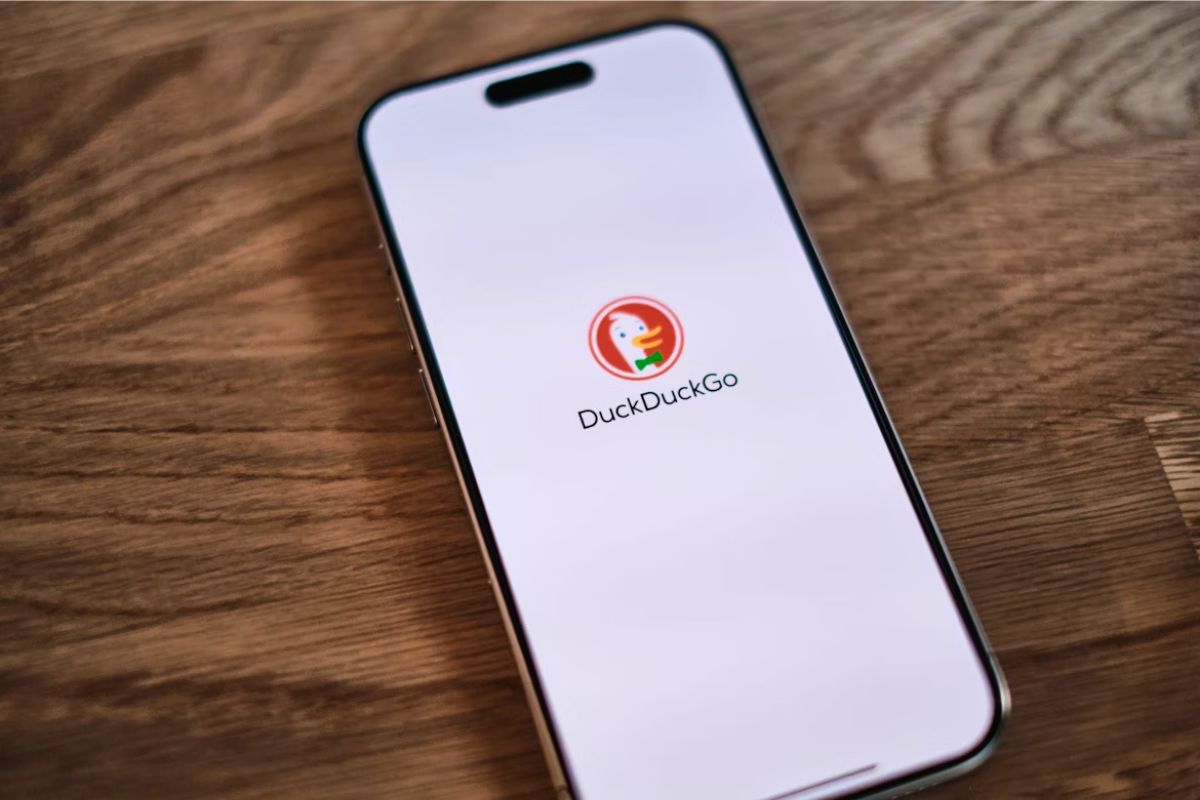
Photo Credit: Unsplash/appshunter.io
DuckDuckGo said recordings are not stored or used for training
Click Here to Add Gadgets360 As A Trusted Source

Advertisement
DuckDuckGo introduced a new opt-in voice chat option for its AI-powered Duck.ai chatbot on Monday, giving users the ability to speak to the assistant in real time rather than rely only on text. The feature adds a voice mode to the platform's existing private chatbot service and comes with built-in limits and privacy controls. DuckDuckGo said users can enable or disable voice chat at any time, and the tool works without requiring an account, with higher usage caps available for subscribers.
DuckDuckGo Brings Opt-In Voice Chat to Duck.ai With Daily Usage Limits
DuckDuckGo added an opt-in real-time voice chat feature to its Duck.ai AI chatbot. The new mode allows users to talk to the assistant instead of typing, with the system responding aloud during the conversation.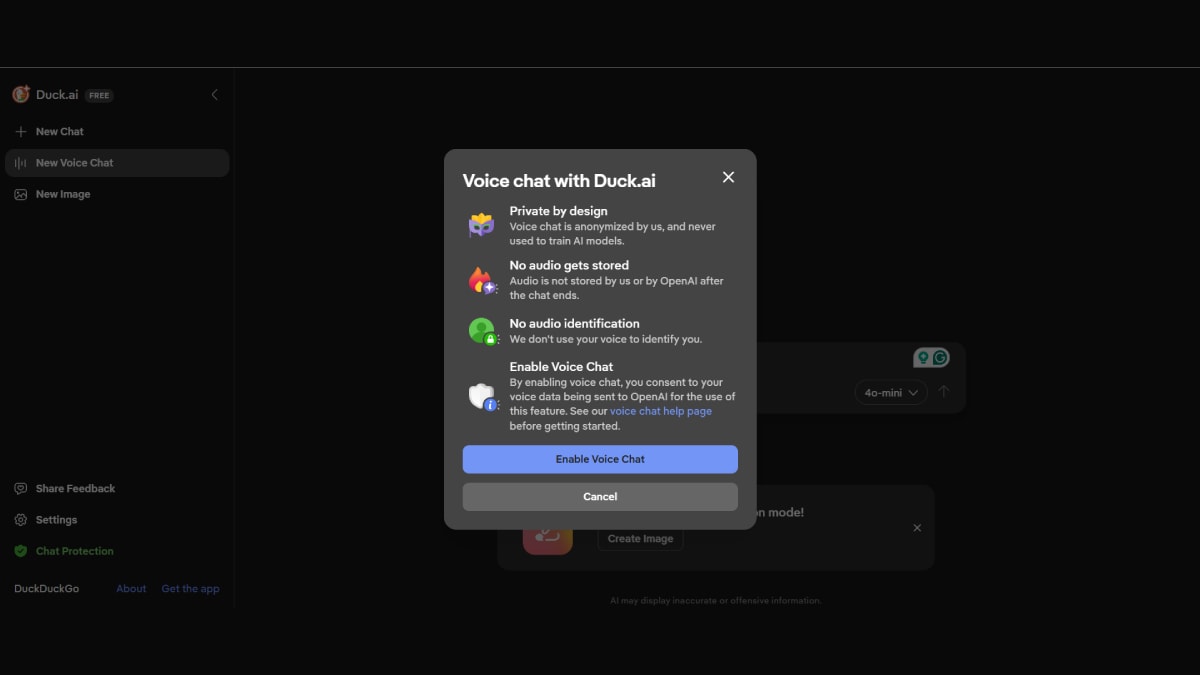
The company introduced Duck.ai last March as a chatbot platform that enables private interactions with third-party language models. Since then, Duck.ai has expanded beyond text chat, and voice support is the latest feature to arrive.
DuckDuckGo said users must choose to enable voice chat, and they can switch it off again at any time in the platform's settings. The feature works without requiring an account, though it comes with daily usage caps. Subscribers receive higher limits than free users.
DuckDuckGo explained that voice sessions connect to an OpenAI model through an encrypted relay. During a session, microphone audio is streamed live to OpenAI for transcription and response generation, producing both written and spoken replies. DuckDuckGo said it cannot decrypt the relay connection.
The company said voice data is handled ephemerally and exists only while the user is speaking. It stated that neither DuckDuckGo nor OpenAI stores recordings after a chat ends, and the audio is not used for AI training.
DuckDuckGo also warned that a person's voice is inherently unique and could serve as a biometric identifier. The company said it does not attempt to recognise users through voice, and it noted that OpenAI's use of the data is limited by contract to providing the service.
Voice chat is currently supported in the DuckDuckGo browser and most other modern browsers, while Firefox support has not yet been added. Users can start a voice session by enabling the feature in Duck.ai and granting microphone permission through their browser.
Comments
Get your daily dose of tech news, reviews, and insights, in under 80 characters on Gadgets 360 Turbo. Connect with fellow tech lovers on our Forum. Follow us on X, Facebook, WhatsApp, Threads and Google News for instant updates. Catch all the action on our YouTube channel.


Advertisement
Follow Us




-

05:05
Goboult Mustang Racer Smartwatch Review: Should You Get This Mustang Smartwatch? -
04:58
OnePlus Nord Buds 4 Pro Review: Specs, Sound Quality, ANC, and Battery Backup Tested -
02:29
[Sponsored] Samsung Galaxy S26 Ultra First Look: AI Smartphone for Creators, Gaming & Productivity -
04:25
Vivo X200T Review - Full Camera, Gaming & Battery Test | Worth Buying? -
28:31
The Future of Productivity: Logitech's Anatoliy Polyanker On AI, Hybrid Work, And India's Tech Boom
Advertisement
Popular on Gadgets
- Samsung Galaxy Unpacked 2026
- iPhone 17 Pro Max
- ChatGPT
- iOS 26
- Laptop Under 50000
- Smartwatch Under 10000
- Apple Vision Pro
- Oneplus 12
- OnePlus Nord CE 3 Lite 5G
- iPhone 13
- Xiaomi 14 Pro
- Oppo Find N3
- Tecno Spark Go (2023)
- Realme V30
- Best Phones Under 25000
- Samsung Galaxy S24 Series
- Cryptocurrency
- iQoo 12
- Samsung Galaxy S24 Ultra
- Giottus
- Samsung Galaxy Z Flip 5
- Apple 'Scary Fast'
- Housefull 5
- GoPro Hero 12 Black Review
- Invincible Season 2
- JioGlass
- HD Ready TV
- Latest Mobile Phones
- Compare Phones
Latest Gadgets
- Honor Play 80
- Nord 6
- Honor X80i
- Honor Play 80 Pro
- Redmi Note 15 SE 5G
- Redmi A7 Pro
- OPPO K15 Pro
- OPPO K15 Pro+
- Xiaomi Book Pro 14
- MacBook Neo
- Vivo Pad 6 Pro
- Lenovo Legion Y700 Gen 5
- boAt Valour Watch 1R
- Xiaomi Watch S5
- Xiaomi QLED TV X Pro 75
- Haier H5E Series
- Asus ROG Ally
- Nintendo Switch Lite
- Haier 1.6 Ton 5 Star Inverter Split AC (HSU19G-MZAID5BN-INV)
- Haier 1.6 Ton 5 Star Inverter Split AC (HSU19G-MZAIM5BN-INV)

- About Us
- Sitemaps
- Feedback
- Archives
- Contact Us
- RSS
- Advertise
- Career
- Privacy Policy
- Ethics
- Editorial Policy
- Terms & Conditions
- Complaint Redressal
Download Our Apps
Available in Hindi
© Copyright Red Pixels Ventures Limited 2026. All rights reserved.