
-
 WhatsApp Could Block Users From Logging In on Outdated Android, iOS Devices6 October 2026
-
WhatsApp Could Soon Show Warning for Unofficial Web Clients1 September 2026
-
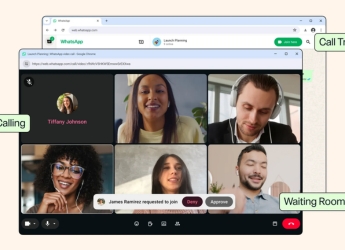
WhatsApp Web Now Supports Group Video Calls; QuickHD, Noise Suppression Features Rolling Out29 July 2026
-
Adobe Integrates Acrobat Directly Into WhatsApp Web and Windows App, Allowing Users to View, Highlight PDFs22 July 2026
-
WhatsApp Desktop, WhatsApp Web Users Targeted Using Malware Campaign, Kaspersky Warns23 June 2026
WhatsApp Users in India Must ‘Exercise Caution’ While Using WhatsApp Web, Home Ministry’s I4C Issues Advisory
Home Ministry’s I4C says that bad actors could gain unauthorised access to WhatsApp Web sessions.
Written by Dhruv Raghav, Edited by Rohan Pal | Updated: 25 November 2026 14:59 IST

Photo Credit: Pexels/ Anton
I4C advises WhatsApp Web users to manually log out after each session
Click Here to Add Gadgets360 As A Trusted Source

Advertisement
WhatsApp users in India should be cautious while using the Web version of the instant messaging platform, the Ministry of Home Affairs' Indian Cybercrime Coordination Centre (I4C) says in a new advisory. The advisory was issued by the I4C's threat analysis wing, which highlighted that select WhatsApp Web sessions can be compromised by bad actors to gain unauthorised access to a user's WhatsApp account. I4C has also listed seven precautions that a user must exercise while using the web version of the instant messaging platform. The government body says that users should not use WhatsApp Web to send sensitive information.
Home Ministry's I4C Issues Fresh Advisory for WhatsApp Web Users in India
On November 18, the National Cybercrime Threat Analytics Unit (NCTAU) of the I4C, under the aegis of the Ministry of Home Affairs, issued an advisory for WhatsApp users in India. The NCTAU has observed that an authenticated WhatsApp Web session can be misused by bad actors to gain unauthorised access to a user's WhatsApp account “under certain circumstances”.
After gaining remote access to a WhatsApp account through a compromised WhatsApp Web session, attackers can “read messages, send messages while impersonating the user, access contacts and group conversations, and misuse the identity” of the WhatsApp account holder for “fraud, phishing, social engineering or other malicious activities”. I4C's threat analysis arm said that users should exercise caution, especially while using WhatsApp Web on “office computers, shared systems, public computers” and devices that are accessible to others.
I4C has published a list of precautionary measures a WhatsApp Web user must take to protect against malicious activities. The advisory highlights that a user should avoid using WhatsApp Web for sending sensitive information. “Government, organizational, financial, confidential, or other sensitive information should preferably not be exchanged through a WhatsApp Web session on computers,” the advisory noted.
Further, I4C said that users should avoid leaving an “authenticated” WhatsApp Web session active when it is not in use, “particularly on office or shared computers”. Users have been advised to log out after each WhatsApp Web session. Moreover, I4C advises users to “develop a habit” of manually logging out of WhatsApp Web when their work is done and to use Incognito or Private Browsing when using the web version of the messaging platform.
The government body has not revealed the number of instances or reports of WhatsApp Web sessions being misused. In June, the Kaspersky Global Research and Analysis Team discovered that bad actors were targeting WhatsApp Web and Desktop users as part of a malware distribution campaign. The hackers were deploying the malware by remotely running VBScript files on compromised WhatsApp accounts.
Comments
Get your daily dose of tech news, reviews, and insights, in under 80 characters on Gadgets 360 Turbo. Connect with fellow tech lovers on our Forum. Follow us on X, Facebook, WhatsApp, Threads and Google News for instant updates. Catch all the action on our YouTube channel.
Related Stories





WhatsApp Users in India Must ‘Exercise Caution’ While Using WhatsApp Web, Home Ministry’s I4C Issues Advisory


Advertisement
Follow Us


-
Upgrade Your Space for Less: Top Amazon Kitchen & Home Essential Discounts Today
-
Top Upper-Midrange Phones Under ₹50,000 for Gamers & Creators
-
Which Is The Best 43-inch 4K Smart TV Under ₹30,000 in India? Explore Top Picks
-
LG vs. Samsung Convection Microwave Oven: Which Brand Reigns Supreme in Indian Kitchens
-
Best Vitamin C Serums Under Rs. 500 in India for Glowing, Even-Toned Skin
Advertisement
Popular on Gadgets
- Samsung Galaxy S26 Ultra
- Motorola Razr Fold
- ChatGPT
- OPPO Find N6
- Mobiles Under Rs. 40,000
- Vivo X300 Ultra
- Asus Zenbook S14
- iQOO 15
- Vivo X300 Pro
- Lenovo Yoga Slim 7i Aura Edition
- iQOO 15R
- Vivo X Fold 5
- Sony PlayStation 5
- HP OmniPad 12
- OnePlus Nord CE 6 Lite
- OnePlus Pad 4
- OPPO F33 Pro 5G
- Cryptocurrency
- HP OmniBook Ultra 14 (2026)
- iPhone 17
- Eureka Forbes AP 355 Room Air Purifier
- Latest Mobile Phones
- Compare Phones
Latest Gadgets
- Redmi R80m 5G
- Redmi R80 5G
- Lava Smart 4 Pro
- Motorola Edge 70 Neo
- OPPO Reno 17 Pro (China)
- OPPO Reno 17 (China)
- Vivo Y6k
- Karbonn Rebel
- Dell XPS 16 Creator Edition
- Dell 14S (2026)
- OPPO Pad Air 6
- Infinix Xpad 30
- Honor Watch 6 Pro
- Xiaomi Watch S5 41mm
- Toshiba 65-Inch 4K Ultra HD Smart Mini LED QLED TV (65Z670SP)
- Haier M70 Mini LED 65-inch
- Acer Predator Atlas 8
- Asus ROG Ally
- Blue Star 1.5 Ton 5 Star Inverter Split AC (IE518ZNURS)
- Blue Star 2 Ton 3 Star Inverter Window AC (WIE324L)

- About Us
- Sitemaps
- Feedback
- Archives
- Contact Us
- RSS
- Advertise
- Career
- Privacy Policy
- Ethics
- Editorial Policy
- Terms & Conditions
- Complaint Redressal
Download Our Apps
Available in Hindi
© Copyright Red Pixels Ventures Limited 2026. All rights reserved.